Protest Economics: Why Modern Dissent Needs Economic Impact
By ThePip Desk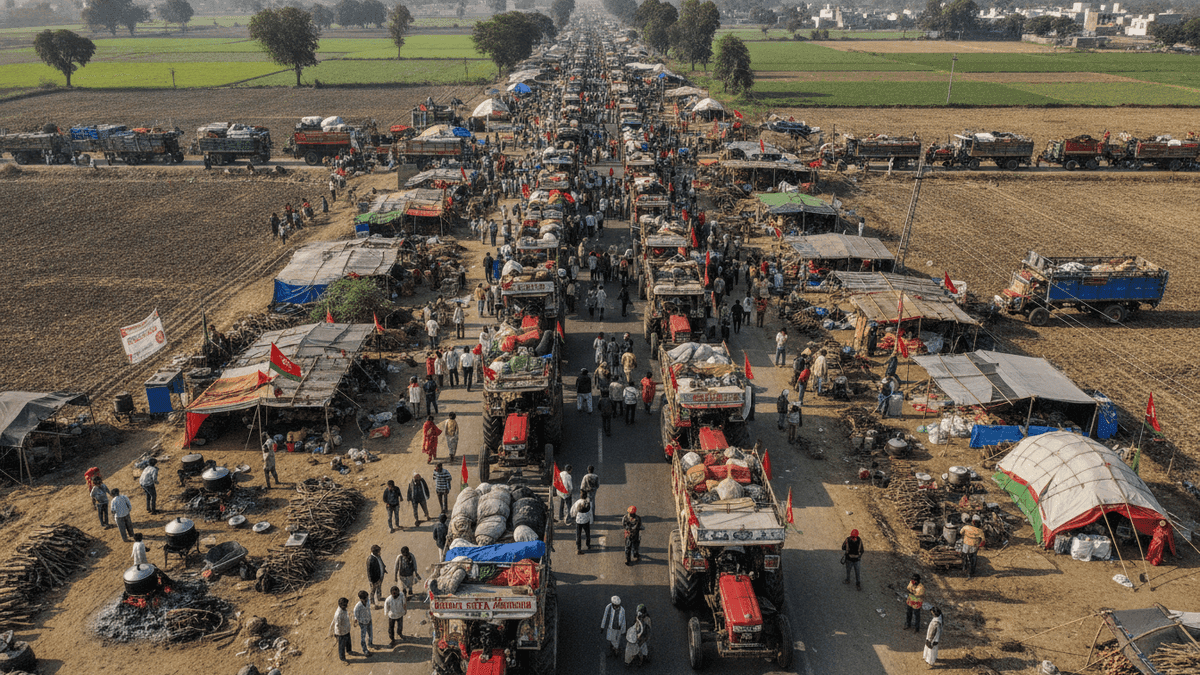
Explore the economic calculus of modern protests. Discover why dissent must impose significant costs to compel authorities and achieve lasting change.
The effectiveness of public dissent, particularly through methods like hunger strikes, is fundamentally determined by the economic and moral costs it imposes on the state. This underlying structural pattern dictates whether a movement can compel governmental action or merely fade as a transient expression of grievance. The historical record, from the 1974 Indian railway strike to more contemporary farmer protests, consistently illustrates this core mechanism.
Consider the 1974 Indian railway strike, a pivotal event that, despite initial suppression, ultimately saw the government concede to demands five years later. The sheer economic disruption caused by this widespread industrial action created an unbearable burden, forcing a recalibration of state policy. This exemplifies what can be termed the “hidden arithmetic of protest,” where success is directly proportional to the expense incurred by the authorities.
The War of Attrition in Modern Activism
Contemporary movements, such as the ongoing hunger strike by Sonam Wangchuk, face a challenging landscape. While national solidarity and passionate engagement are vital, they often prove insufficient against the state’s vast resources in what becomes a protracted war of attrition. Research by Erica Chenoweth, a leading scholar on civil resistance, initially indicated a 53% success rate for non-violent campaigns between 1900 and 2006, significantly outperforming violent counterparts. However, Chenoweth’s more recent work reveals a sharp decline in the success of peaceful movements since 2010, suggesting a structural shift in the dynamics of modern protest.
This decline can be attributed to several factors. Firstly, for a protest to overcome the state’s inherent advantage in endurance, it must mobilize a broad and diverse cross-section of society. Studies indicate that campaigns involving over 3.5% of a population have historically never failed, a high threshold that many modern movements struggle to meet. The Occupy Wall Street movement, for instance, ultimately failed because it could not sustain the broad-based pressure required to compel a response from authorities.
Secondly, genuine impact necessitates growth beyond an initial core of participants. While digital platforms and hashtags enable rapid mobilization and large crowds, they often foster fleeting engagement rather than the sustained dedication vital for long-term change. Unlike India’s decades-long freedom movement, which built patient mass mobilization, many modern protests are ephemeral, driven by transient social media trends rather than deep, enduring commitment.
Economic Leverage as the Decisive Factor
The most potent leverage available to protesters remains the imposition of economic cost. Indian governments, historically, have shown a greater propensity to yield to demands when strikes, boycotts, and widespread disruptions inflict unbearable economic damage, rather than solely in response to moral suasion. The 2020-21 farmer protests serve as a recent, powerful illustration: the substantial economic and political costs incurred by affected states ultimately led to the repeal of contentious agricultural laws.
While moral costs can also compel state action, as seen with Potti Sriramulu’s fast-unto-death or the Nirbhaya protests, these instances often require extreme circumstances or an overwhelming societal outcry that directly challenges the state’s legitimacy. Absent significant material or moral costs, the state’s default strategy is to simply wait out the protest. The enduring lesson for any movement seeking change is that passion, while a necessary catalyst, must translate into tangible, unavoidable costs for the governing apparatus to achieve its objectives.