India’s FY27 Fiscal Deficit: 9.6% by May Signals Early Trends
By ThePip Desk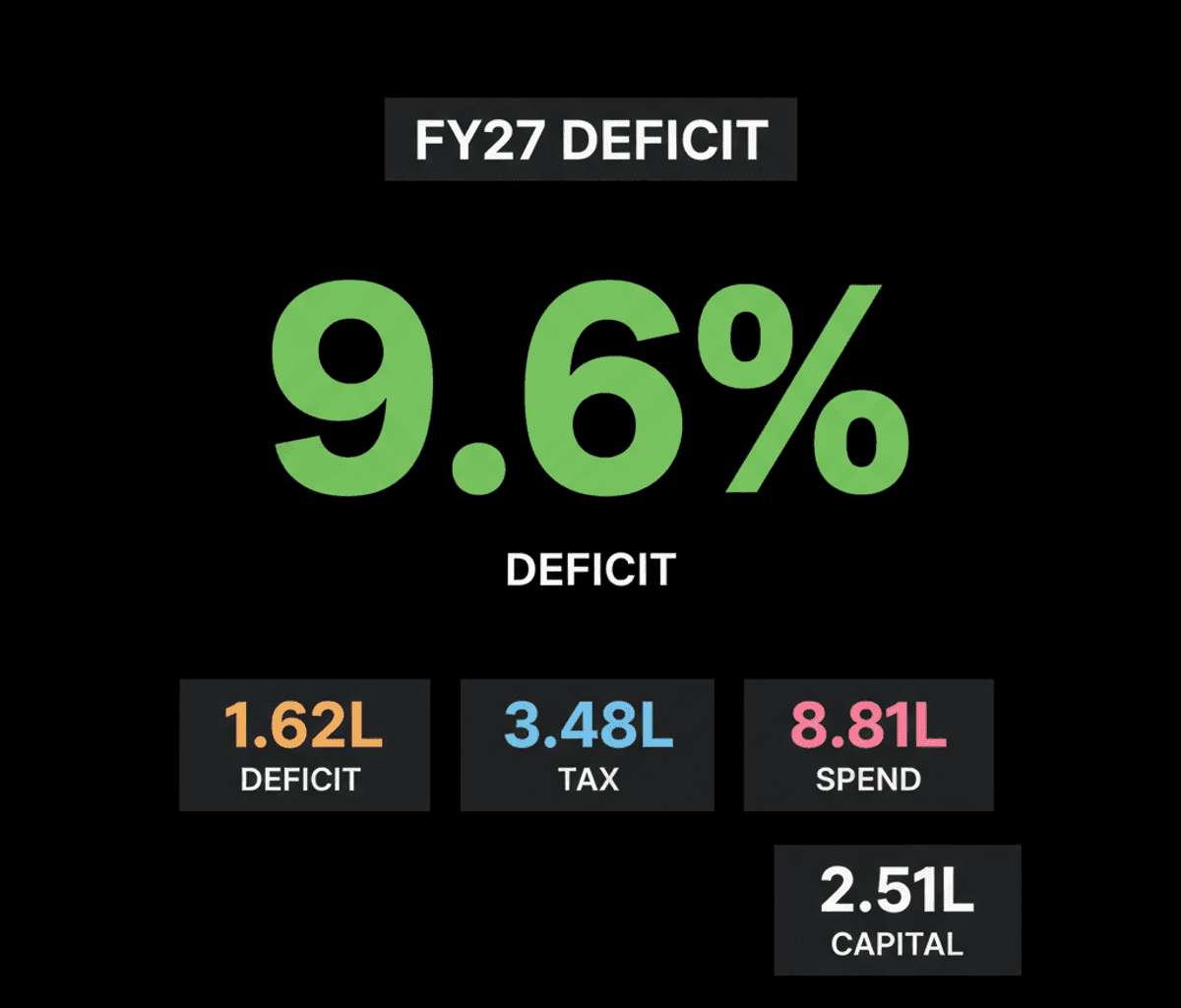
India’s FY27 fiscal deficit hits 9.6% (Rs 1.62 lakh crore) by May-end. Early trends reveal government spending and revenue dynamics. Explore the implications.
India’s fiscal deficit reached 9.6% of its budget target for the current financial year (FY27) by the close of May 2026, according to data released by the Controller General of Accounts (CGA). This early-year snapshot, valued at Rs 1.62 lakh crore, provides a preliminary indication of the government’s fiscal health and its expenditure-revenue dynamics.
The fiscal deficit, fundamentally representing the gap between the government’s total expenditure and its total revenue, offers a critical lens into national economic management. While a 9.6% achievement against a full-year target within the first two months might seem substantial, it is crucial to understand the typical front-loading of government spending, particularly capital outlays, at the start of a fiscal cycle.
Examining the revenue side, the CGA data revealed that net tax receipts stood at Rs 3.48 lakh crore by the end of May. Complementing this, non-tax revenue contributed Rs 3.51 lakh crore, illustrating the diverse streams feeding into the central government’s coffers in the initial phase of FY27.
On the expenditure front, the central government’s total spending reached Rs 8.81 lakh crore during the same period. A significant component of this total was capital expenditure, which amounted to Rs 2.51 lakh crore. This focus on capital spending is a key structural pattern, as it is often viewed as productive investment that can stimulate long-term economic growth, rather than merely covering operational costs.
This early-stage deficit figure, alongside the revenue and expenditure breakdowns, allows for an initial assessment of the government’s adherence to its fiscal consolidation path. The emphasis on capital expenditure in the early months suggests a strategic push to boost infrastructure and productive capacity, aligning with broader economic policy objectives aimed at fostering sustainable growth.
For the informed observer, these figures underscore the importance of monitoring not just the headline deficit number, but also its underlying components and their structural implications. The trajectory set in the initial months often provides valuable insights into the government’s fiscal discipline and its commitment to long-term economic frameworks, rather than merely short-term spending patterns.