Indian Bond Yields Drop: Impact on Your Savings Explained
By Sivam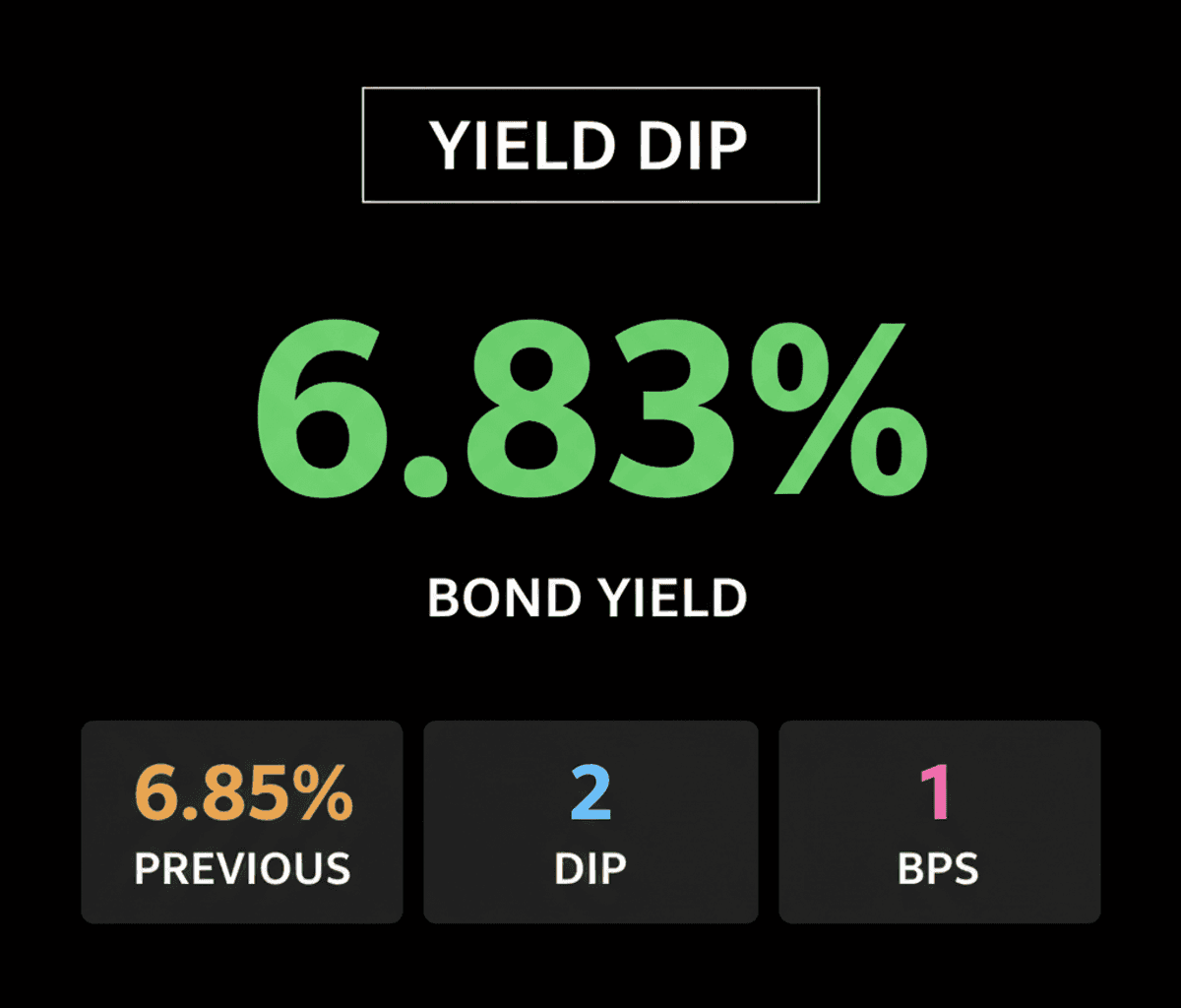
Discover how the recent 2 bps dip in Indian 10-year government bond yields, influenced by global oil prices, could affect your savings and financial planning.
THE PIP (TL;DR)
This slight dip in Indian bond yields could signal broader shifts in the economy, influencing future interest rates and your financial planning.
India’s 10-year government bond yield fell by 2 basis points to 6.83% on Tuesday, down from Monday’s close of 6.85%.
This movement was influenced by easing global oil prices and progress in US-Iran negotiations, even as US Treasury yields rose.
Lower bond yields generally suggest expectations of stable or lower future interest rates, which can affect everything from loan costs to returns on debt-oriented investments.
Indian 10-year government bond yields, which reflect the return investors demand for lending to the government for a decade, decreased by 2 basis points (bps) on Tuesday, settling at 6.83%. A basis point is one-hundredth of a percentage point, meaning the yield moved from its previous close of 6.85% on Monday, according to Accord News data.
This domestic movement occurred despite a rise in US Treasury yields on Monday, with the 2-year yield reaching its highest point since early last year. However, easing global oil prices, driven by progress in US-Iran peace negotiations and a temporary relaxation of sanctions on Iranian crude exports, provided a counterbalancing influence, Accord News reported. Investors globally are also keenly awaiting key US inflation data expected later this week.
While a 2-basis point shift might seem small, changes in bond yields are crucial indicators for the broader economy. Lower government bond yields can signal expectations of a more stable economic environment or even potential future interest rate cuts, which can directly or indirectly affect your fixed deposit rates, loan EMIs, and the performance of debt mutual funds. It translates market movements into the landscape where your money grows or is borrowed.
This slight dip, while influenced by international developments, offers a glimpse into the ongoing balancing act between global economic pressures and domestic financial stability. For your long-term financial planning, understanding these shifts helps you contextualise the performance of your investments and savings.
ONE THING TO CONSIDER TODAY
It’s a good moment to review your investment portfolio’s asset allocation, especially the debt component, to ensure it aligns with your current risk appetite and financial goals amidst evolving interest rate expectations.