India Youth Protest: ‘Cockroach’ Movement Demands Action on Jobs, Exams
By ThePip Desk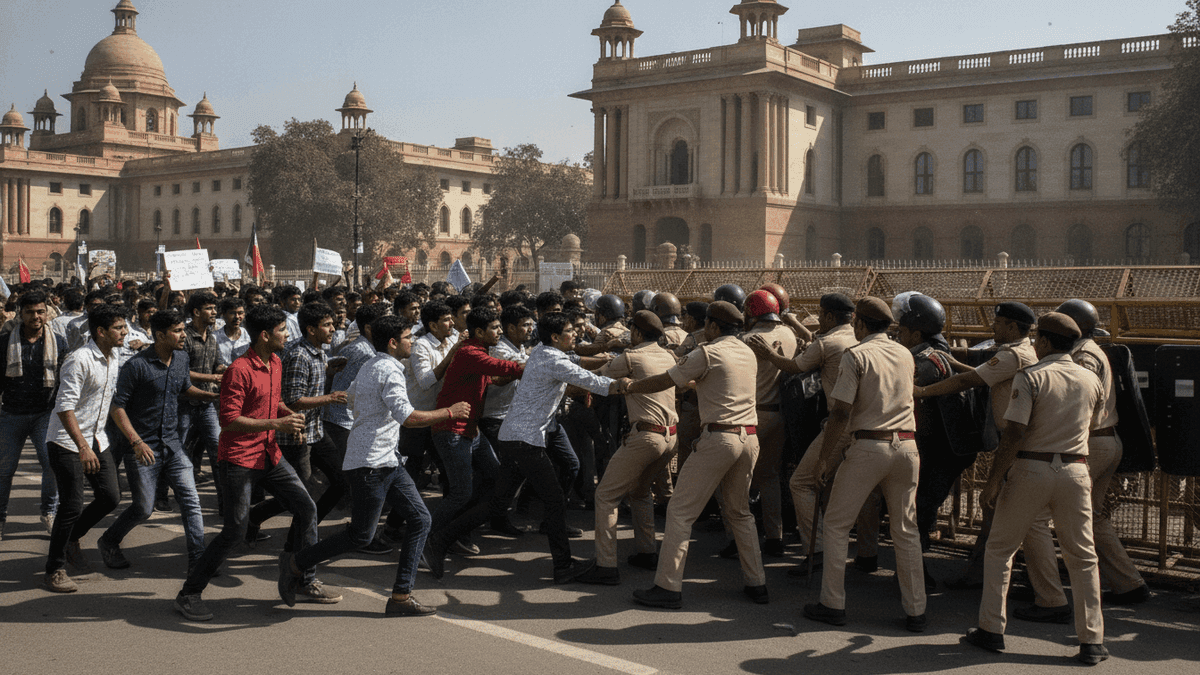
India’s ‘Cockroach’ movement faces a ban on its parliamentary march, highlighting youth anger over unemployment and exam integrity. Activist Sonam Wangchuk’s detention escalates tensions.
The immediate news of Indian police denying permission for a parliamentary march by the youth-led ‘Cockroach’ movement serves as a direct manifestation of deeper structural tensions surrounding youth grievances in the nation. This movement, galvanized by widespread exam paper leaks and high youth unemployment, intends to proceed with its demonstration, setting the stage for a significant standoff. The planned march underscores fundamental questions about governance, opportunity, and the state’s response to organized dissent.
The ‘Cockroach’ movement has seen a surge in support following the forced hospitalization of activist Sonam Wangchuk on Saturday. Wangchuk, who was on a hunger strike, framed the planned march as “India’s 2nd FREEDOM MOVEMENT,” advocating for “freedom from injustice (like paper leaks)” and “freedom from fear (my illegal detention).” The movement’s core demand includes the sacking of Prime Minister Narendra Modi’s education minister, reflecting a direct challenge to the current administration’s handling of these systemic issues.
Authorities in the New Delhi district have explicitly denied permission for the march, citing strict security arrangements necessitated by the commencing parliamentary session. Police stated that orders are in force prohibiting assemblies of five or more persons in the area, allowing protests only at a designated site. This official stance underscores the state’s prerogative to maintain public order and legislative security, especially during critical parliamentary functions.
The legal and personal dimensions surrounding Wangchuk’s situation remain contested. A Delhi court ruled that authorities were within their rights to move him to a government hospital due to his deteriorating health, noting that doctors administered only oral fluids and supplements with his consent. However, Wangchuk’s wife, Gitanjali Angmo, criticized the heavy police presence as “illegal detention” and sought permission to transfer him to a private hospital, asserting their right to choose his treatment facility.
The emergence and widespread support for the ‘Cockroach’ movement are not isolated incidents but reflect profound structural pressures within India’s youth demographic. Persistent issues such as high youth unemployment and recurrent exam paper leaks erode trust in institutional fairness and economic mobility, creating a fertile ground for organized dissent. This systemic challenge underscores a broader societal concern about governance and equitable opportunity for the younger generation, making the looming confrontation a symptom of these unaddressed structural grievances.