India Rural Economy Crisis: Incomes & Savings Hit Record Lows
By ThePip Desk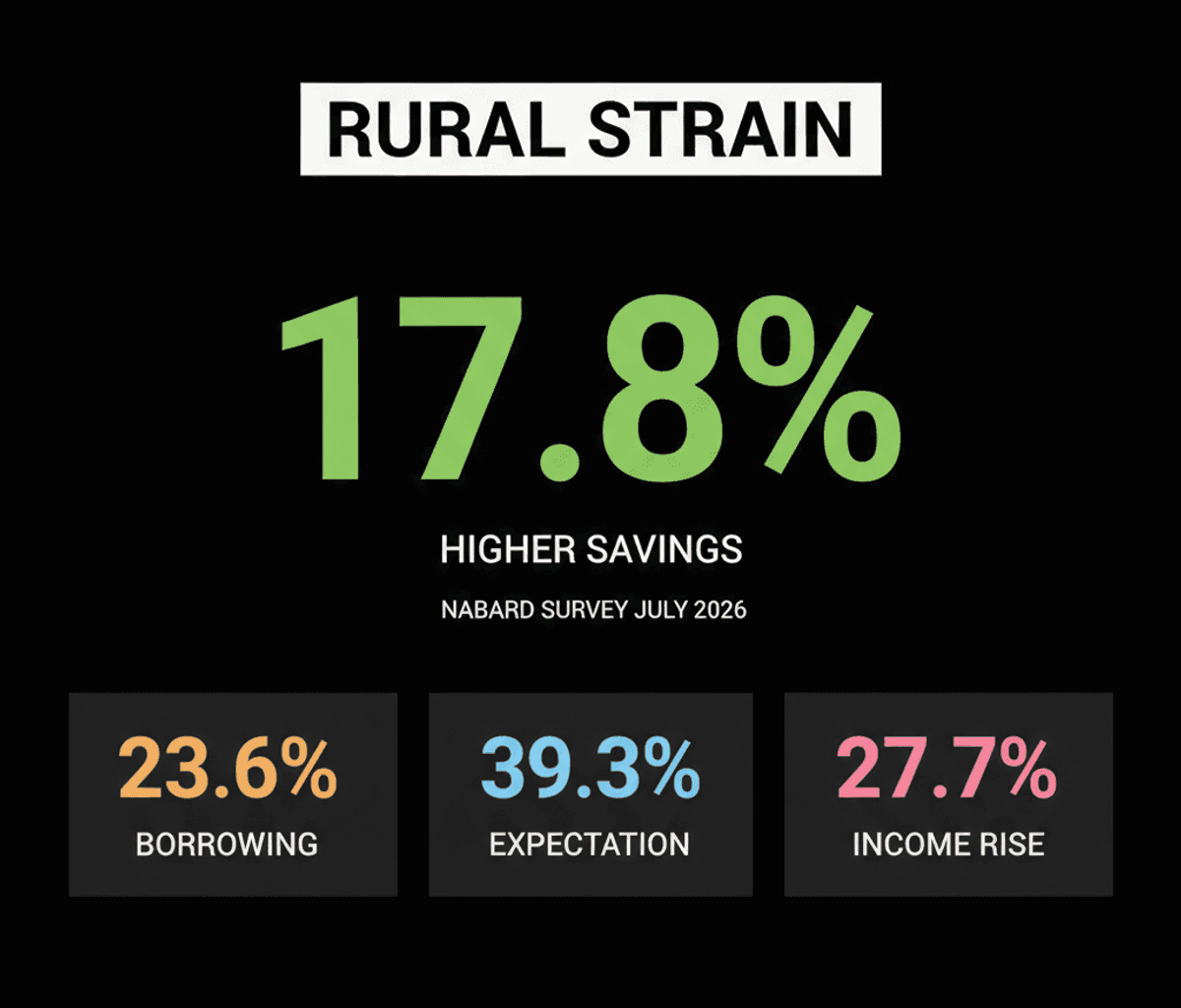
NABARD survey reveals India’s rural economy faces historic lows in household incomes and savings, with increased reliance on informal borrowing.
India’s rural economy is under significant strain, with household incomes and savings plummeting to record lows. The National Bank for Agriculture and Rural Development (NABARD) survey, conducted in July 2026, unveiled these concerning figures.
- Only 27.7% of rural households experienced an income increase over the past year.
- A historic low of 17.8% of households reported higher savings.
- Dependence on informal borrowing rose to a record 23.6%.
- Only 39.3% of households expect improvement in future income and employment.
The data indicates a continued downward trend in income growth since November 2025 and a historic depletion of financial reserves. This environment has led to a notable shift in how rural households manage their finances, increasingly relying on non-institutional loans.
Rising Financial Stress and Diminished Hope
Dependence on informal borrowing has surged to a record 23.6%, signaling heightened financial stress as families resort to such loans for daily expenses. Meanwhile, optimism regarding future income and employment prospects has fallen to its lowest point since the survey’s inception.
Impact on Spending and Demand
This combination of reduced savings, increased informal debt, and a pessimistic outlook is projected to foster more cautious spending habits. Consequently, demand for discretionary goods is expected to soften, directly affecting consumer-facing businesses.
- Fast-Moving Consumer Goods (FMCG)
- Two-wheeler manufacturers
- Tractor companies
- Fertilizer producers
The situation is further complicated by anticipated El Nino conditions, which could negatively affect agricultural production. A decline in farm yields would exert additional pressure on rural income levels, further dampening overall rural demand.
Investor Focus: Monitoring Rural Market Health
For investors, the critical metric to observe will be the volume growth of companies with substantial exposure to rural markets. While urban demand has shown resilience, a prolonged rural slowdown could impact profit margins if costs cannot be offset or total sales volumes decrease.
Market participants will closely monitor upcoming quarterly results for insights into rural demand recovery and changes in pricing strategies. Updates on the impact of weather conditions on future harvest cycles will also be crucial for assessing the path ahead.