Dark Money in US Politics: Structural Debate Unpacked
By ThePip Desk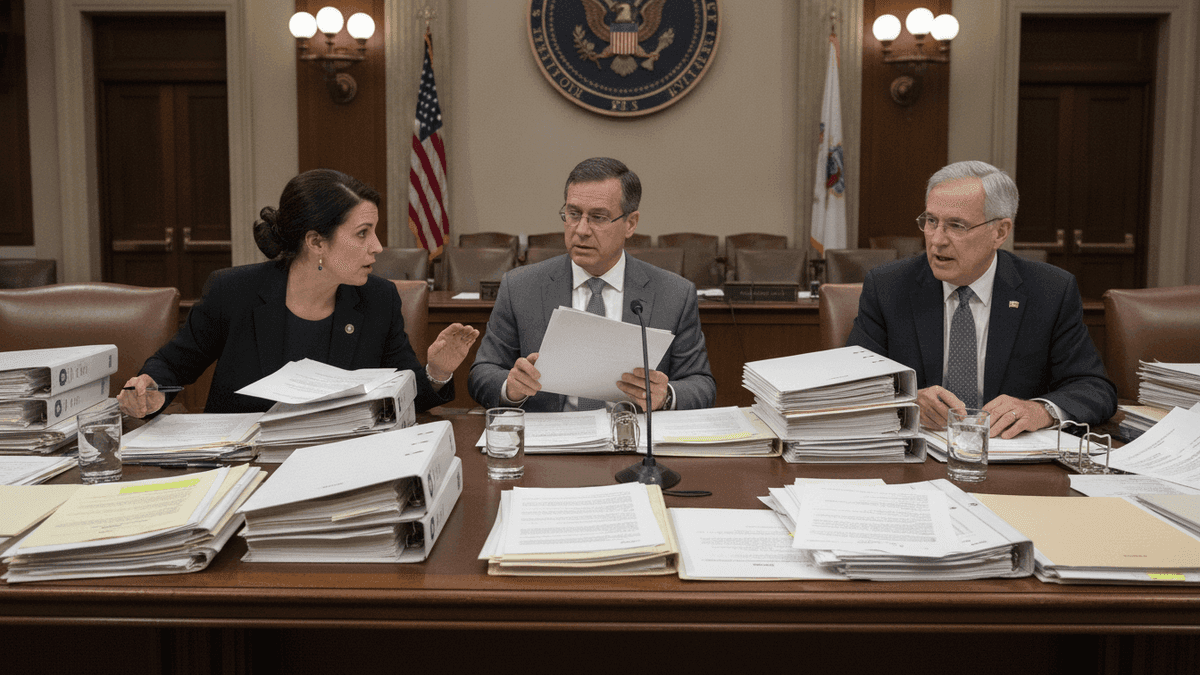
Explore the contentious debate on ‘dark money’ networks and foreign influence in US politics, highlighted by a recent Senate hearing on state and federal programs.
A recent Senate Homeland Security Committee hearing, titled ‘Examining Fraud and Foreign Influence in State and Federal Programs,’ brought into sharp focus the enduring structural challenges posed by opaque political funding. The session quickly became a contentious debate among Senators regarding allegations of fraud, foreign influence, and the impact of so-called ‘dark money’ networks on Minnesota programs.
At its core, the concept of ‘dark money’ refers to political spending where the source of funding is not disclosed, creating a significant transparency deficit. This mechanism allows entities to influence elections and policy debates without public accountability, a pattern that consistently raises questions about the integrity of democratic processes. The very structure of such funding makes it difficult to trace, complicating efforts to assess the true extent of its impact or potential foreign manipulation.
During the hearing, specific allegations surfaced concerning ‘dark money groups’ that purportedly funded $60 million into various programs. Furthermore, a ‘Soros-linked network’ in Minnesota was reportedly ‘exposed,’ serving as a concrete illustration of how these opaque financial flows can manifest at the state level. These instances underscore the operational reality of financial influence operating outside traditional, regulated campaign finance channels.
The palpable tension among Senators during the debate signals a deeper disagreement not just over specific instances, but over the fundamental interpretation and regulation of political finance. One perspective views such networks as an inherent threat to democratic integrity, demanding greater disclosure and stricter controls. Another might argue for the protection of donor privacy, framing increased regulation as a potential infringement on free speech and association, highlighting the legal and philosophical complexities involved.
Ultimately, the Senate hearing serves as a recurring reminder of the systemic challenge of balancing political expression with financial transparency. The ongoing scrutiny of ‘dark money’ and foreign influence points to a structural vulnerability in political funding landscapes globally, where the mechanisms designed for public accountability often struggle to keep pace with sophisticated, undisclosed financial operations. Understanding these underlying patterns is crucial for comprehending the dynamics shaping modern governance.