Rupee Falls 16 Paise Amid FII Outflows: Investment Impact
By ThePip Desk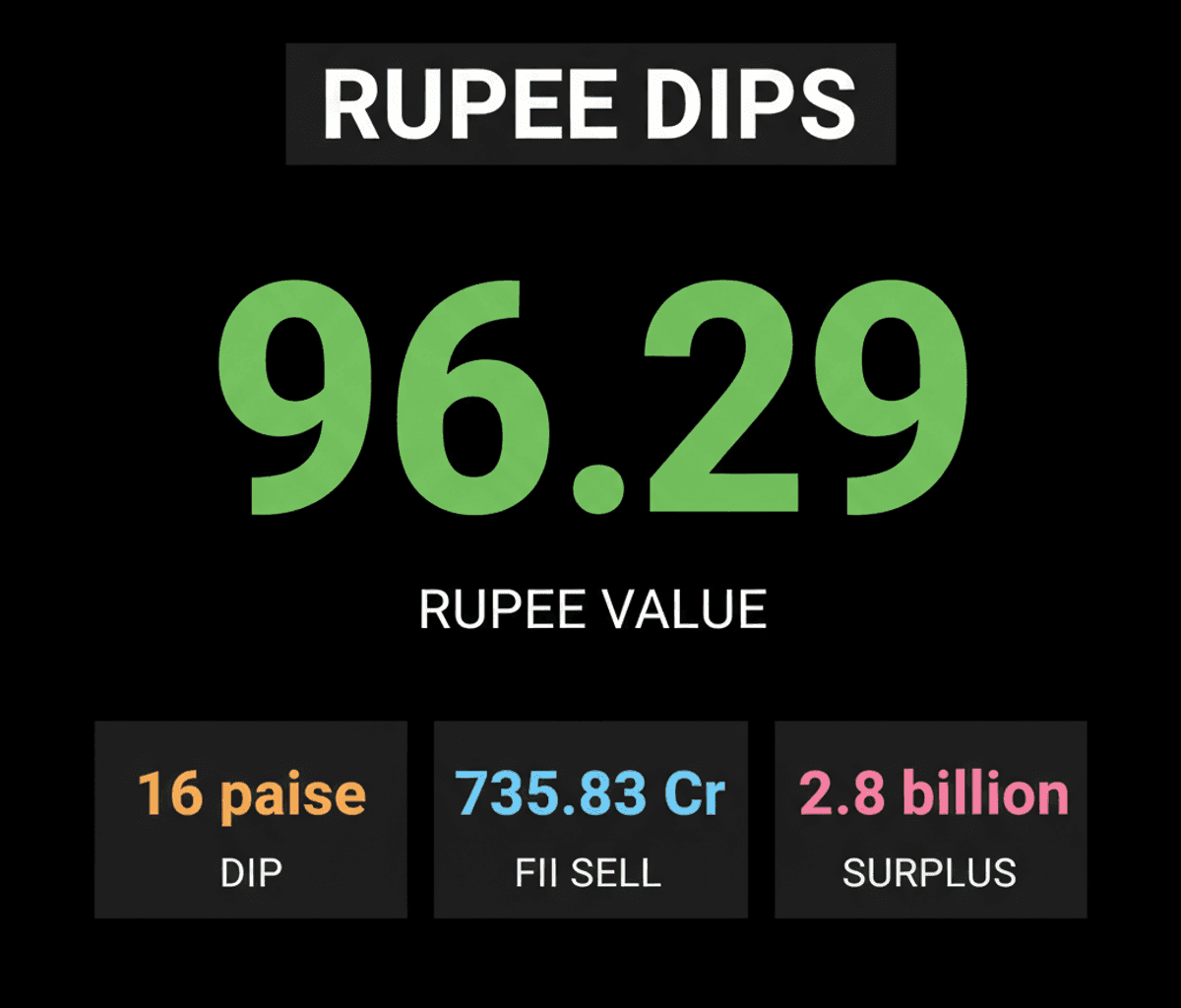
Indian Rupee weakens 16 paise due to FII outflows of ₹735 Cr, influenced by geopolitical tensions. Explore the impact on your investments.
THE PIP (TL;DR)
A dip in the rupee and FII outflows signal broader market caution, potentially affecting your international investments and overall portfolio sentiment.
- The Indian rupee fell by 16 paise to 96.29 against the US dollar on Thursday, according to provisional data.
- This depreciation was largely driven by foreign institutional investors (FIIs) selling a net ₹735.83 crore worth of securities on Wednesday, alongside geopolitical tensions in West Asia and high crude oil prices.
- While not a direct hit to your SIPs, such movements reflect a cautious market mood that can influence the overall performance of your equity and debt mutual funds.
On Thursday, the Indian rupee experienced a marginal dip against the US dollar, settling at 96.29. This 16-paise weakening from its previous close of 96.25 largely stemmed from continued capital withdrawals by foreign institutional investors (FIIs), who were net sellers, offloading securities worth ₹735.83 crore on Wednesday, as per Accord News data.
Beyond the FII activity, market sentiment was further influenced by escalating tensions in West Asia and persistently high crude oil prices, which often spark caution among global investors. However, preliminary data from the Reserve Bank of India (RBI) offered a notable counterpoint, revealing India recorded a current account (net) surplus of $2.8 billion during April-May 2026. This surplus indicates the country is earning more from its exports and services than it is spending on imports, providing a layer of underlying economic stability despite daily market fluctuations.
For your personal finances, a weakening rupee and foreign investor exits typically reflect a broader cautious outlook among international funds. While this doesn’t directly impact your rupee-denominated Systematic Investment Plans (SIPs), it can contribute to volatility in equity and debt markets, potentially influencing the Net Asset Value (NAV) of your mutual funds that hold Indian assets.
It is important to remember that such market movements are part of routine trading cycles. For instance, the corporate bond market saw demand for TMF HOLDINGS LIMITED SR A NCD 28AG26 FVRS10LAC, trading at ₹137.3334 with a 7.5500% annualized Yield to Maturity (YTM), while government securities like the 06.94 GS 2036 bond also saw significant trading volume of ₹27535.00 crore across 3002 trades.
ONE THING TO CONSIDER TODAY
Consider reviewing the international exposure within your mutual fund portfolio to understand how currency fluctuations might indirectly affect your overall returns.