Turtlemint Fintech IPO Dives 11%: Investor Caution Ahead
By Varun Mittal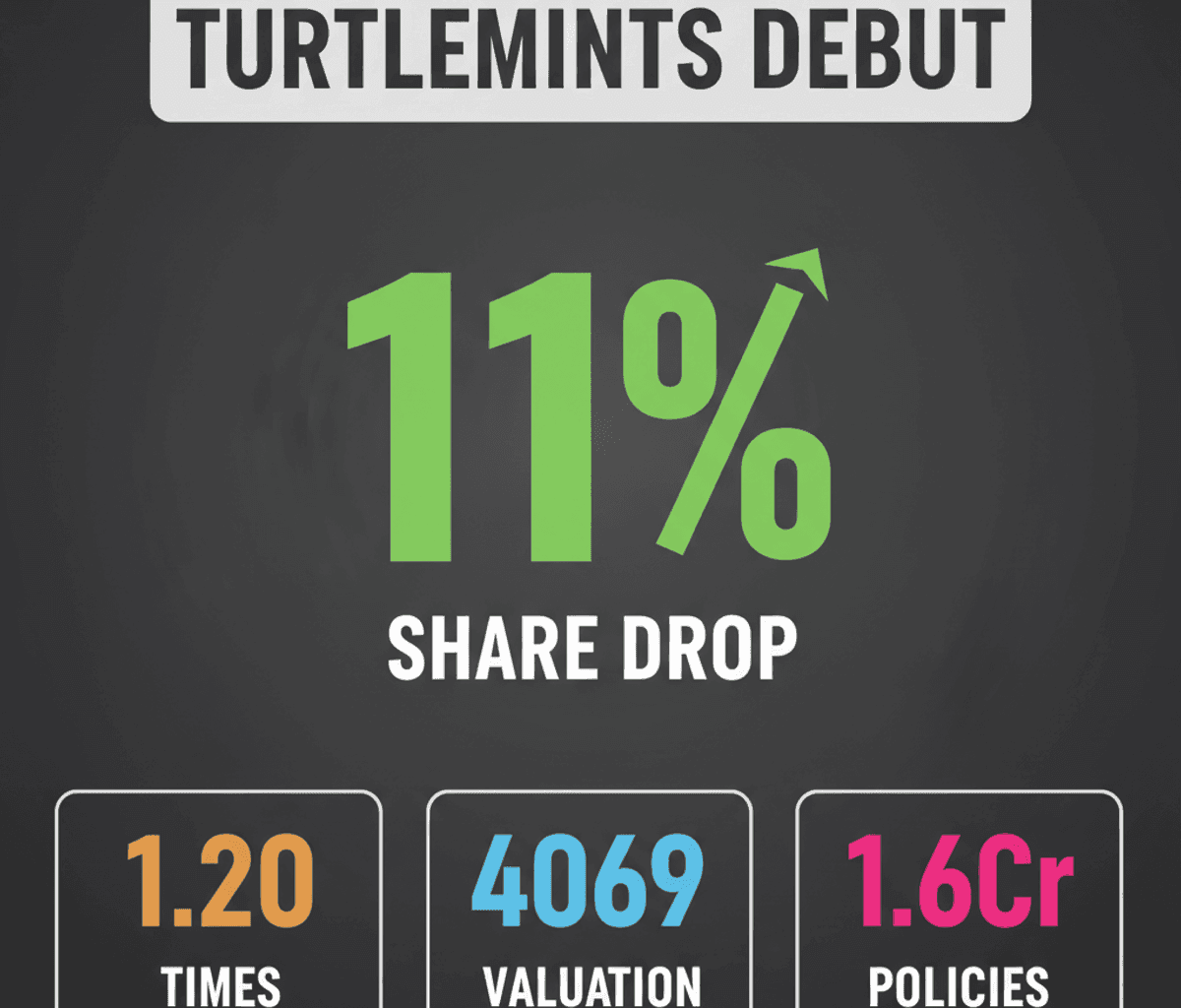
Turtlemint Fintech shares plunged over 11% on market debut, opening below IPO price. Explore what this means for investors and the fintech sector.
🔥 Main Takeaway
Turtlemint Fintech’s market debut flopped hard, with shares dropping over 11% below their IPO price, signaling investor caution despite its strong insurance tech platform.
📌 What Happened?
Shares of Turtlemint Fintech Solutions tanked over 11% on their market debut, listing at a significant discount to the Rs 152 issue price.
The stock opened on the BSE at Rs 136.20, a 10.39% decrease, and continued falling to Rs 132.15, marking a 13% discount from the issue price.
On the NSE, shares debuted at Rs 134.90, an 11.25% discount, bringing the company’s market valuation to Rs 4,069.70 crore.
The Rs 883 crore initial public offering, priced at Rs 144-152 per share, saw a lukewarm subscription rate of only 1.20 times on its final bidding day.
💰 Why It Matters
A weak listing like this signals investor apprehension, even for a fintech player in the growing insurance tech space, potentially cooling off sentiment for future IPOs.
Despite a broad network of over five lakh advisors and approximately 1.6 crore policies sold since 2015, the market seems to be pricing in concerns about profitability or competitive pressures.
The IPO proceeds were earmarked for crucial growth areas, including strengthening cloud infrastructure, covering salaries for tech teams, and funding strategic acquisitions, which are now under pressure from a lower market capitalization.
This debut could make investors re-evaluate valuations for other fintechs, especially those that haven’t demonstrated clear paths to sustained earnings.
👀 What to Watch Next
Keep an eye on Turtlemint’s next quarterly earnings to see how they leverage the IPO funds and if they can reverse market sentiment with strong operational performance.
Observe the broader fintech IPO landscape; this lukewarm reception might lead to more conservative pricing or even delayed launches for other tech startups.
Watch for any strategic moves, such as new product launches or inorganic growth initiatives through its subsidiary TIB, that could inject confidence back into the stock.