Skyroot’s Vikram-1 Launch: India’s Private Space Sector Soars
By Technology Desk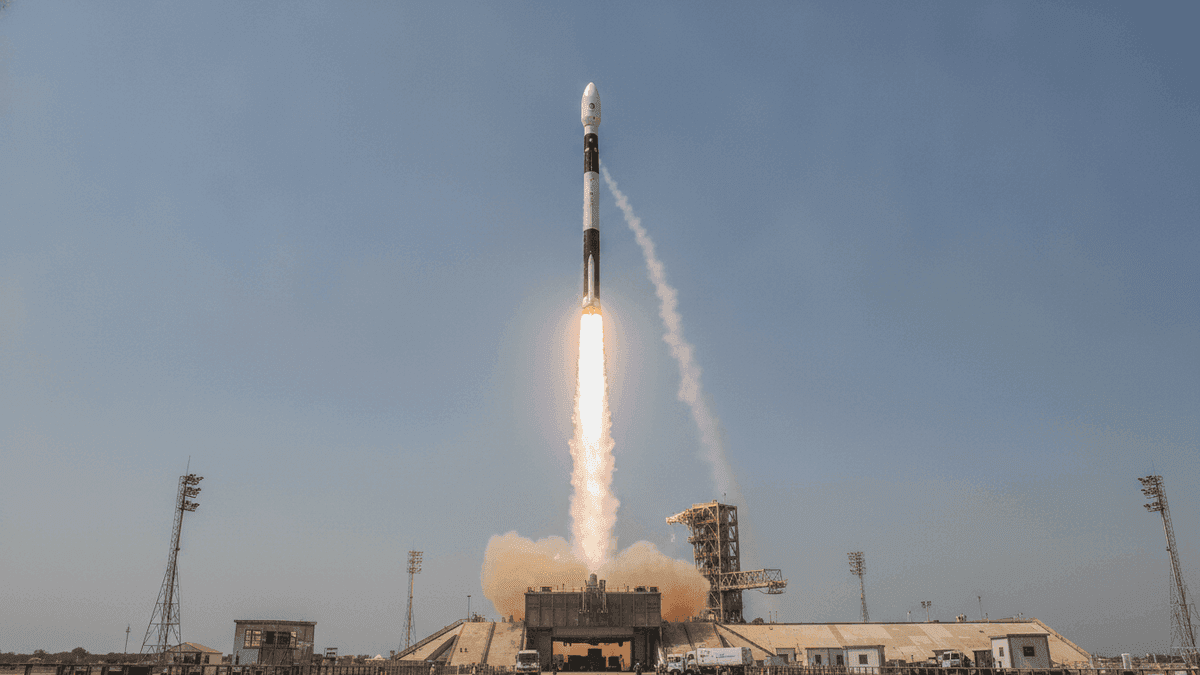
Skyroot Aerospace’s Vikram-1 rocket successfully launched, marking a monumental achievement for India’s private space sector and deploying satellites.
🔥 Main Takeaway
India’s private space-tech scene just hit a major milestone with Skyroot Aerospace’s Vikram-1, proving private companies can launch orbital rockets and opening up new investment frontiers.
📌 What Happened?
Skyroot Aerospace, an Indian startup, successfully launched its Vikram-1 rocket on ‘Mission Aagaman’ from the Satish Dhawan Space Centre in Sriharikota.
This mission placed two satellites, SCOPE and ‘Grahaa’, plus other experiments into a low-Earth orbit of about 450 km at a 60-degree inclination.
Vikram-1 is a seven-storey-tall, multi-stage, all-carbon-composite rocket, using advanced tech like 3D-printed engines and high-thrust solid-fuel motors.
India joins an elite club as only the third country globally where private companies can independently launch orbital-class rockets.
The launch was backed by crucial support from the Indian Space Research Organisation (ISRO) and IN-SPACe, a direct result of the Centre’s 2020 space-sector reforms.
💰 Why It Matters
For investors, this signals massive growth potential in India’s private space sector, attracting more venture capital funding for startups like Skyroot.
Cheaper access to space for deploying small satellites (up to 350 kg) means more innovation in communication, Earth observation, and IoT for consumers and various industries.
This success positions India as a rapidly emerging global space hub, challenging established players and creating new economic opportunities.
The use of 3D-printed engines and all-carbon-composite structures highlights cutting-edge manufacturing and technological prowess in the space tech arena.
👀 What to Watch Next
Skyroot plans its Vikram-2 rocket for a maiden flight targeted for 2027, aiming to carry heavier payloads of up to 1,000 kg to low-Earth orbit, which could further boost its market position.
Keep an eye on developments in their fully reusable launch vehicle program, designed to drastically cut the cost of accessing orbit and make space more accessible.
Expect increased private and public investment in Indian space startups as this mission validates the sector’s potential and encourages further innovation.