AI’s Environmental Impact: UN Pushes for Transparency
By Sivam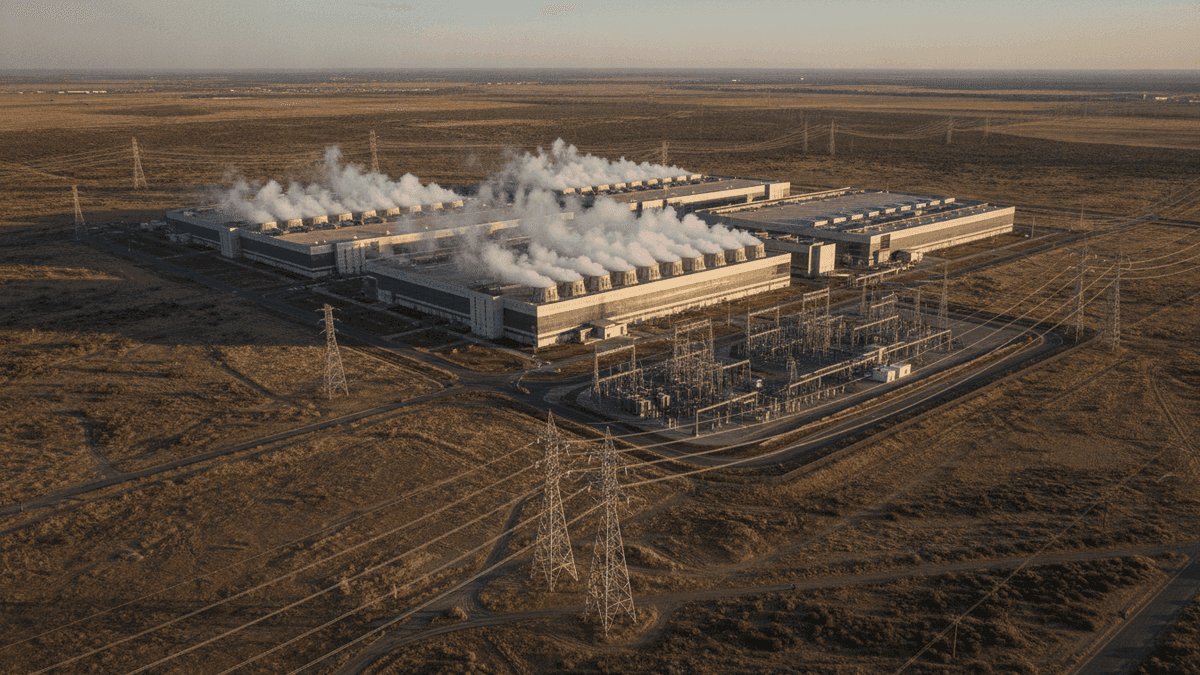
UN Secretary-General Guterres demands AI firms disclose their environmental footprint, highlighting data centers’ massive resource consumption.
The Structural Imperative for AI Environmental Transparency
The burgeoning field of artificial intelligence, while promising transformative solutions across industries, is simultaneously creating a significant, often unacknowledged, environmental footprint. UN Secretary-General António Guterres recently underscored this structural tension, launching a critical initiative to compel AI companies to disclose the full ecological impact of their operations. This push, articulated during London Climate Action Week, highlights that the physical infrastructure underpinning AI — particularly its data centers — consumes resources on a scale that rivals, and in some cases surpasses, the demands of entire nations.
This is not merely an incidental side effect; it is a direct consequence of the first-principles mechanics of computation. Every algorithm, every training run, every inference requires energy. As AI models grow in complexity and pervasiveness, the aggregate demand for processing power escalates exponentially, translating into a proportional increase in the demand for electricity, water for cooling, and physical land for these vast server farms. The current lack of comprehensive disclosure creates a market externality, where the true costs of AI development are not fully accounted for, obscuring the sector’s material impact on planetary resources.
The Anatomy of AI’s Resource Demands
Data centers are the physical manifestation of AI’s computational needs, operating continuously to support training, refinement, and inference processes. This 24/7 operational demand translates into a substantial baseline energy draw, a fundamental component of the AI cost structure. The primary energy consumption arises from the sophisticated processing units—GPUs and specialized AI chips—which generate immense heat during operation. Managing this heat necessitates extensive cooling systems, often consuming as much, if not more, electricity than the computing hardware itself. The efficiency of these cooling mechanisms directly dictates the overall energy footprint of an AI facility.
Beyond direct electricity consumption, the upstream environmental impact of power generation represents another critical dimension. If data centers draw power from grids heavily reliant on fossil fuels, their carbon emissions scale directly with their energy use. Furthermore, many power plants, particularly thermal power stations, require vast quantities of water for their cooling processes, thereby linking AI’s electricity demand to broader regional water scarcity challenges. This complex interdependency illustrates how technological advancement in one domain can exert pressure on multiple environmental fronts, necessitating a holistic view of its resource intensity.
Land use also emerges as an often-overlooked environmental consideration. Large-scale data centers demand significant physical footprints for their facilities, associated power infrastructure, and extensive cooling apparatus. This land, which could otherwise be utilized for agricultural purposes, biodiversity conservation, or community development, represents a direct opportunity cost. The “AI Environmental Transparency Initiative” spearheaded by Secretary-General Guterres is designed precisely to address these multifaceted impacts. By mandating firms to measure and report their carbon, water, and land footprints, the initiative seeks to internalize these previously externalized environmental costs, making the sector’s true resource intensity visible to stakeholders and policymakers alike.
Quantifying the Unseen Footprint
The scale of this structural challenge is formidable, as illuminated by a recent report from the UN University Institute for Water, Environment and Health. This analysis reveals that existing environmental assessments frequently overlook significant aspects beyond the carbon emissions directly associated with model training. Instead, a more comprehensive view must encompass the substantial water and land footprints tied to electricity generation and the continuous cooling requirements of data centers. The report’s projections paint a stark picture of AI’s future resource demands.
By 2030, global AI data centers are estimated to consume an astonishing 945 terawatt-hours of electricity annually. To provide context, offsetting the carbon emissions from such energy consumption would necessitate the equivalent of planting 6.7 billion trees. Furthermore, the water consumed by these operations would equal the basic needs of approximately 1.3 billion people residing in sub-Saharan Africa. From a land perspective, the physical infrastructure required could occupy an area exceeding 14,500 square kilometers. These figures are not mere statistics; they represent a significant structural externality, demanding systemic changes in how AI infrastructure is planned, powered, and regulated.
Navigating the Dual Nature of AI
It is crucial to acknowledge the counter-narrative: AI’s profound potential to contribute to climate solutions. AI can optimize energy grids, enhance climate modeling, improve agricultural efficiency, and accelerate the development of new sustainable materials. This capacity to drive positive environmental change is often the primary focus of public and industry discourse, creating a perception that AI is inherently a force for good in the climate fight. This perspective, while valid in its assessment of AI’s capabilities, frequently overlooks the foundational resource demands that enable these very solutions.
What many often fail to fully grasp is that the efficacy of AI as a climate solution is intrinsically linked to the sustainability of its own operational footprint. If the technology designed to solve climate problems simultaneously exacerbates resource depletion and emissions through its infrastructure, the net benefit becomes questionable. The challenge, therefore, lies in balancing AI’s immense potential for positive impact with a rigorous, first-principles approach to managing its own environmental costs. Achieving this balance requires a shift from viewing AI purely as a computational tool to recognizing it as a critical component of global infrastructure with inherent material and energy dependencies.
Policy Responses and the Path to Sustainable AI
The growing awareness of AI’s environmental impact is now catalyzing policy responses globally, reflecting a structural pattern of governance attempting to internalize these externalities. The European Union, for instance, is actively developing minimum energy-efficiency standards and a sustainability label specifically for data centers. This regulatory approach aims to drive innovation towards more efficient hardware and operational practices, ensuring that the growth of AI infrastructure aligns with broader environmental objectives. Such standards provide a clear framework for industry players, signaling a long-term commitment to sustainable digital development.
Concurrently, in the United States, local communities have increasingly voiced opposition to new data center projects, leading to delays and outright prohibitions. These community-level concerns are directly rooted in environmental worries, particularly regarding water consumption and the strain on local power grids. This bottom-up pressure complements top-down regulatory efforts, creating a multi-faceted push for greater accountability. Secretary-General Guterres’s call for all major AI companies to commit to powering their data centers exclusively with renewable energy by 2030 serves as a powerful, time-bound objective, aiming to decouple AI’s growth from fossil fuel dependence.
Transparency, as Guterres emphasized, is not merely a bureaucratic requirement; it is fundamental for informed decision-making. Communities need accurate data to assess the real-world implications of infrastructure built in their vicinity. Similarly, investors and policymakers require clear, standardized reporting to guide capital allocation and regulatory frameworks towards more sustainable AI development. This collective push for disclosure, efficiency, and renewable energy integration signifies a critical turning point. As AI continues its inexorable expansion, the structural imperative is clear: its advancement must be inextricably linked with a commitment to environmental stewardship, embedding sustainability into its core from first principles rather than treating its impact as an afterthought.