

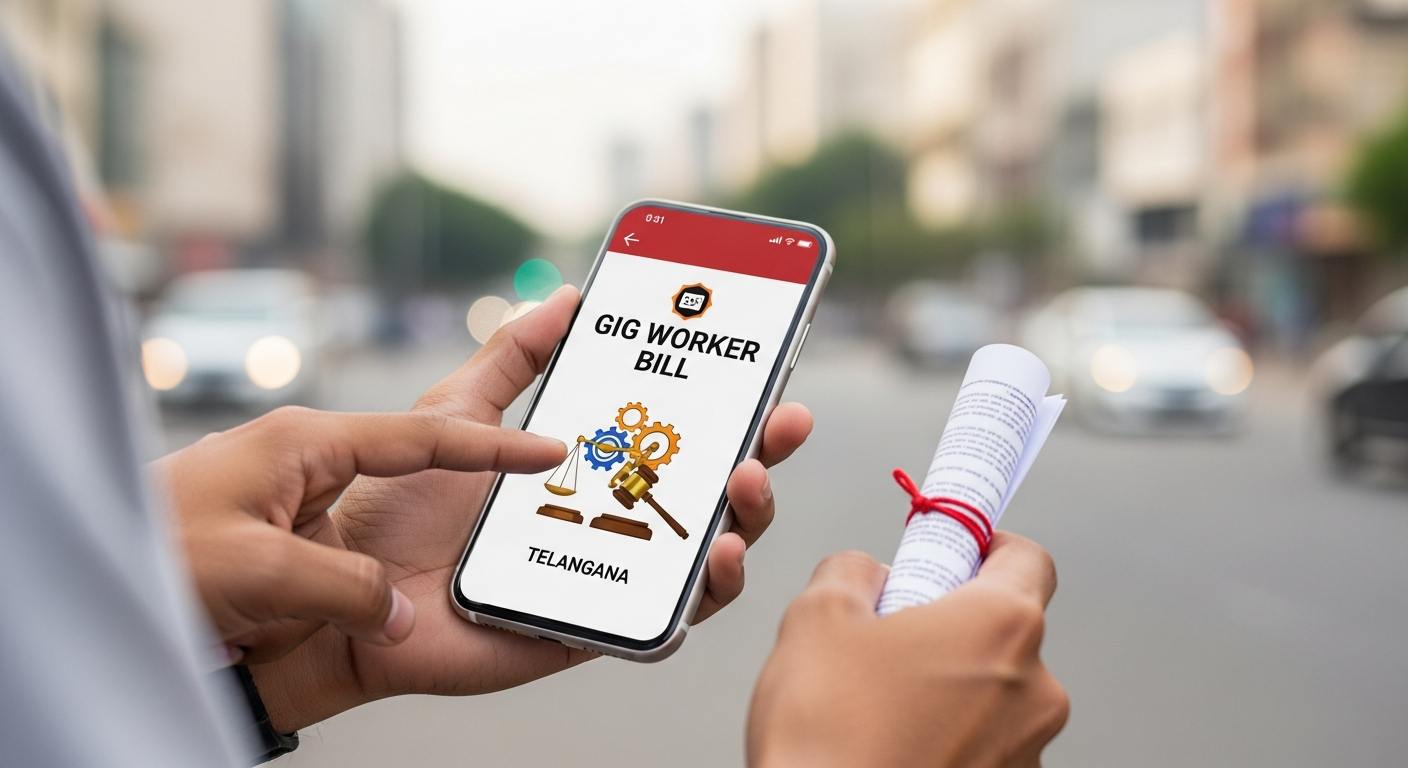







The air in Hyderabad hangs thick, a familiar mix of exhaust and anticipation. It’s a fitting backdrop for the debate swirling around Telangana’s draft Gig Workers’ Bill. The bill, announced recently, is the latest attempt to address the precarious working conditions of the state’s burgeoning gig economy. But will it be a game-changer, or another well-intentioned effort that gets bogged down?
The core issue is straightforward. Gig workers – the delivery drivers, the freelance coders, the on-demand service providers – often lack basic protections. No minimum wage, no benefits, no recourse when disputes arise. Telangana, like other states and countries, is grappling with how to regulate this rapidly evolving landscape. The draft bill, as reported by Inc42 Media, aims to provide a framework for these workers. It’s a complex undertaking, a legal and social tightrope walk.
I spoke with a delivery driver, Shiva, near the bustling Gachibowli area. He works for multiple platforms, averaging twelve hours a day. He pointed to his worn-out shoes and said, “We’re always on the move, always hustling. One wrong turn, one missed delivery, and you lose money.” His words echoed the concerns of many, a stark contrast to the promises of flexibility and autonomy often touted by gig platforms.
The bill proposes several measures, including the establishment of a welfare board and provisions for social security. These are crucial steps. The devil, as always, is in the details. How will the board be funded? What mechanisms will be put in place to ensure enforcement? These are the questions that will determine the bill’s success.
One of the key challenges is defining the ‘gig worker’ itself. The lines are blurred. Are they employees? Independent contractors? The legal classification has significant implications for rights and responsibilities. “The government needs to ensure that the definition is inclusive and doesn’t leave anyone behind,” said a labor lawyer, requesting anonymity due to the sensitivity of the issue. This uncertainty can lead to exploitation.
The Telangana government is not alone in tackling this problem. Other states and countries have experimented with different approaches. California’s Proposition 22, for example, attempted to create a ‘third category’ of worker, a move that was met with mixed reactions. The stakes are high. Get it wrong, and the bill could become another exercise in bureaucratic inertia. Get it right, and Telangana could set a precedent for other regions.
The real test will be in the implementation. Will the bill translate into tangible improvements in the lives of gig workers? Or will it become another piece of paper, gathering dust in the halls of power? The answer, as the sun sets over Hyderabad, remains uncertain. But the conversation, at least, has begun.