New Passive Funds: Tata Multi-Sector & HDFC Auto Index
By Sivam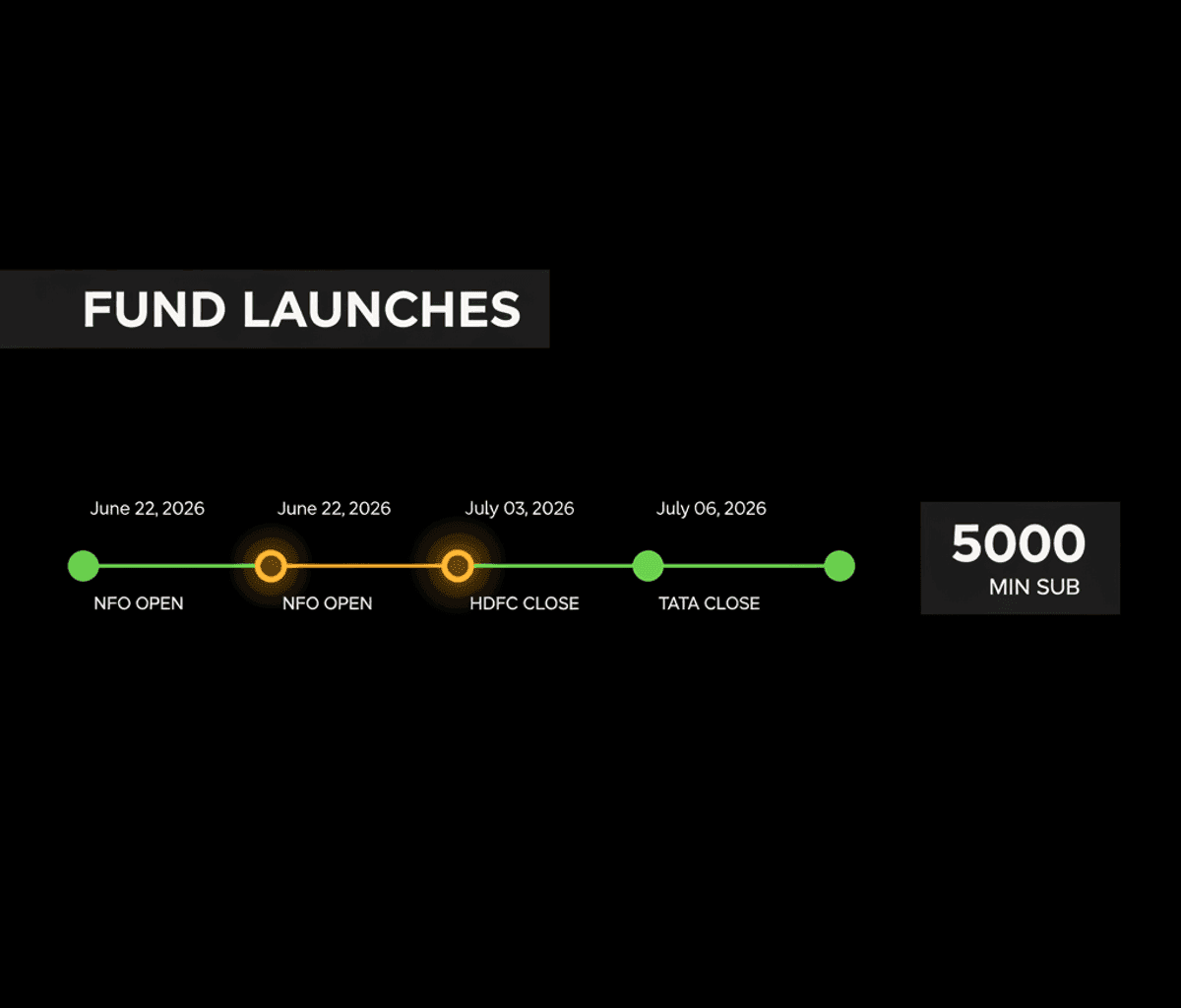
Tata Mutual Fund launches a Multi-Sector Passive FOF, while HDFC Mutual Fund introduces a Nifty Auto Index Fund, offering new passive investment options.
THE PIP (TL;DR)
These new passive fund offerings mean more straightforward ways to diversify your portfolio across sectors or specific themes.
- Tata Mutual Fund introduced a Multi Sector Passive Fund of Fund, while HDFC Mutual Fund launched a Nifty Auto Index Fund.
- Both funds aim to offer focused or diversified passive investment opportunities.
- This expands options for investors seeking low-cost, index-tracking exposure to different market segments.
Two major fund houses, Tata Mutual Fund and HDFC Mutual Fund, have rolled out new passive fund offerings, expanding the choices available for investors. Tata Mutual Fund unveiled the Tata Multi Sector Passive FOF, an open-ended fund of fund designed to invest in various passive equity mutual fund schemes across multiple sectors. Concurrently, HDFC Mutual Fund introduced the HDFC Nifty Auto Index Fund, an open-ended scheme that will track the NIFTY Auto Total Return Index (TRI).
The New Fund Offer (NFO) for the Tata Multi Sector Passive FOF opened for subscription on June 22, 2026, and will close on July 06, 2026. This fund requires a minimum subscription of Rs 5,000, and its performance will be benchmarked against the Nifty 500 Index (TRI). While there is no entry load, an exit load of 0.50% applies if units are redeemed within 30 days of the allotment date.
Meanwhile, the HDFC Nifty Auto Index Fund’s NFO also commenced on June 22, 2026, and will conclude on July 03, 2026. This fund offers a lower minimum subscription amount of Rs 100 and carries no entry or exit load. It aims for passive investment by replicating the Nifty Auto Index (TRI), against which its performance will be measured.
For you, the investor, these launches present opportunities to gain exposure to broad market segments or specific sectors like automotive through a passive investment strategy. Passive funds, such as these index funds and fund of funds, typically aim to mirror the performance of their underlying index rather than actively trying to beat it, often resulting in lower expense ratios compared to actively managed funds. This can be a straightforward way to add diversification or targeted exposure to your investment portfolio.
ONE THING TO CONSIDER TODAY
Consider reviewing your current investment portfolio to see if adding passive exposure to multiple sectors or a specific growth sector like auto aligns with your long-term financial goals and existing diversification strategy.