India’s Reservoirs at 44% Capacity: Monsoon Deficit Hits Agriculture
By ThePip Desk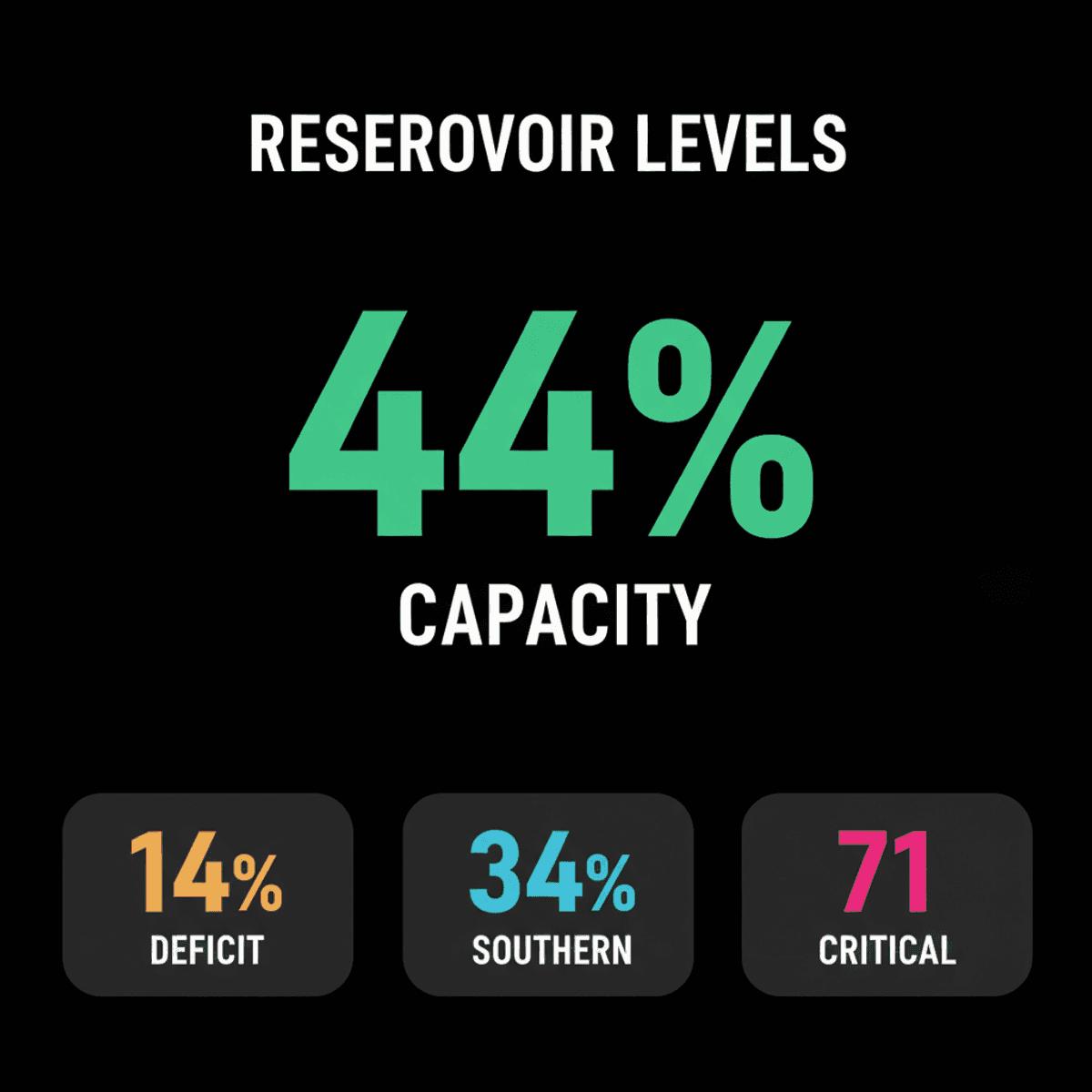
India’s 166 major reservoirs are at 44% capacity due to a 14% monsoon deficit, severely impacting agriculture and power generation. Water stress critical in southern regions.
India’s major reservoirs collectively hold only 44% of their total capacity as of July 31, 2026. This significant reduction, amounting to 81.479 billion cubic meters (BCM) out of 183.565 BCM across 166 major reservoirs, stems from a persistent South-West monsoon deficit.
The monsoon deficit currently stands at 14% below normal levels. This follows a more severe 37% deficit recorded in June, despite a brief revival observed since then.
Regional Disparities and Critical Stress
Regional data reveals stark differences in water storage across the country. The western region is the only area where reservoirs exceed 50% capacity.
In sharp contrast, the southern region faces critical water stress, with its reservoirs at a mere 34% capacity. A total of 71 reservoirs nationwide are filled to less than 40% of their potential.
Economic Implications for Key Sectors
These low water levels directly impact the agricultural sector’s irrigation capabilities, crucial during the Kharif sowing season. Hydroelectric power generation also suffers from the reduced water availability.
The ongoing monsoon deficit further strains the rural economy, potentially increasing reliance on groundwater. This reliance poses long-term sustainability risks for agricultural yields across the country.
Outlook and Market Watch
Market attention is now firmly fixed on the monsoon’s performance during August and September. Meteorological forecasts indicate a deep depression forming over central India, which could deliver much-needed heavy rainfall.
Investors are advised to closely monitor how these rainfall patterns will influence specific companies. Regional power distribution companies, agriculture-input firms, and Fast-Moving Consumer Goods (FMCG) companies with significant exposure to rural demand are particularly vulnerable.
A continued rainfall deficit would likely lead to higher irrigation and power costs. This scenario could negatively impact the profit margins of businesses heavily reliant on the rural market, underscoring the monsoon’s broader economic significance.