Indian Destination Weddings to Hit 32% Market Share by 2028
By Business Desk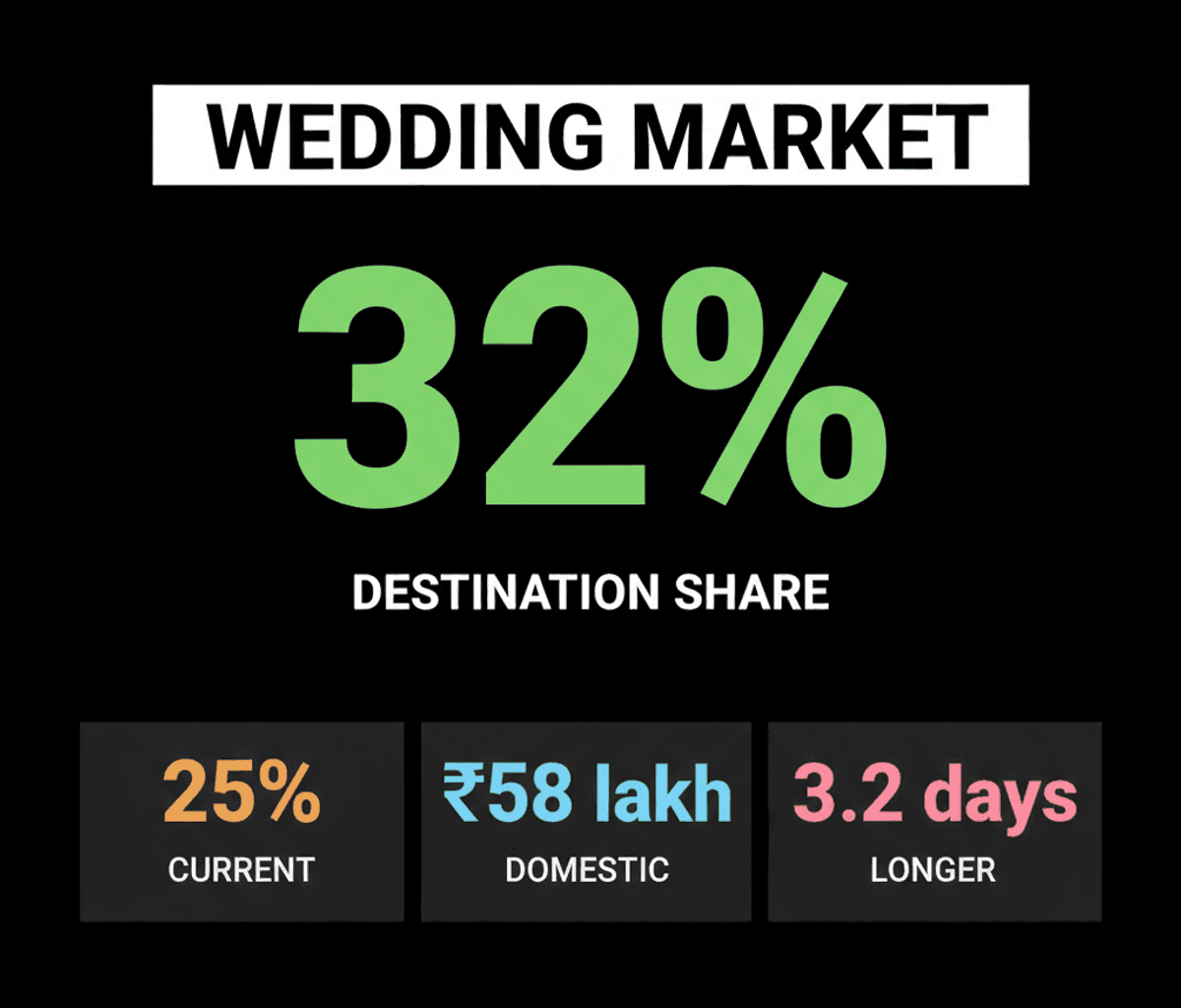
Indian destination weddings are booming, projected to capture 32% of the market by 2028. Discover the trends driving this growth and rising costs.
Planning a wedding in India? Get ready for more intimate, experience-focused celebrations that are increasingly taking you out of town. Destination weddings are transforming the Indian wedding scene, set to capture a significant portion of the market.
The share of destination weddings is projected to reach 32% of the total wedding market by 2028, up from its current 25%. This shift reflects a growing preference among couples for unique, memorable events over traditional large gatherings.
The Cost of Saying “I Do”
These dream weddings come with a higher price tag, reflecting the demand for curated experiences.
- Average domestic destination wedding cost has risen by 8% year-over-year.
- Domestic events now average ₹58 lakh.
- International events frequently exceed ₹1.5 crore.
- Celebrations are also getting longer, averaging 3.2 days.
This surge in spending is driven by demand for high-value services like wellness activities, curated dining options, and immersive guest experiences. Couples are seeking to make their special days last longer and feel more exclusive.
Where Couples are Heading
When choosing a location, proximity plays a big role for couples. Nearly 50% of them prefer destinations that are accessible within a two to four-hour flight.
This preference for accessible locations is significantly boosting certain international spots.
- Sri Lanka is seeing increased interest from luxury wedding planners.
- Its strong hospitality infrastructure and geographical closeness to India are key attractions.
- Bookings for Sri Lankan venues are projected to grow by 20% to 25% annually.
What This Means for Businesses
The expansion of destination weddings presents clear opportunities for businesses in the luxury hospitality sector. Hotel chains in popular hubs and specialized event management companies are set to benefit from sustained demand.
However, these providers also face challenges, including managing rising costs for premium logistics and high-end vendor coordination. The industry remains sensitive to economic shifts, meaning consumer sentiment could impact spending and guest lists.
The ability of hospitality firms to maintain profit margins while scaling to accommodate these increasingly complex and longer events will be a key factor to watch.