India-UK Trade Deal: Tariffs Aren’t Enough, Readiness is Key
By ThePip Desk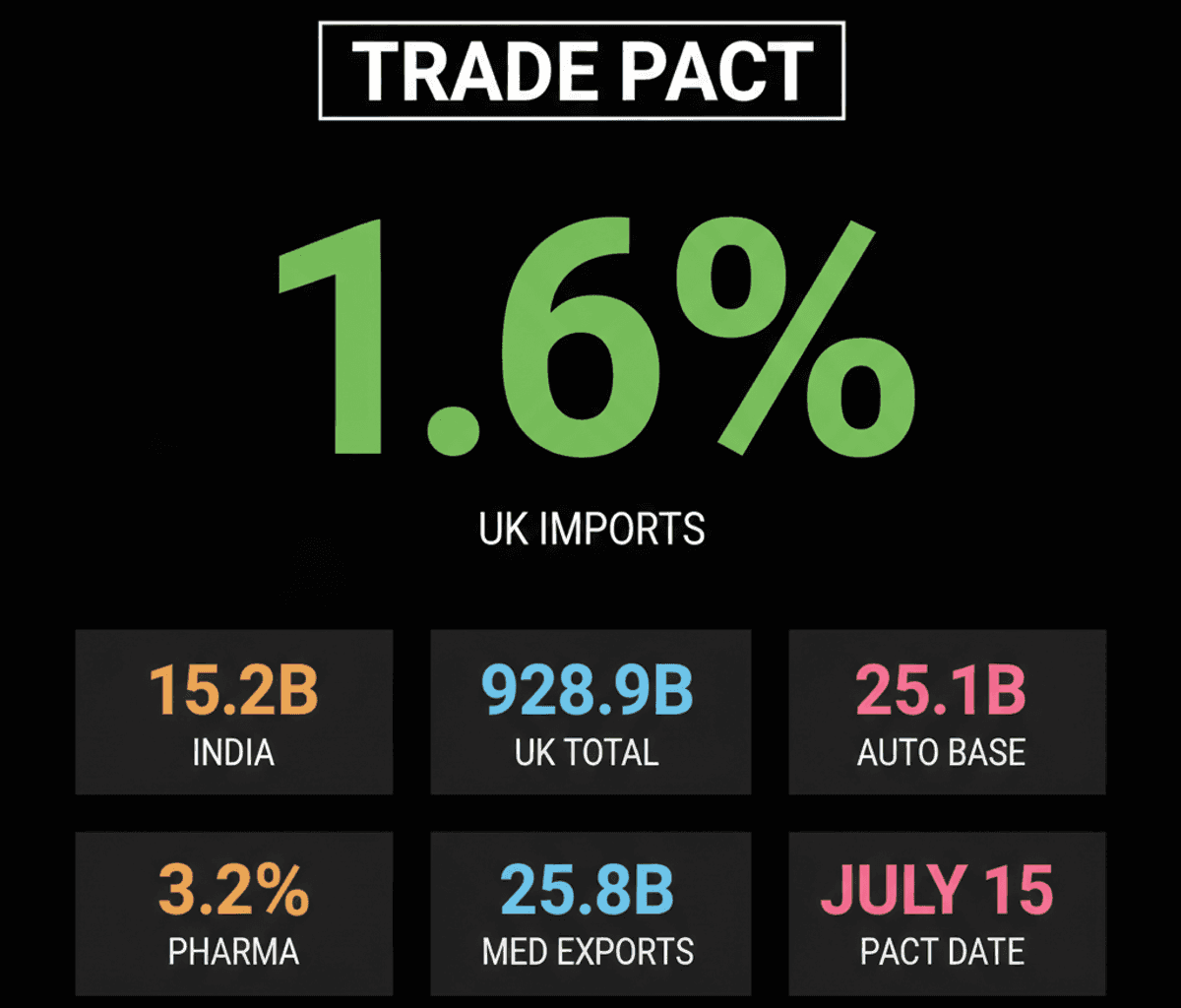
India’s July 15 UK trade pact offers tariff cuts, but GTRI stresses readiness in certification, logistics, and networks is vital for export success.
The impending free trade agreement between India and the United Kingdom, slated for July 15, presents a classic case study in market access versus market readiness. While tariff concessions open the door, India’s ability to convert this opportunity into substantial export gains fundamentally hinges on its internal infrastructure: robust certification systems, advanced testing facilities, streamlined logistics, and integrated buyer networks. The Global Trade Research Initiative (GTRI) underscores that without these foundational improvements, the pact’s full potential will remain largely untapped.
Beyond Tariffs: The Structural Imperative
A trade agreement, at its core, is a framework designed to reduce friction for goods and services crossing borders, primarily through tariff elimination. However, as the GTRI’s analysis highlights, this mechanism is merely one component of unlocking global trade value. The durable lesson for emerging economies like India is that market access, while crucial, often yields to the structural realities of domestic supply chains and adherence to international standards. This distinction between policy-level access and ground-level operational capacity defines the true ceiling of any bilateral trade relationship.
India’s Readiness Deficit: An Empirical View
GTRI founder Ajay Srivastava pointed to specific areas where India must bridge its readiness gap. For instance, food exporters require significant enhancements in traceability and strict compliance with British food-safety standards. Similarly, manufacturers in the automobile and machinery sectors face an imperative to secure superior certifications and cultivate stronger technological and buyer connections. Srivastava’s assertion that India’s responsibility lies in transforming access into tangible exports encapsulates this challenge, moving beyond the simplistic view that reduced tariffs automatically equate to increased trade.
Sectoral Evidence and Underlying Barriers
The data reinforces this structural perspective. India’s overall contribution to Britain’s global imports in 2025 was a modest 1.6%, accounting for $15.2 billion out of the UK’s total $928.9 billion. This low penetration is not uniformly driven by tariffs. Indian automobile exporters, despite a global base of $25.1 billion, hold a negligible presence in the UK market, primarily due to the stringent rules-of-origin and technical requirements. The pharmaceutical sector, a global powerhouse with $25.8 billion in medicine exports, faces regulatory approvals as a more significant impediment than tariffs, capturing only about 3.2% of Britain’s import demand.
Furthermore, some sectors, even with tariff relief, confront inherent structural limitations. GTRI cautioned that iron and steel, for example, could see limited upside due to the UK’s existing safeguard measures and quota restrictions, which function as non-tariff barriers. Similarly, India’s alcohol and wine exports remain a small fraction of its global sales, not because of prohibitive tariffs, but due to a weak scale of production and underdeveloped brand recognition in international markets. These examples illustrate that the “cost of entry” into a new market extends far beyond customs duties.
Cultivating Competitive Advantage Beyond Price
The path to capitalizing on the UK trade pact, therefore, requires a strategic shift. India must proactively invest in upgrading its quality control, standardisation, and logistical frameworks to align with global benchmarks. This means developing a robust ecosystem that supports product certification, ensures supply chain integrity, and facilitates seamless integration with international buyer networks. The anticipated benefits in sectors like garments, textiles, leather, footwear, processed foods, and seafood are precisely where India already possesses strong production capabilities and where these non-tariff barriers are more manageable or already addressed.
Ultimately, the India-UK trade pact serves as a potent reminder that economic agreements are rarely silver bullets. Their efficacy is deeply intertwined with a nation’s internal capacity to meet global standards and navigate complex supply chain dynamics. For policymakers and industry leaders, the enduring lesson is clear: true trade advantage is built not just on negotiated access, but on the relentless pursuit of operational excellence and an unwavering commitment to quality and compliance. When evaluating the impact of any new trade agreement, it is crucial to consider whether the participating economies have adequately addressed the underlying structural requirements that convert policy into prosperity.