India’s ₹9 Lakh Crore Textile Export Goal: Value-Driven Strategy
By ThePip Desk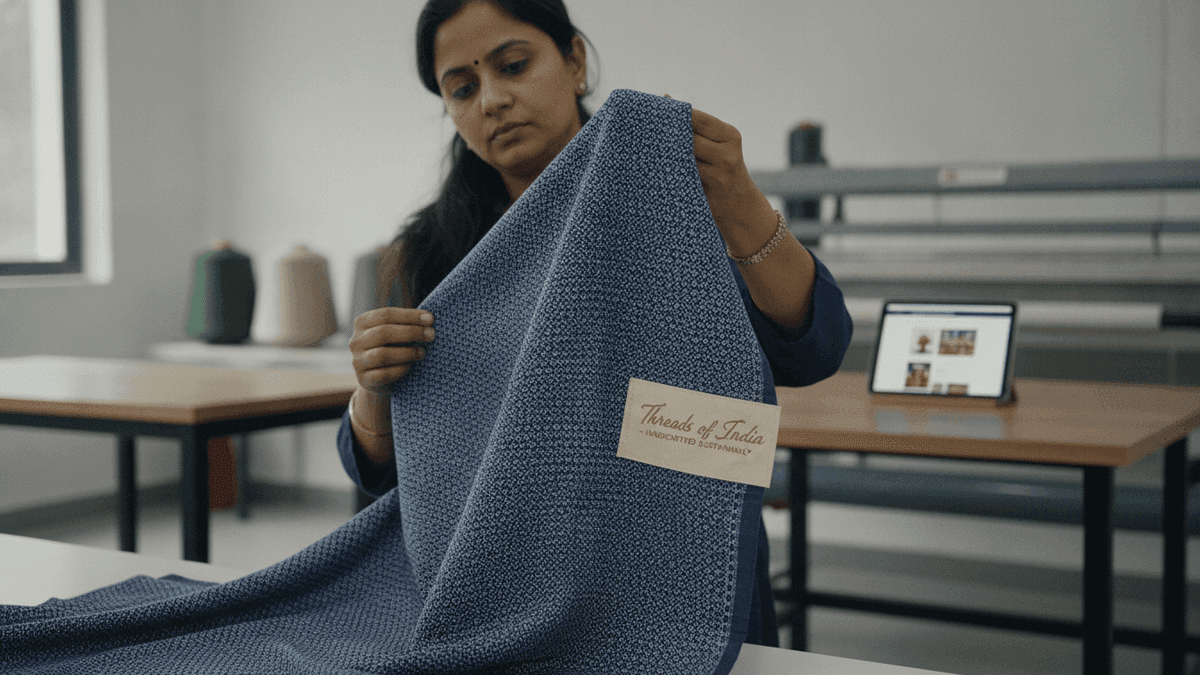
India targets ₹9 lakh crore textile exports by 2030, focusing on sustainable, brand-led manufacturing to boost global competitiveness and value.
India’s textile sector is embarking on an ambitious structural transformation, targeting ₹9 lakh crore in exports by 2030. This represents a substantial increase from the projected ₹3.16 lakh crore for the 2025-26 fiscal year, signaling a clear intent to move beyond raw material volume towards higher-value propositions. Union Minister Giriraj Singh has confirmed this strategic pivot, which prioritizes the establishment of recognizable international lifestyle and textile brands, blending India’s rich heritage with contemporary demands for sustainability and digital integration.
The core mechanism driving this shift is a recognition that sustainable competitive advantage in global markets no longer rests solely on cost, but increasingly on brand equity and ethical production. To achieve this, the strategy extends beyond simply increasing production. It involves fostering stronger Indian designer houses and investing significantly in shared infrastructure. This infrastructure is crucial for enabling smaller manufacturers, traditionally hampered by fragmented supply chains, to compete effectively on an international scale by reducing costs and mitigating delays.
A critical component of this value chain transformation involves adapting to evolving retail dynamics. The growth of Indian textiles in modern retail is now inextricably linked to robust e-commerce and sophisticated omnichannel strategies. Manufacturers must seamlessly integrate online marketplaces into their existing production models, a complex operational challenge that demands technological investment and process re-engineering. This digital pivot is not merely an optional enhancement but a foundational requirement for market access and growth.
Furthermore, the global competitive landscape imposes stringent environmental standards, particularly in key markets like Europe and North America. Sustainability is no longer a differentiator but a mandatory prerequisite for market entry. Companies failing to adopt eco-friendly production processes face the dual risk of market exclusion and diminished competitiveness. This regulatory pressure necessitates a fundamental shift in manufacturing practices across the sector, moving towards more sustainable materials and processes to ensure long-term viability.
However, the path to the 2030 target is fraught with structural challenges. Intense competition from countries such as Vietnam and Bangladesh, which often benefit from lower production costs and advantageous trade agreements, exerts continuous pressure on pricing and margins. The sector also grapples with inherent vulnerabilities to fluctuations in raw material prices. Consequently, the industry’s ability to maintain profit margins will depend on its successful transition towards higher-value products and services, where brand and quality can command a premium.
For this structural shift to materialize, the mentorship of smaller creative designers by larger, established exporters will be paramount. This collaborative approach is essential for ensuring consistent quality, fostering innovation, and successfully building global brands that resonate with international consumers. The durable takeaway for stakeholders is that the future of India’s textile exports hinges on a holistic re-imagination of its value proposition, driven by branding, digital integration, and unwavering commitment to sustainability, rather than a mere expansion of existing capacities.