India-Panama Ties: Geoeconomic Diversification & Corridor Access
By ThePip Desk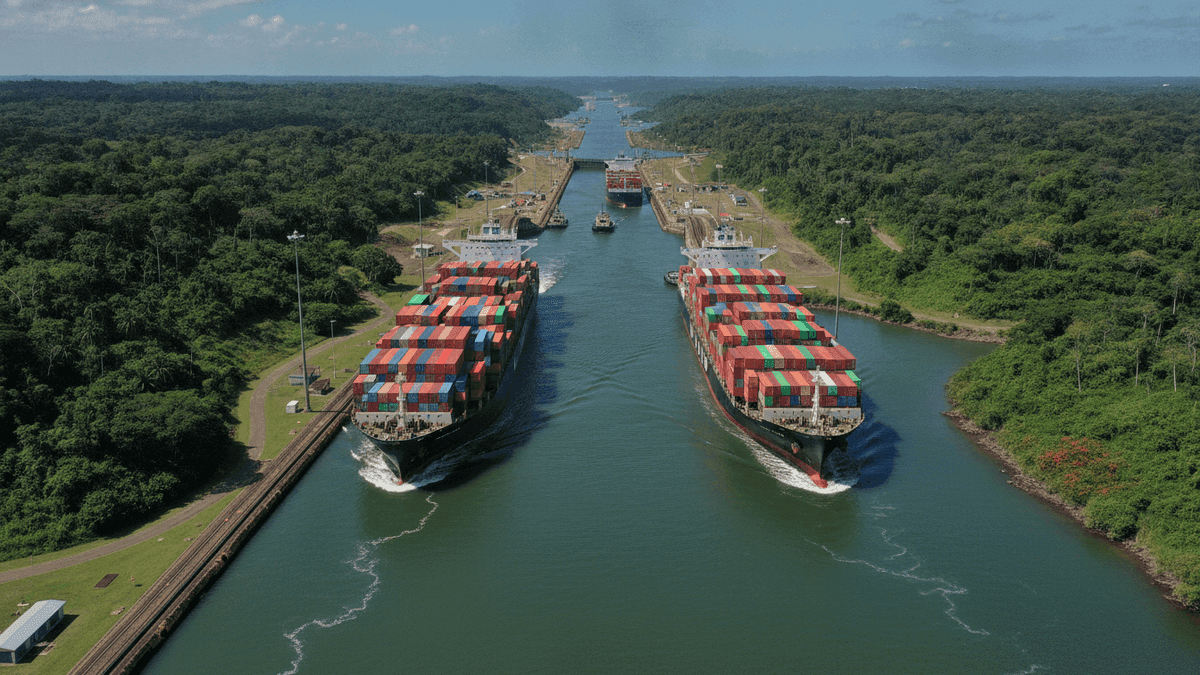
Explore India’s strategic outreach to Panama, focusing on geoeconomic diversification, vital corridor access, and strengthening global partnerships.
External Affairs Minister S. Jaishankar recently articulated India’s clear intent to forge ‘closer ties’ and broaden ‘economic partnership’ with Panama, describing the Central American nation as a ‘strategically located and economically stable partner.’ This diplomatic engagement, unfolding during the official visit of Panama’s Minister for Foreign Affairs, Javier Martínez-Acha Vasquez, from July 19 to 23, underscores a discernible pattern in India’s global strategy: the deliberate cultivation of relationships with geographically pivotal nations to diversify economic corridors and enhance geopolitical influence.
This approach is rooted in the first-principles understanding of geoeconomic integration. In a globalized yet increasingly fragmented world, securing diverse trade routes and fostering resilient partnerships becomes paramount. Panama, with its iconic canal, represents a critical nexus for global maritime trade, offering India not just bilateral opportunities but also enhanced access to broader Latin American markets and a strengthened position in the Western Hemisphere. The stated appreciation for Panama’s interest in expanding cooperation across education, scholarships, pharmaceuticals, technology, and, most importantly, trade, serves as qualitative evidence of this multi-faceted strategic alignment.
The Framework of Strategic Corridor Development
India’s engagement with Panama can be framed within the context of ‘Strategic Corridor Development.’ This framework posits that nations actively seek to establish and secure pathways for economic exchange, resource flow, and diplomatic influence, often through bilateral agreements with countries that control critical choke points or offer unique market access. While the immediate trade volumes with Panama may not rival those with India’s primary partners, the long-term structural advantage of establishing a firm foothold in such a strategically significant region cannot be overstated.
The emphasis on sectors like pharmaceuticals and technology reflects a deeper analytical intent. Pharmaceuticals represent a sector where India holds significant global leadership, offering a pathway for South-South cooperation and market penetration into new geographies. Technology collaboration, similarly, aligns with India’s digital public infrastructure initiatives and its burgeoning tech ecosystem, positioning it as a development partner rather than merely a trade partner. This nuanced approach builds durable relationships that transcend transactional exchanges, cementing long-term trust and mutual benefit.
A common misinterpretation of such diplomatic initiatives is to view them in isolation or solely through the lens of immediate quantifiable trade figures. However, what this perspective often overlooks is the cumulative strategic value these partnerships generate over time. Each bilateral agreement, particularly with a ‘strategically located’ partner like Panama, contributes to a robust network that enhances India’s global supply chain resilience, diversifies its export markets, and expands its diplomatic footprint, thereby mitigating risks associated with over-reliance on a few dominant corridors or partners.
The confidence expressed by Minister Jaishankar that the Panamanian foreign minister’s visit would further strengthen relations is not merely diplomatic pleasantry. It reflects an understanding that these engagements are foundational elements in a larger, long-term strategy for global economic integration. For the informed observer, this pattern signals a systemic shift towards a more distributed and resilient global economic architecture, where emerging economies actively shape their own corridors of influence.
One Thing to Consider Today
When evaluating diplomatic overtures and bilateral agreements, it is valuable to look beyond immediate trade statistics and consider the underlying structural rationale. Often, seemingly modest partnerships with strategically located nations are critical building blocks in a nation’s long-term strategy for market access, resource security, and geopolitical diversification, reflecting a deliberate effort to create new, resilient economic corridors.