India’s Economic Boom: NZ Eyes Deeper Ties
By ThePip Desk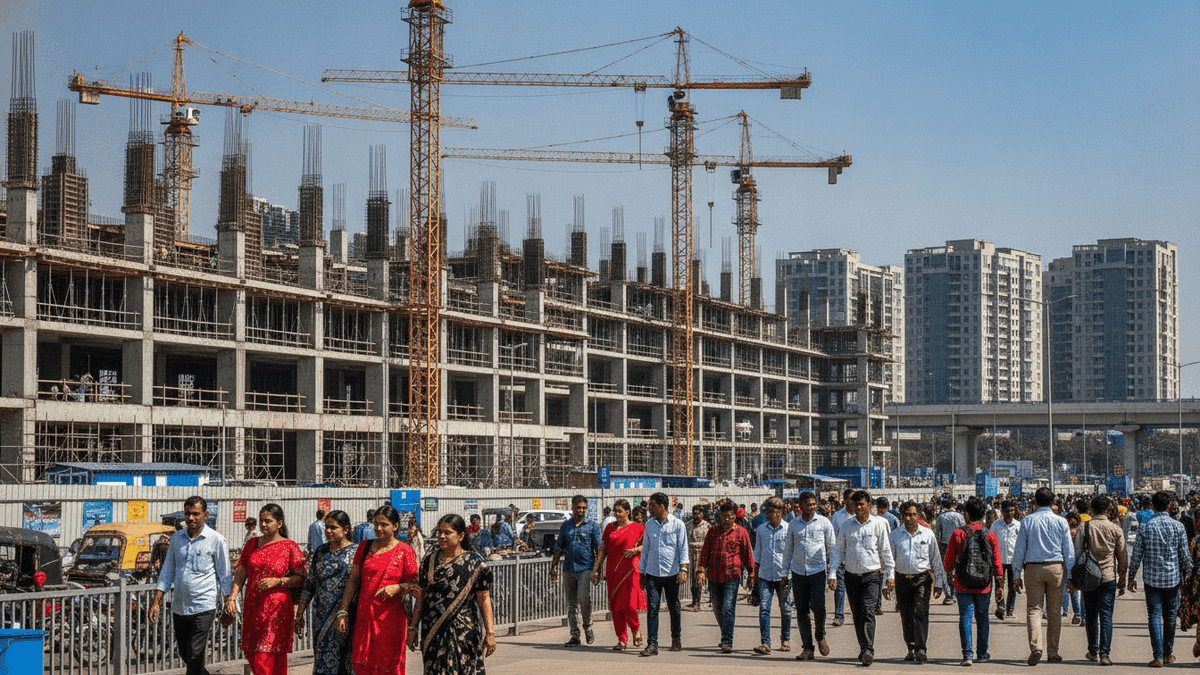
New Zealand PM Christopher Luxon highlights India’s economic transformation, rising middle class, and infrastructure boom, inviting investment and deeper bilateral ties.
India’s economic trajectory signals a profound structural shift, creating enduring opportunities for nations like New Zealand to deepen bilateral engagement. This transformation is driven by a burgeoning middle class and aggressive infrastructure build-out, positioning India on a path to high-income status. Key evidence underscores this shift, with 250 million people lifted from poverty and the middle class projected to expand dramatically. For nations seeking sustained economic partnerships, understanding these foundational changes and tailoring engagement accordingly is paramount.
Understanding India’s Economic Metamorphosis
New Zealand Prime Minister Christopher Luxon recently lauded India’s profound economic transformation under Prime Minister Narendra Modi, reflecting on the nation’s “incredible” progress since his first visit in the 1990s. Speaking at the India-New Zealand Business and Sports Engagement event in Auckland, Luxon highlighted a significant demographic shift: 250 million individuals have ascended out of poverty, while India’s middle class has expanded to 440 million, with projections indicating it will reach 750 million by the decade’s end. This trajectory marks India’s transition from a low-income to a middle-income and aspiring high-income nation, a structural pattern that warrants close analytical attention.
From a first-principles perspective, this demographic and economic evolution underpins a fundamental re-rating of India’s market potential. A growing middle class translates directly into increased consumer demand, driving domestic consumption across various sectors. Furthermore, Prime Minister Modi detailed aggressive infrastructure expansion, including the construction of 147 airports and a projected need for 2,000 more aircraft to support domestic tourism. The continuous establishment of new universities and polytechnics simultaneously builds human capital, essential for sustaining long-term economic growth and innovation. These investments collectively form the bedrock for a self-reinforcing cycle of demand and supply-side capacity building.
Framework: The Maturing Emerging Market
This pattern aligns with the “Maturing Emerging Market” framework, where foundational investments in human capital and physical infrastructure unlock latent economic potential. As a large, populous nation like India moves through this phase, the sheer scale of its internal market becomes a significant competitive advantage. Luxon identified key sectors for collaboration, including agriculture, food, tourism, education, and technology. As India’s 1.4 billion population accumulates wealth, the demand for high-quality imports, advanced services, and global experiences naturally rises, presenting a clear export opportunity for countries like New Zealand.
New Zealand’s specific capabilities, such as its growing prowess in space technology—ranking as the third-biggest launcher of rockets globally—offer distinct avenues for cooperation beyond traditional trade. The strategic imperative for New Zealand businesses, as Luxon underscored, involves a deep dive into understanding the Indian consumer, navigating diverse regional markets, and identifying suitable local partners. This nuanced approach is critical for tailoring products and services to effectively capitalize on the vast opportunities presented by India’s internal market dynamics.
The Imperative for Deeper Engagement
While the structural conditions are compelling, the mechanism for realizing this potential lies in deliberate policy and business-level execution. Luxon emphasized the critical role of the India-New Zealand Free Trade Agreement (FTA) in establishing the necessary framework for stronger economic growth. Governments, through instruments like FTAs, create the enabling environment, but it is ultimately the business leaders who drive the actual wealth creation and improve living standards across both nations. This underscores a crucial insight: market access is a necessary, but not sufficient, condition for success; strategic business adaptation is equally vital.
The challenge, therefore, is not merely recognizing India’s growth, but actively engaging with its complexities. New Zealand businesses must move beyond a superficial understanding, investing in market research and cultural acclimatization. This proactive learning curve ensures that products and services resonate with a diverse Indian consumer base, maximizing the returns on bilateral trade and investment. The collaborative efforts of governments, businesses, and community leaders, as referenced by Austrian psychiatrist Viktor Frankl, are essential for meaningful national development and mutual prosperity.
One Thing to Consider Today
When assessing opportunities in rapidly growing economies, it is worth asking whether the observed growth is merely cyclical or indicative of deeper, structural shifts like demographic dividends and foundational infrastructure investments. Understanding this distinction can inform more durable and strategic engagement, moving beyond short-term trends to capture long-term value creation.