India Market Entry: Framework for Multinational Success
By ThePip Desk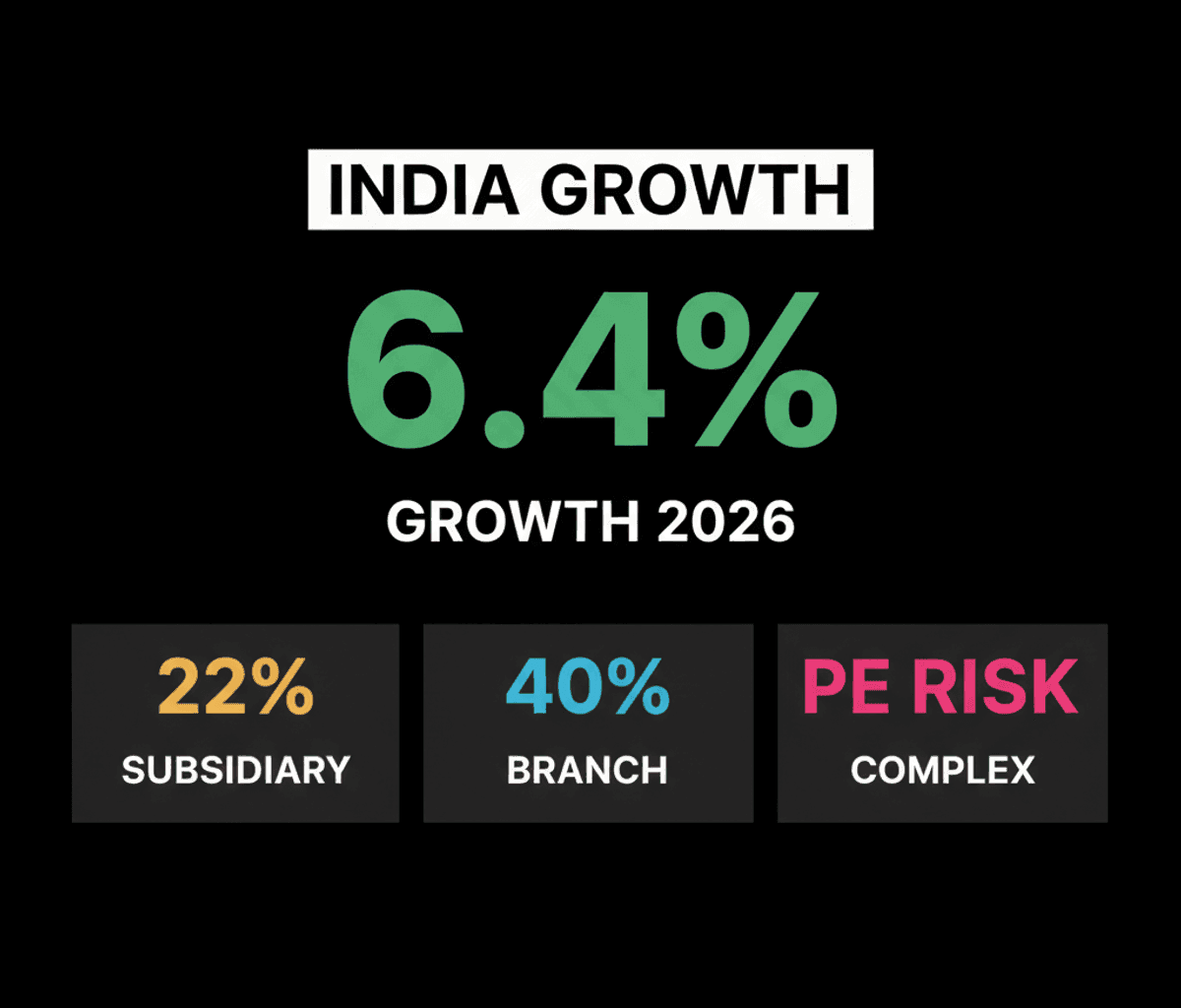
Navigate India’s complex market entry with strategic models, tax insights, and compliance for multinational success amid 6.4% projected growth.
India’s economic trajectory continues to draw significant attention from multinational businesses, with a projected growth rate of 6.4% in 2026, according to TechBullion. This robust expansion fuels increasing Foreign Direct Investment across key sectors such as computer software and hardware, services, manufacturing, retail, renewable energy, and healthcare. However, the sheer diversity of India’s linguistic, cultural, and regulatory environment presents a complex structural challenge, demanding a first-principles approach to market entry.
The Strategic Imperative of Entry Structures
The choice of legal entity for market entry is not merely an administrative step; it is a strategic decision that fundamentally dictates operational scope, revenue generation capabilities, and regulatory burden. Businesses can opt for a Wholly Owned Subsidiary, a structure suitable for full control and extensive operations, or consider a Branch Office or Liaison Office for more limited, non-revenue-generating activities, often requiring Reserve Bank of India (RBI) approval. Limited Liability Partnerships (LLPs) offer a hybrid model, while Project Offices are typically established for specific, time-bound contracts.
Understanding India’s Foreign Direct Investment (FDI) policy is crucial, differentiating between the Automatic Route, which permits investment in most sectors without prior government approval, and the Government/Approval Route, mandated for strategically sensitive areas. This dual-route mechanism reflects India’s calibrated approach to foreign capital, balancing economic liberalization with national interests.
Navigating India’s Regulatory and Fiscal Landscape
The fiscal framework further shapes entry strategies. Corporate Income Tax rates are a primary consideration, standing at 22% for Wholly Owned Subsidiaries, a significant advantage over the 40% levied on Branch and Project Offices. Beyond direct taxation, the Goods and Services Tax (GST) requires meticulous registration and compliance once specific thresholds are met. Crucially, Transfer Pricing regulations and the concept of Permanent Establishment (PE) risk introduce layers of complexity that, if mishandled, can lead to substantial financial and legal repercussions. These are not merely accounting items but structural determinants of long-term profitability and operational footprint.
The Overlooked Pitfalls and the Path to Sustained Compliance
Many foreign entrants underestimate the multifaceted nature of the Indian market, leading to common pitfalls. These include selecting an inappropriate entry structure that misaligns with long-term business objectives, underestimating the significant state-level variations in regulations and consumer behavior, and neglecting critical compliance areas such as GST, Transfer Pricing documentation, and rigorous PE risk assessment. Labour law compliance, encompassing Provident Fund (PF), Employee State Insurance (ESI), Gratuity, and Prevention of Sexual Harassment (POSH) regulations, represents another non-negotiable layer of operational responsibility.
A successful launch in India is not a one-time event but an ongoing commitment. It demands meticulous planning, from initial market opportunity evaluation and local advisor selection to entity incorporation, tax registrations, team building, and continuous adherence to evolving regulations. The structural patterns of India’s market reward those who approach it with a deep understanding of its inherent complexities and a readiness for sustained operational and regulatory engagement, ultimately unlocking its vast potential.