India’s Top Investment States for 2026: Gujarat, Maharashtra Lead
By ThePip Desk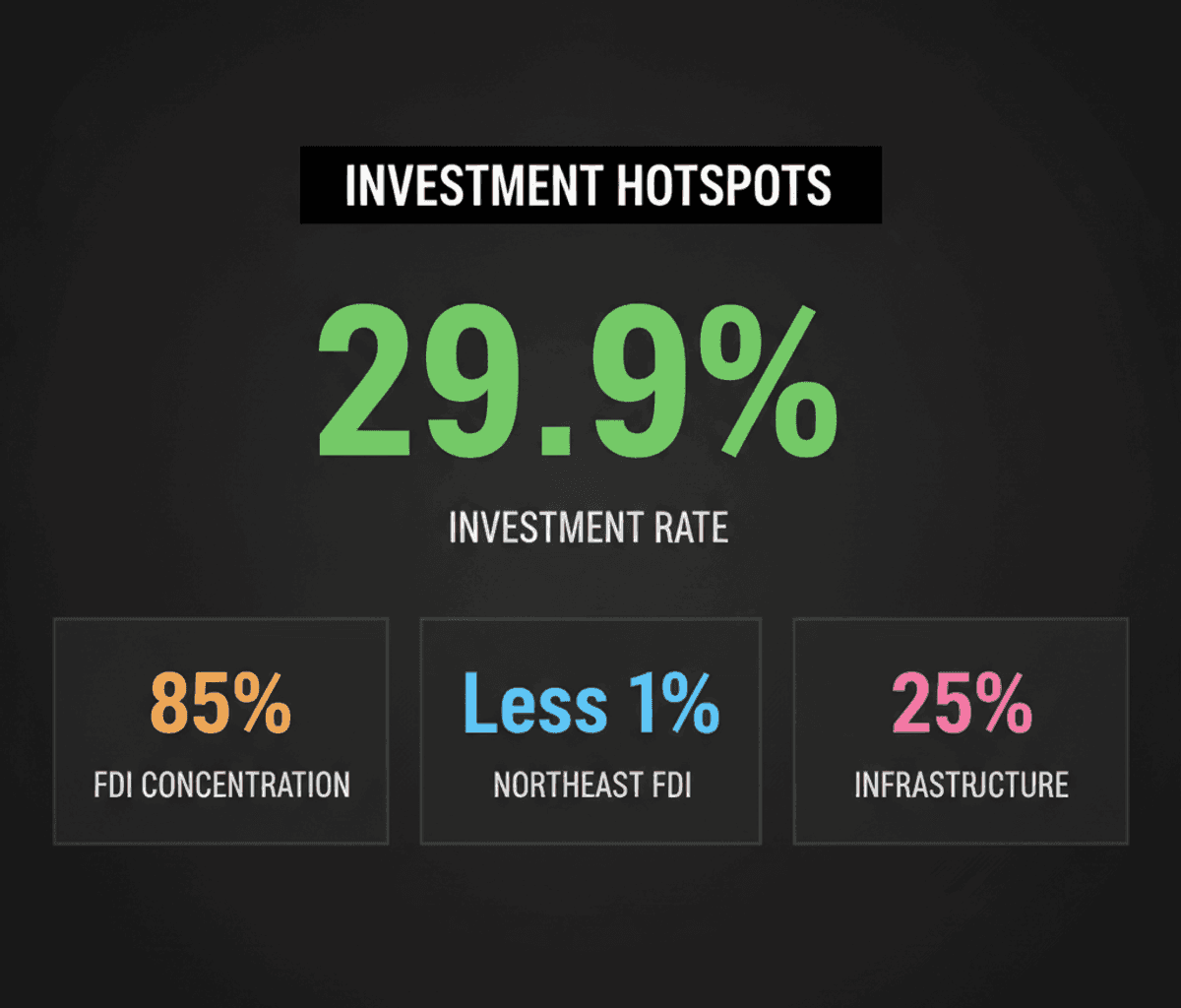
Niti Aayog’s 2026 Investment Friendliness Index highlights Gujarat & Maharashtra as FDI magnets, attracting 85% of investment. Discover India’s top states for growth.
🔥 Main Takeaway
India’s top states are dominating the investment game, but significant regional disparities mean untapped growth opportunities are being missed across the country.
📌 What Happened?
Niti Aayog released its Investment Friendliness Index 2026, ranking all 28 states and eight union territories on their appeal to investors.
The index weighed various factors, with infrastructure carrying the highest importance at 25%, alongside business climate, government policy, and regulatory ease.
Gujarat, Maharashtra, Odisha, Tamil Nadu, and Goa emerged as the top-performing states, signaling robust environments for capital.
A concentrated group of states—Maharashtra, Karnataka, Gujarat, Delhi, and Tamil Nadu—collectively pull in a massive 85% of India’s total foreign direct investment (FDI).
Despite this, northeastern states face a stark contrast, attracting less than 1% of combined FDI, highlighting a major regional imbalance.
💰 Why It Matters
For investors, states consistently ranking high on this index, like Gujarat and Maharashtra, indicate lower operational risks and stronger potential for successful ventures.
The heavy concentration of FDI in just a few states signals that while capital is flowing into India, it’s not evenly distributed, which could mean overlooked, high-potential markets elsewhere.
India’s overall investment rate hit 29.9% of GDP in financial year 2025, surpassing GDP growth since financial year 2022, a strong indicator of sustained economic expansion and job creation.
The index serves as a crucial tool for states to pinpoint weaknesses and implement targeted policy changes, potentially unlocking new investment avenues and fostering more balanced growth.
👀 What to Watch Next
Keep an eye on how lower-ranked states respond to Niti Aayog’s feedback; their policy adjustments could create new investment hotspots.
Look for any central government initiatives designed to incentivize FDI in currently underserved regions, aiming to bridge the significant regional investment gap.
Monitor private capital expenditure growth; while government and household spending currently drive investment, a faster acceleration in private capex would signal broader economic confidence.