Future FinTech’s Reverse Split: A 90% Stock Plunge Response
By ThePip Desk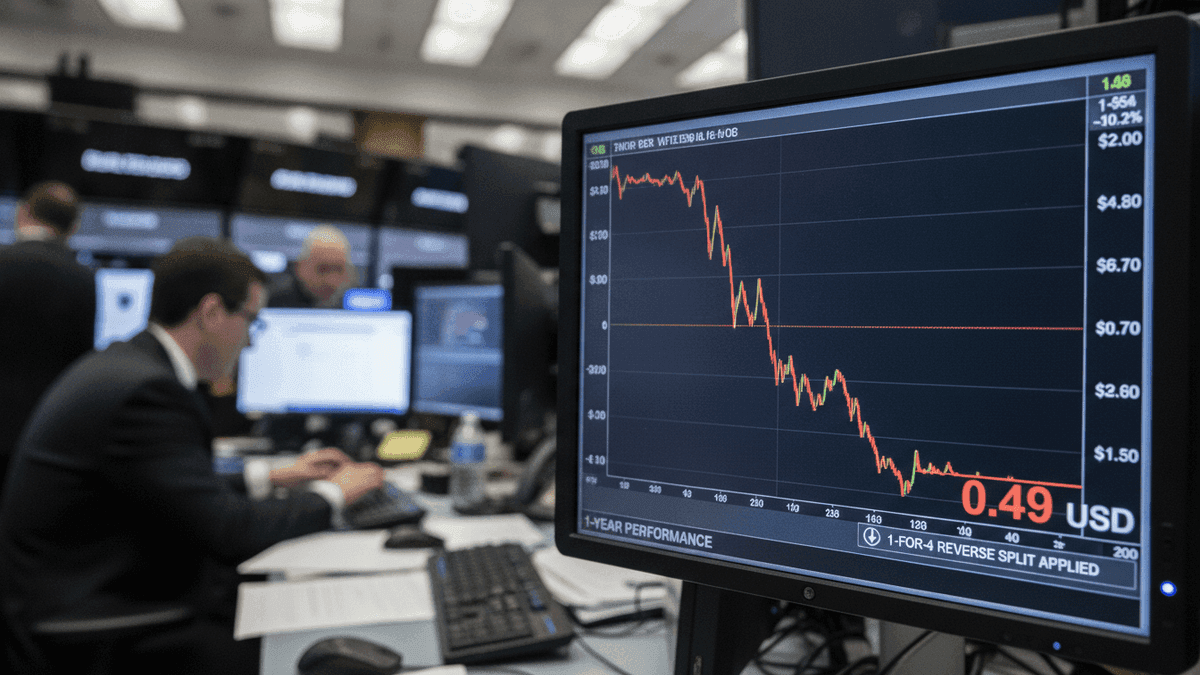
Future FinTech Group Inc. (FTFT) enacts a 1-for-4 reverse stock split after a 90% share price decline, signaling significant financial distress and potential delisting concerns.
🔥 Main Takeaway
Future FinTech is enacting a 1-for-4 reverse stock split, a drastic measure after its stock plunged 90% this past year, signaling deep financial distress.
📌 What Happened?
Future FinTech Group Inc. (NASDAQ:FTFT) just approved a 1-for-4 reverse stock split, effective Friday at 4 P.M. Eastern Time. Trading on a split-adjusted basis kicks off Monday under a new CUSIP number.
This move will slash outstanding common stock from approximately 7,472,707 shares down to roughly 1,868,177 shares. The company’s board enacted this without needing shareholder approval.
The stock currently hovers at $0.53, dangerously close to its 52-week low of $0.49. This follows a brutal 90% decline over the last year, making the reverse split a clear attempt to boost its per-share price.
💰 Why It Matters
Reverse stock splits are often a red flag, typically used by companies struggling to meet exchange listing requirements or to avoid delisting. It’s a cosmetic fix that inflates the share price without changing the company’s underlying market capitalization or business fundamentals.
For investors, this doesn’t create new value; it simply means you own fewer shares, each theoretically worth more. However, historical data shows that stocks undergoing reverse splits often continue their downward trend, as the core issues remain unresolved.
While existing shareholder ownership percentages remain proportional, the automatic rounding up of fractional shares could slightly dilute some holders. This signals a company in a precarious position within the financial and digital technology services sector, including its brokerage operations in Hong Kong and supply chain finance in China.
👀 What to Watch Next
Keep an eye on FTFT’s stock performance in the immediate aftermath of Monday’s split-adjusted trading. Will the artificial price boost attract new interest, or will selling pressure persist?
Watch for any potential capital raises. A higher share price could make it easier for Future FinTech to issue new shares, which might provide short-term liquidity but could dilute existing shareholders further if not handled strategically.
Investors should also monitor for any concrete strategic shifts or operational improvements from the company. Without fundamental changes, this reverse split might only be a temporary band-aid on a deeper problem.