India Retail Credit Hits 74%: Unsecured Loans Drive Growth
By ThePip Desk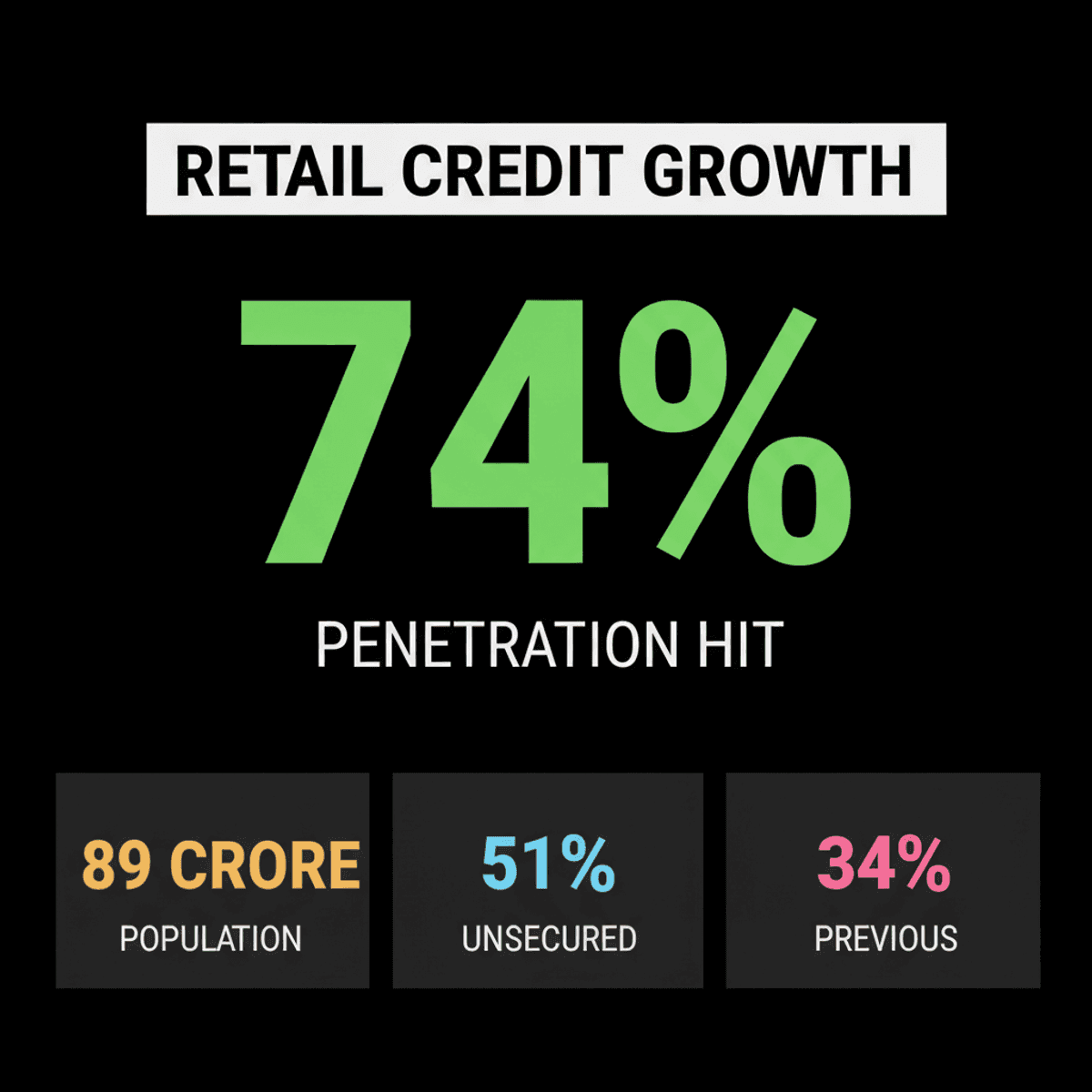
India’s retail credit access reaches 74% by March 2026, fueled by a surge in small-ticket unsecured consumer loans and a growing credit-eligible population.
India’s formal lending landscape has undergone a significant transformation, with retail credit penetration more than doubling to 74% by March 2026. This expansion, confirmed by TransUnion CIBIL data, coincided with a substantial increase in the nation’s credit-eligible population to 89 crore.
Shifting Borrowing Patterns and Consumer Choices
A notable trend highlights a clear shift towards lifestyle-driven borrowing among new credit users. Unlike a decade ago when asset-backed loans like vehicle financing were common entry points, consumers now increasingly choose small-ticket unsecured credit.
- Unsecured products, including personal loans, credit cards, and financing for electronics or home appliances, now account for 51% of all active borrowers.
- This figure marks a significant rise from 34% in 2017, reflecting a clear preference for consumption-led credit.
- Younger borrowers, specifically, are opting to finance mobile phones over traditional assets rather than larger assets.
While this expansion deepens financial inclusion across the country, it simultaneously alters the risk profile for lenders. The inherent nature of unsecured loans presents different considerations compared to traditional asset-backed equivalents.
Geographic Diversification of Credit Activity
Credit activity is also diversifying geographically, extending beyond the traditionally concentrated western and southern states. Northern and central regions are experiencing increased participation in the credit ecosystem.
- States like Uttar Pradesh, Madhya Pradesh, and Bihar are showing notable growth in their share of the credit-active population.
- While Maharashtra and Tamil Nadu remain dominant, their relative share has moderated as the financial landscape broadens.
Implications for Lenders and Financial Stability
This broadening borrower base, which now includes more women, younger individuals, and those in semi-urban or rural areas, creates a larger addressable market for banks and Non-Banking Financial Companies (NBFCs). For investors, this signifies expanded growth opportunities within the financial sector.
However, the increased reliance on small-ticket unsecured loans necessitates diligent monitoring of lenders’ asset quality. Economic slowdowns or rising interest rates could potentially impact repayment capacities across these portfolios.
- It is crucial to track non-performing asset levels in retail loan portfolios.
- Particular attention is required in newly penetrated areas to accurately assess the overall health of financial institutions.