Australian Bond Exchange Shares Dip: Fintech Market Reality
By ThePip Desk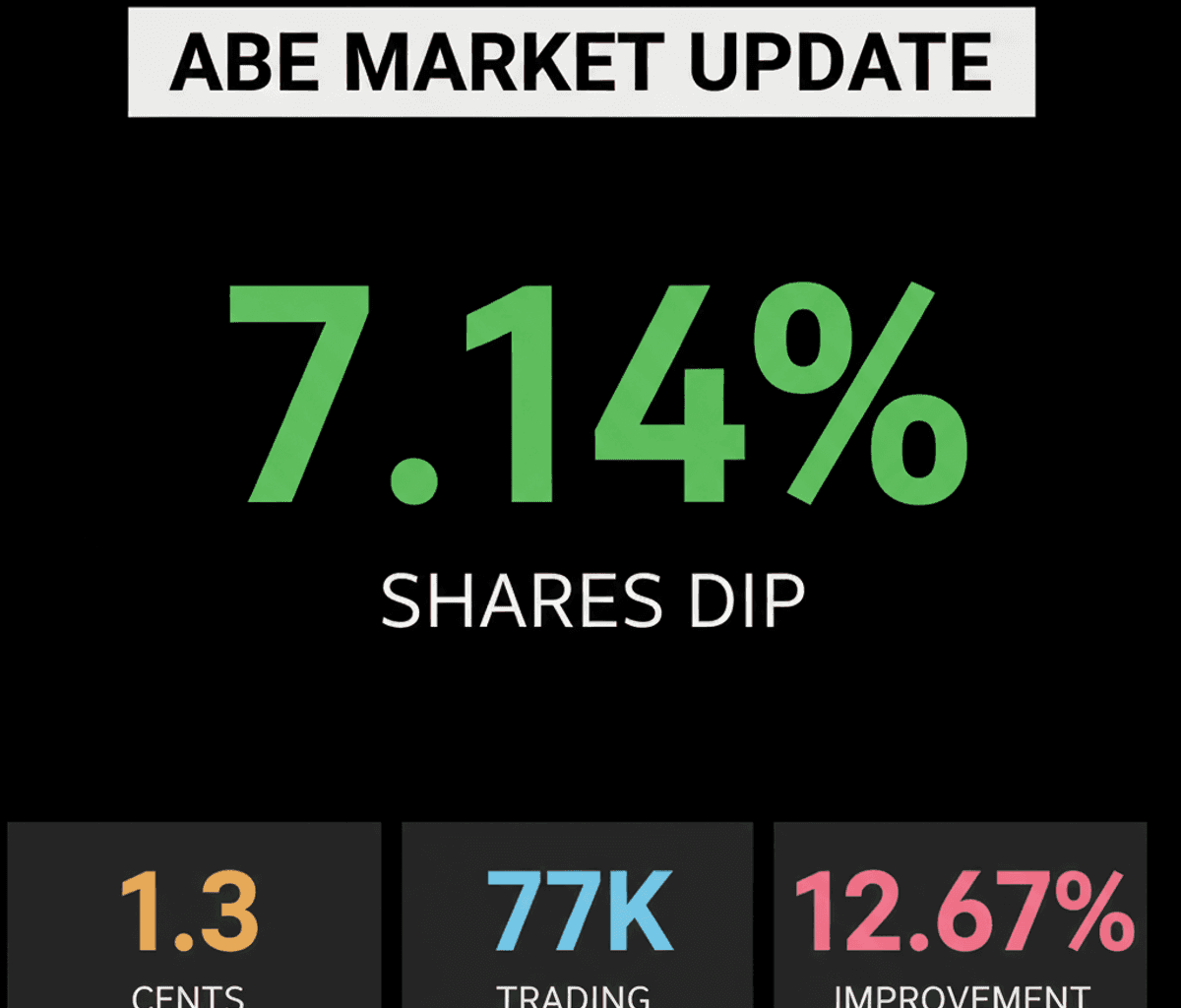
Australian Bond Exchange (ASX: ABE) shares fell 7.14% to 1.3 cents. This micro-cap fintech aims to democratize bond access for retail investors, facing market volatility.
🔥 Main Takeaway
Australian Bond Exchange (ASX: ABE), a micro-cap fintech democratizing bond access, saw its shares dip 7.14% on light trading volume, highlighting the volatile journey for niche financial platforms.
📌 What Happened?
Shares of Australian Bond Exchange Holdings Ltd (ASX: ABE) dropped 7.14%, closing at 1.3 cents. This occurred on light trading volume, approximately 77,000 shares.
The company, a finance sector fintech, currently holds a market capitalization of around 2.31 million Australian dollars.
ABE operates an online platform providing retail investors and self-managed superannuation funds direct access to the bond market, a segment traditionally dominated by institutional players.
Despite a negative diluted TTM EPS of 0.03 AUD, the company showed a 12.67% improvement in losses year-on-year, indicating some progress in financial health.
💰 Why It Matters
This share price movement, even on light volume, signals the inherent volatility and thin liquidity often associated with micro-cap stocks, especially in the capital-intensive fintech space.
ABE addresses a genuine market gap by opening up fixed-income investments to smaller investors, offering a different risk profile compared to managed funds.
The improvement in EPS suggests ABE is making strides in managing its operational costs and building its platform, despite ongoing losses.
For investors, the absence of analyst coverage and thin liquidity means higher risk and less public scrutiny, requiring deep due diligence.
👀 What to Watch Next
Keep an eye on ABE’s ability to scale its regulated financial services platform, which demands substantial investment in technology and compliance.
Monitor their customer and revenue growth data to see if they are effectively capitalizing on increased awareness of bond yields from the 2022-2024 higher interest rate environment.
Future developments will hinge on their strategy to overcome challenges like ongoing losses and the difficulty of building a robust customer base in a specialized market.