AI Costs Skyrocket: Enterprises Seek Efficient Models
By Varun Mittal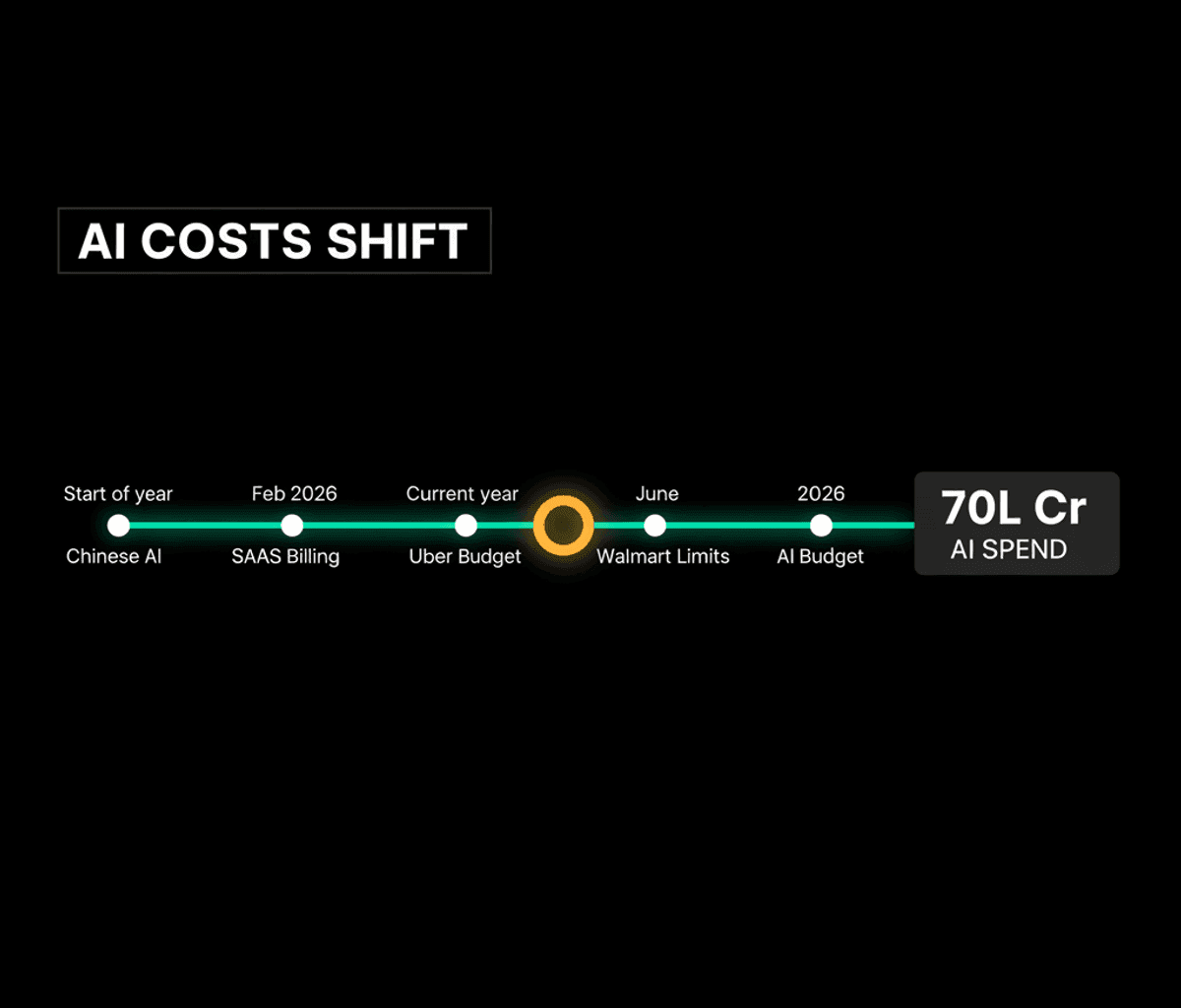
Rising AI expenses from complex agents and token billing push enterprises towards cost-effective Chinese and open-source AI solutions. Explore the shift.
The landscape of enterprise artificial intelligence adoption is undergoing a fundamental structural shift, driven primarily by escalating operational costs. Major AI laboratories, including Anthropic and OpenAI, are confronting challenges to their growth as corporate users increasingly scrutinize and seek to control their burgeoning AI expenditures. This pivot reflects a deeper re-evaluation of AI procurement models, moving beyond initial widespread adoption.
This surge in expenses stems from two primary mechanisms. First, the industry’s evolution from rudimentary chatbots to sophisticated AI agents demands significantly greater computational power, inherently increasing resource consumption. Second, a crucial change in billing structure has occurred: AI labs have transitioned from predictable flat-rate subscriptions to more granular token-based billing, directly linking usage to cost and amplifying financial pressure on enterprises.
The Emergence of Cost-Efficient Alternatives
This financial strain has inadvertently created a significant market opportunity, particularly for Chinese AI laboratories. These providers are demonstrating a competitive advantage through more efficient models and the inherent benefit of lower energy costs within China. Data from OpenRouter, for instance, indicates a notable trend since the start of the year, revealing that Chinese AI models are now exhibiting greater token consumption compared to their U.S. counterparts, signaling a shift in usage patterns driven by cost efficiency.
In response to these rising costs, enterprises that once encouraged broad AI tool adoption are now implementing rigorous cost-reduction strategies. Executives report a range of measures, including the introduction of usage caps, guiding employees toward the most appropriate and cost-effective AI tools for specific tasks, and promoting the use of older, cheaper models. The integration of open-source AI solutions also represents a strategic move to mitigate expenses.
The underlying issue is a fundamental mismatch between traditional software-as-a-service (SaaS) commercial infrastructure and the complex billing models inherent to AI services. As PYMNTS highlighted in February, AI services frequently charge based on a multitude of metrics, such as per token, per application programming interface (API) call, per generated image, per inference cycle, or per autonomous workflow, making cost management inherently more challenging and less predictable than conventional software licensing.
Real-world instances underscore this structural challenge. Uber reportedly exhausted its entire 2026 AI budget by April of the current year, prompting a comprehensive re-evaluation of its AI strategy. Similarly, Walmart implemented limits on employee AI usage in June, providing a fixed number of tokens for its internal AI agent, Code Puppy, after initially offering unrestricted access. These examples illustrate the tangible impact of the new cost paradigm on even the largest corporate entities.
Ultimately, this dynamic indicates a broader market recalibration. The initial phase of unbridled AI experimentation is yielding to a more disciplined, cost-conscious approach. Enterprises are not abandoning AI, but rather optimizing their investment by seeking structural efficiencies, which in turn diversifies the competitive landscape and favors providers able to deliver performance at a lower operational cost. This shift underscores the enduring principle that even transformative technologies must ultimately align with sustainable economic models.