TN Govt Mulls Revival of Jewel Loan Waiver Scheme
By Sivam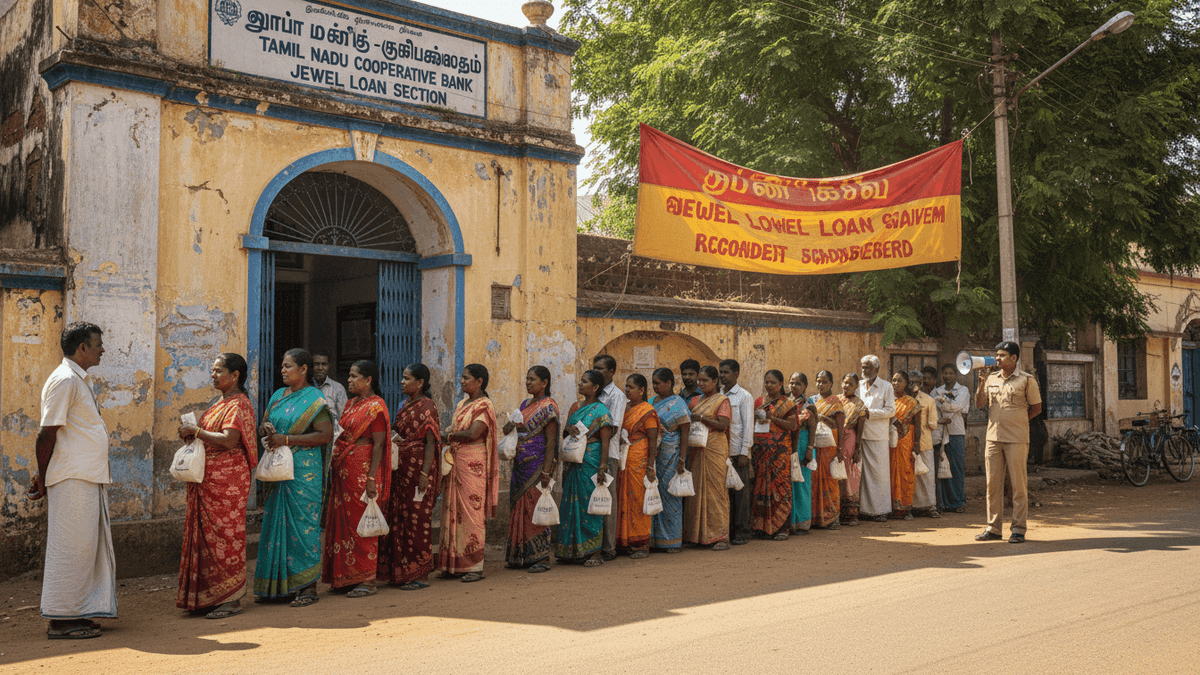
Tamil Nadu’s Cooperation Minister V Gandhiraj confirms government review of the 2021 jewel loan waiver scheme and other welfare programs for potential reinstatement, prioritizing public welfare.
The Tamil Nadu government is actively considering the reinstatement of several welfare programs that were previously discontinued, a development signaled by Cooperation Minister V Gandhiraj. Among the key initiatives under review is the 2021 jewel loan waiver scheme, which, along with other public-focused programs, will be formally presented to the Chief Minister for a comprehensive assessment. This move underscores the administration’s commitment to public welfare and its proactive approach to evaluating the efficacy and reach of its social support mechanisms, aiming to ensure that essential benefits continue to reach the intended beneficiaries across the state.
Tamil Nadu Government Reviews Discontinued Welfare Initiatives
The decision to revisit the discontinued schemes, particularly the jewel loan waiver, comes as the government seeks to strengthen its welfare agenda. Minister V Gandhiraj explicitly stated that these programs, which were halted for various reasons, are now being brought back to the forefront for reconsideration. The 2021 jewel loan waiver scheme, in particular, had significant implications for a large segment of the population, providing crucial financial relief. The process involves a thorough review by the Chief Minister, who will evaluate the feasibility and necessity of reviving these initiatives, taking into account their potential impact on the state’s economy and the financial well-being of its citizens.
Addressing Technical Issues for Effective Scheme Implementation
A critical aspect of this reconsideration involves addressing the technical issues that may have led to the discontinuation or hindered the effective implementation of these schemes in the past. Minister Gandhiraj emphasized the government’s intent to resolve these operational challenges to ensure that any revived public welfare initiatives can function smoothly and efficiently. This proactive approach to technical problem-solving is vital for building public trust and ensuring that the benefits of such programs are delivered without bureaucratic hurdles or inefficiencies. The government is focused on creating a robust framework that supports the seamless execution of welfare policies, thereby maximizing their positive societal impact.
Commitment to Zero Corruption and Enhanced Transparency
Central to the Tamil Nadu government’s operational philosophy is a steadfast commitment to achieving zero corruption and maintaining absolute transparency in all its undertakings. This principle extends directly to the review and potential revival of welfare schemes. The administration aims to implement these programs with utmost integrity, ensuring that public funds are utilized responsibly and effectively. By fostering an environment of accountability, the government seeks to eradicate any opportunities for malpractices and ensure that every rupee allocated for public welfare reaches the deserving individuals. This focus on ethical governance is expected to restore and reinforce public confidence in state-sponsored initiatives.
Implications for State Finance and Public Trust
The potential revival of significant welfare programs, such as the jewel loan waiver, carries substantial implications for the state’s financial landscape. The government’s decision to reconsider these schemes will necessitate a careful evaluation of budgetary allocations and fiscal sustainability. Beyond the financial considerations, this move also serves as a critical indicator of the government’s responsiveness to public needs and its willingness to adapt policies for greater societal benefit. By openly reviewing past decisions and addressing identified shortcomings, the Tamil Nadu government aims to bolster public trust and demonstrate its unwavering dedication to the welfare of its populace, setting a precedent for transparent and accountable governance in the region.