SoFi Stock: Undervalued Fintech Disruptor in Tech Sell-Off
By Varun Mittal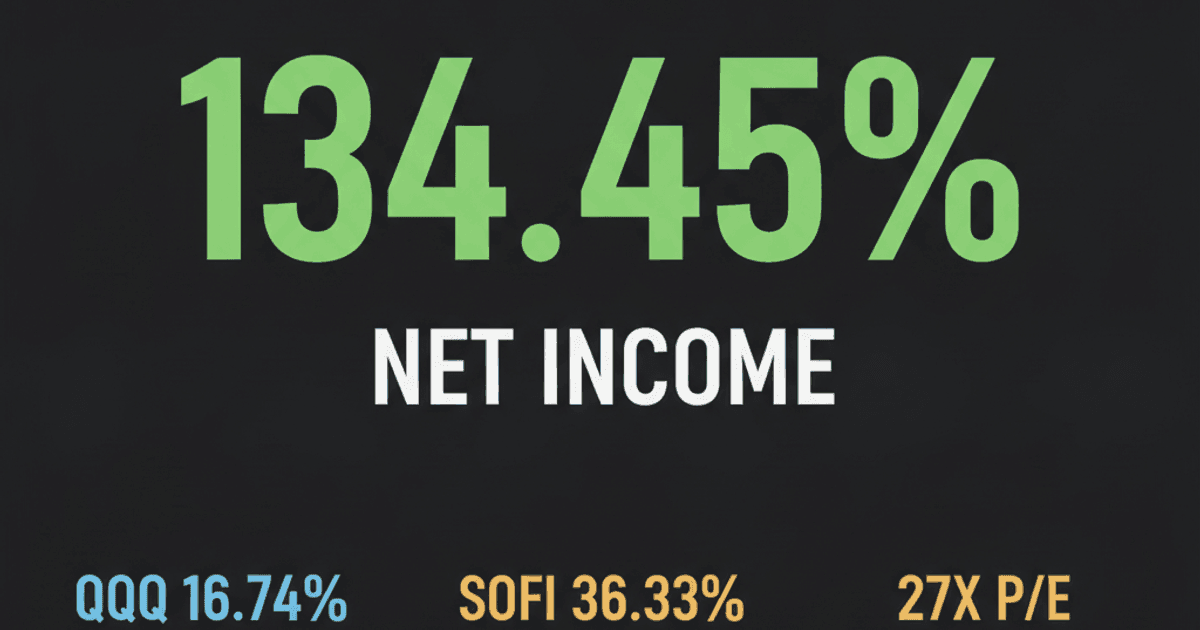
Explore why SoFi Technologies (SOFI) is a dirt-cheap financial disruptor, offering a buying opportunity amid the tech sell-off with strong earnings and a robust deposit base.
SoFi: A Buy Amidst Tech Sell-Off?
SoFi Technologies (NASDAQ:SOFI) stock has plunged 36.33% year-to-date, contrasting sharply with the QQQ’s 16.74% gain. This downturn, triggered by the Federal Reserve, presents a significant buying opportunity for investors, according to analyst Alex Sirois.
Sirois argues the market is mispricing SoFi as a struggling fintech, overlooking its transformation into a rapidly growing national bank fundamentally changing personal finance.
Strong Fundamentals and Growth
Conviction in SoFi rests on three core pillars:
- Compounding Earnings: Q1 2026 net income surged 134.45% year-over-year to $166.73 million. Management projects an adjusted EPS Compound Annual Growth Rate (CAGR) of 38% to 42% through 2028, making its current 27x forward P/E ratio appear undervalued.
- Robust Deposit Base: SoFi’s deposit machine funds operations effectively, with $40.24 billion in deposits covering over 90% of total liabilities. This has reduced the cost of funds by 48 basis points year-over-year, enabling significant loan originations.
- Considerable Optionality: Future growth drivers include the integration of SoFiUSD, a stablecoin, with Mastercard for global settlement, and $3.6 billion in new commitments to its Loan Platform Business.
Risks and Insider Confidence
While SoFi faces risks like a 27% revenue decline in its Technology Platform segment due to a client departure, and a slight increase in personal loan charge-off rates, these are deemed manageable. SoFi’s borrower base has a weighted average FICO of 745, and its capital ratio stands at 21%, double the regulatory minimum.
CEO Anthony Noto’s personal stock purchases signal strong insider confidence, reinforcing the bullish outlook. The author remains committed to buying SoFi, anticipating continued member growth, deposit funding, and innovation, regardless of market conditions set by the Fed.