Singapore Banks Lead Longevity Banking in Asia
By Varun Mittal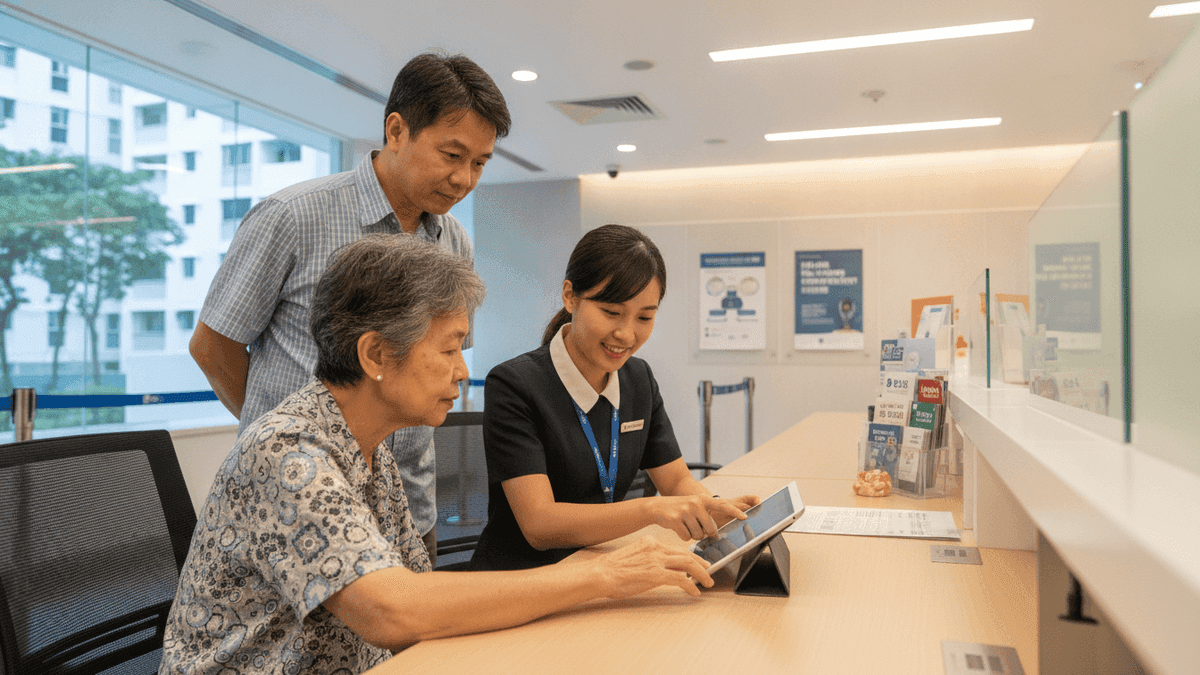
Singapore banks pioneer Asia’s first longevity banking playbook, standardizing legacy and bereavement processes for an aging society. Learn about this structural shift.
Singapore’s banking sector is embarking on a significant structural adaptation to demographic realities, launching an Asia-first senior banking playbook designed to reshape how financial institutions serve an increasingly elderly population. This comprehensive initiative, spearheaded by the Association of Banks in Singapore (ABS), moves beyond mere compliance to embed longevity planning and support into core banking operations, reflecting a proactive approach to evolving societal needs.
The ‘Banking a Longevity Society’ playbook encompasses 20 distinct initiatives, targeting critical areas from scam protection and accessibility to financial resilience and estate planning. This integrated strategy aims to simplify complex life events for seniors and their caregivers, recognizing the banking sector’s role as a fundamental pillar in societal well-being. It represents a first-principles re-evaluation of the customer lifecycle in an aging demographic.
Standardizing Legacy and Bereavement Support
A central tenet of this structural shift is the standardization of legacy planning and bereavement support across major banks, including DBS, OCBC, and UOB. By the first quarter of 2027, procedures for Lasting Power of Attorney (LPA), deputyship, and the closure of accounts for deceased customers will be harmonized. This move directly addresses a long-standing pain point, reducing administrative burdens and providing clearer guidance during what are often emotionally challenging periods for families.
Furthermore, the initiative includes practical measures such as simplifying processes for bereaved families to withdraw small balances, specifically up to S$5,000 across all accounts with a bank, without requiring a Grant of Probate or Letter of Administration. This pragmatic adjustment acknowledges the immediate financial needs that often arise, streamlining access to funds and minimizing bureaucratic hurdles for grieving families.
Safeguarding Vulnerable Seniors and Enhancing Accessibility
Beyond estate matters, the playbook introduces robust safeguards for vulnerable seniors. By the end of 2026, banks will collaborate with the Agency for Integrated Care to establish common guidelines for frontline staff. This will enable better identification of potential signs of cognitive decline, allowing for early intervention and support.
An industry-wide referral system, slated for piloting in 2027, further underscores this commitment. It will ensure that customers requiring additional assistance are seamlessly connected to appropriate support services, creating a more responsive and empathetic banking environment. Concurrently, efforts to improve cash access are underway, with DBS, OCBC, UOB, and NETS committing to ensuring an ATM, branch, or cashpoint is available within 500 meters of every HDB block by the end of 2027. This physical infrastructure commitment is crucial for maintaining financial inclusion for those less comfortable with digital banking.
The Structural Implications of an Asia-First Model
As ABS Director Ong-Ang Ai Boon noted, this initiative stands as the first of its kind in Asia. This pioneering effort by Singapore’s banking sector highlights a critical structural pattern: the proactive adaptation of financial services to profound demographic shifts. Rather than waiting for regulatory mandates, the industry is collectively investing in frameworks that address the unique challenges and opportunities presented by a longevity society.
This comprehensive playbook sets a precedent, positioning Singapore as a leader in