SBI Mutual Fund IPO: ₹11,693 Cr Offer for Sale Launched
By ThePip Desk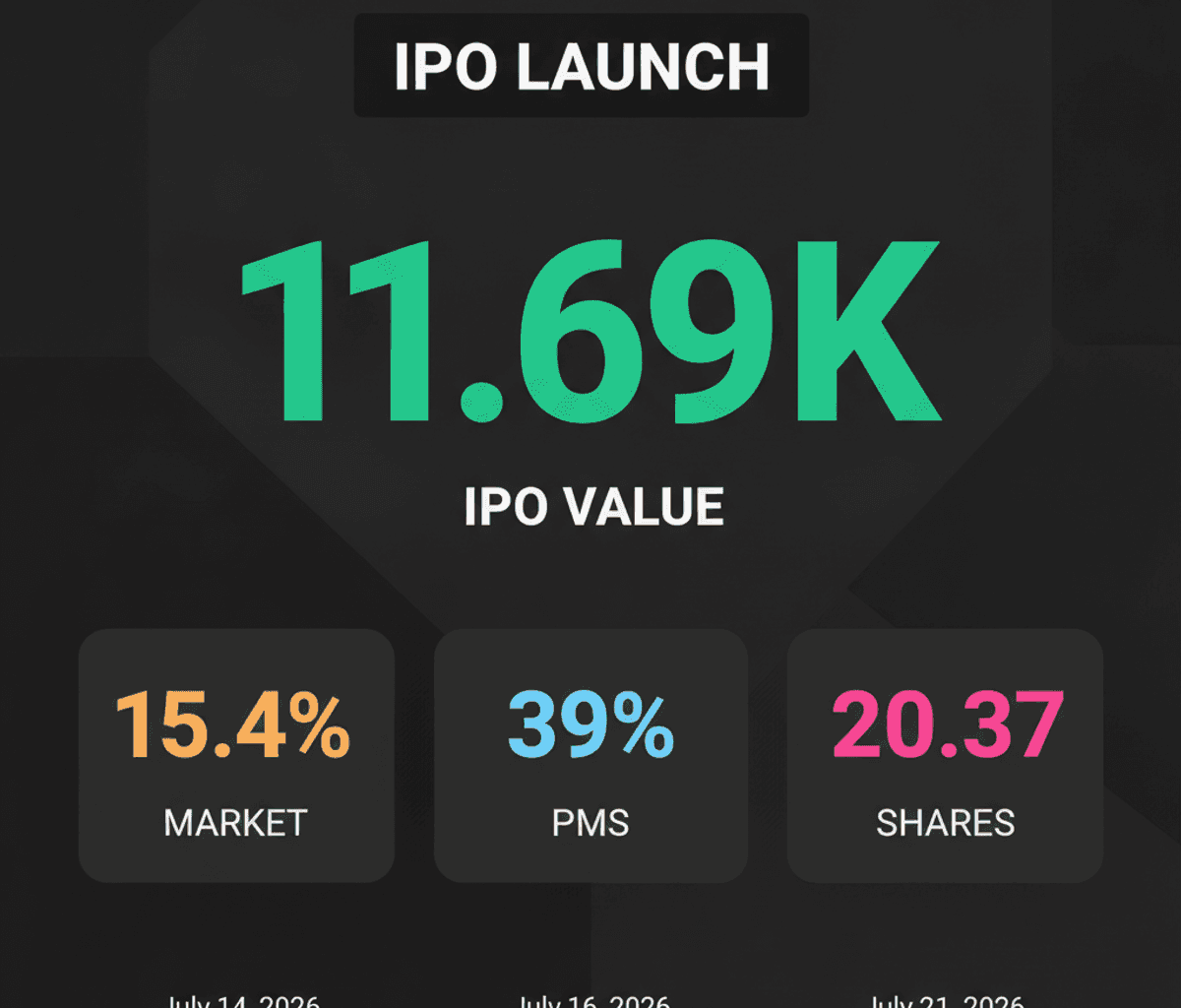
India’s largest AMC, SBI Mutual Fund, launches a ₹11,693 Cr IPO (OFS). Learn about the State Bank of India & Amundi divestment, key dates, and investment potential.
🔥 Main Takeaway
India’s largest asset manager, SBI Funds Management, is launching a massive ₹11,693 crore IPO, entirely an Offer for Sale (OFS) from its parent State Bank of India and Amundi India Holdings Ltd.
📌 What Happened?
The SBI Mutual Fund IPO is a mainboard offering valued at ₹11,693 crore, with shares priced between ₹545 and ₹574 per unit.
This IPO is 100% an Offer for Sale, meaning the company itself receives no funds; existing shareholders SBI and Amundi India Holdings Ltd are divesting up to 20.37 crore equity shares.
Bidding for the IPO opens on July 14, 2026, and closes on July 16, 2026, with listing expected by July 21, 2026, on the BSE and NSE.
SBI Funds Management currently dominates as India’s largest AMC by QAAUM, holding a 15.4% market share as of December 31, 2025.
💰 Why It Matters
This IPO offers a chance to invest in a market leader with the lowest operating expense ratio among the top 10 AMCs and a significant 39% market share in Portfolio Management Services (PMS).
However, the OFS structure means no fresh capital for the company’s growth directly, which could impact future expansion strategies.
New SEBI (Mutual Funds) Regulations, 2026, could potentially reduce fees and affect profitability, creating a regulatory risk for investors.
Revenue concentration from its top 10 schemes and reliance on the Indian stock market’s performance expose the company to market volatility.
👀 What to Watch Next
Keep an eye on the impact of the upcoming SEBI regulations on AMC fee structures and overall industry profitability.
Monitor SBI Funds Management’s ability to diversify revenue streams beyond its top schemes and mitigate dependency on the broader Indian stock market.
Watch the post-listing performance on BSE and NSE, especially given the company’s strong market position and potential regulatory headwinds.