SBI Funds Management IPO: India’s Asset Giant Raises ₹11,600 Crore
By ThePip Desk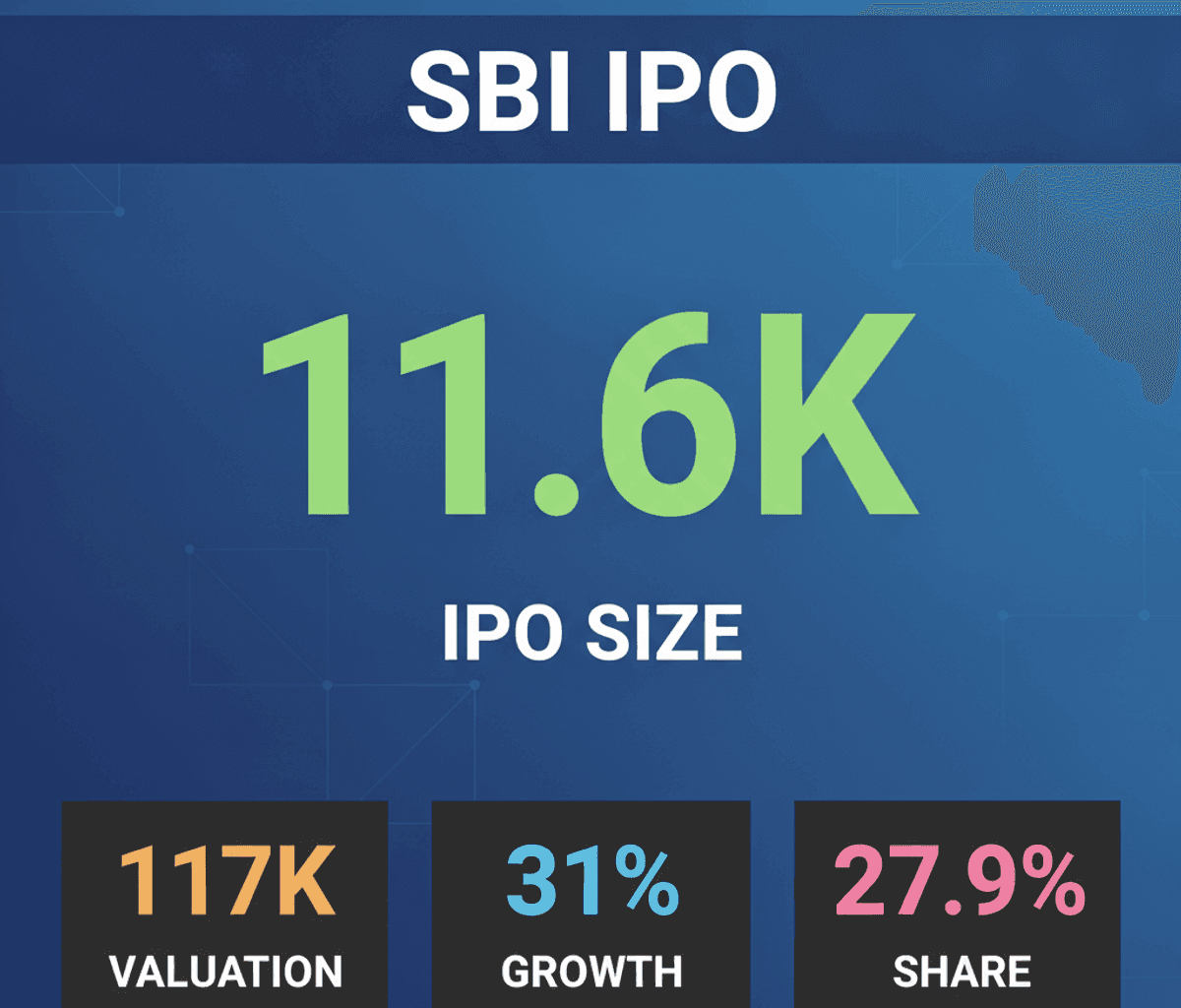
India’s largest asset manager, SBI Funds Management, launches a ₹11,600 crore IPO. Discover the market shifts and growth strategies of this wealth management giant.
🔥 Main Takeaway
India’s largest asset manager, SBI Funds Management, is hitting the market with a massive ₹11,600 crore IPO, signaling a major play in the nation’s wealth management space.
📌 What Happened?
SBI Funds Management, known as India’s top asset manager, has launched an Initial Public Offering (IPO) to raise ₹11,600 crore.
This IPO is structured entirely as an offer-for-sale by its current shareholders, State Bank of India and Amundi.
After the sale, State Bank of India will retain a 55% stake, while Amundi will hold 33%.
The company is valued at approximately ₹116,900 crore, translating to 38 times its projected FY26 earnings.
Its Assets Under Management (AUM) have seen remarkable growth, escalating from ₹13.81 lakh crore in June 2016 to an estimated ₹82.22 lakh crore by June 2026.
💰 Why It Matters
This IPO offers investors a direct opportunity to tap into a dominant force within India’s financial sector, holding a 27.9% market share in passive funds and 19.2% in B-30 locations.
The company boasts robust financials, including a 31% compound annual growth rate (CAGR) in operating profit between fiscal years 2023 and 2026, alongside a strong 43% return on equity in fiscal year 2026.
The offering underscores the growing investor confidence in India’s expanding financial services market and the broader trend of wealth creation across the nation.
It also highlights the strategic divestment efforts by major financial institutions like State Bank of India.
👀 What to Watch Next
Investors should closely monitor how SBI Funds Management navigates potential industry-wide fee compression, particularly from large institutional mandates such as the Employees’ Provident Fund Organisation.
Future growth will be significantly influenced by sustained inflows into equity funds and the continued popularity of systematic investment plans (SIPs), given the mutual fund business’s inherent dependence on market cycles.
Key factors for shareholder outcomes include the company’s ability to maintain its market share against fierce competition and the ongoing penetration of financial products within the diverse Indian economy.