SBI Funds Management IPO: A Gen Z Investor’s Guide
By ThePip Desk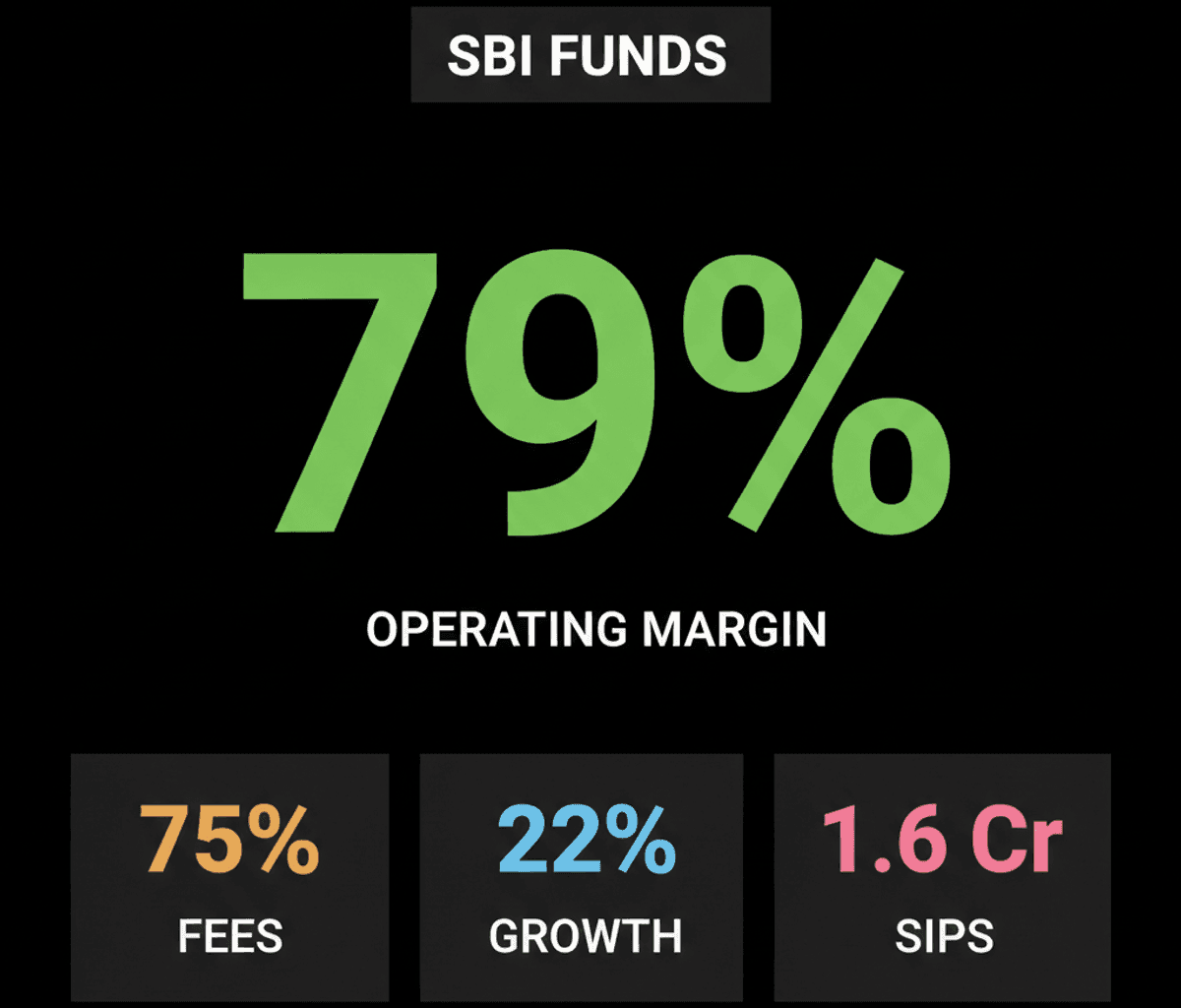
SBI Funds Management’s IPO is here! Discover what Gen Z investors need to know about India’s largest asset manager’s ₹9,812.9 crore offering and its strategic pivot.
🔥 Main Takeaway
SBI Funds Management, India’s largest asset manager, is hitting the market with an IPO that reveals its strong profitability and strategic pivot towards high-margin equity funds, despite a diverse asset base.
📌 What Happened?
SBI Funds Management launched its Initial Public Offering (IPO) from July 14-16, 2026, aiming to raise a total of ₹9,812.9 crore. Anchor investors have already committed ₹2,662.96 crore.
The IPO’s price band is set between ₹545 and ₹574 per share. As an offer-for-sale, the proceeds will benefit selling promoters State Bank of India and Amundi India Holding directly.
Despite managing a massive ₹29.5 lakh crore in total assets, only ₹12.5 lakh crore of this is in high-revenue mutual funds. These mutual funds, however, impressively generate 96% of the company’s operating income.
💰 Why It Matters
For investors, SBI Funds Management boasts a stellar 79% operating margin and the lowest operating costs among top Asset Management Companies at just 8 basis points of assets. This indicates robust financial health and efficiency.
The company is strategically shifting its focus towards active equity funds, which, despite comprising 42.5% of mutual fund AUM, drive approximately 75% of its fees. This pivot promises higher future revenue growth.
SBI Funds Management holds a strong presence in “B30” cities, accounting for 22.8% of its assets, and manages 1.6 crore Systematic Investment Plans (SIPs). This highlights a broad, yet potentially untapped, market for converting to higher-fee products.
While its current revenue trails competitors due to a lower concentration in active equity, the improving portfolio mix and industry-leading cost efficiency could help bridge this gap over time.
👀 What to Watch Next
Monitor how SBI Funds Management executes its strategy post-IPO to convert its existing low-fee asset base into higher-margin active equity and affluent-customer products. This will be key to sustained profitability.
Keep a close eye on its equity-oriented asset growth, which surged 22% annually between FY24 and FY26. This metric will be a crucial indicator for continued revenue expansion.
Observe the trajectory of average SIP amounts and asset growth in B30 cities to gauge deeper market penetration and the success of its conversion strategies.