Rupee Weakness & Job Market Woes Hit Overseas Education
By Sivam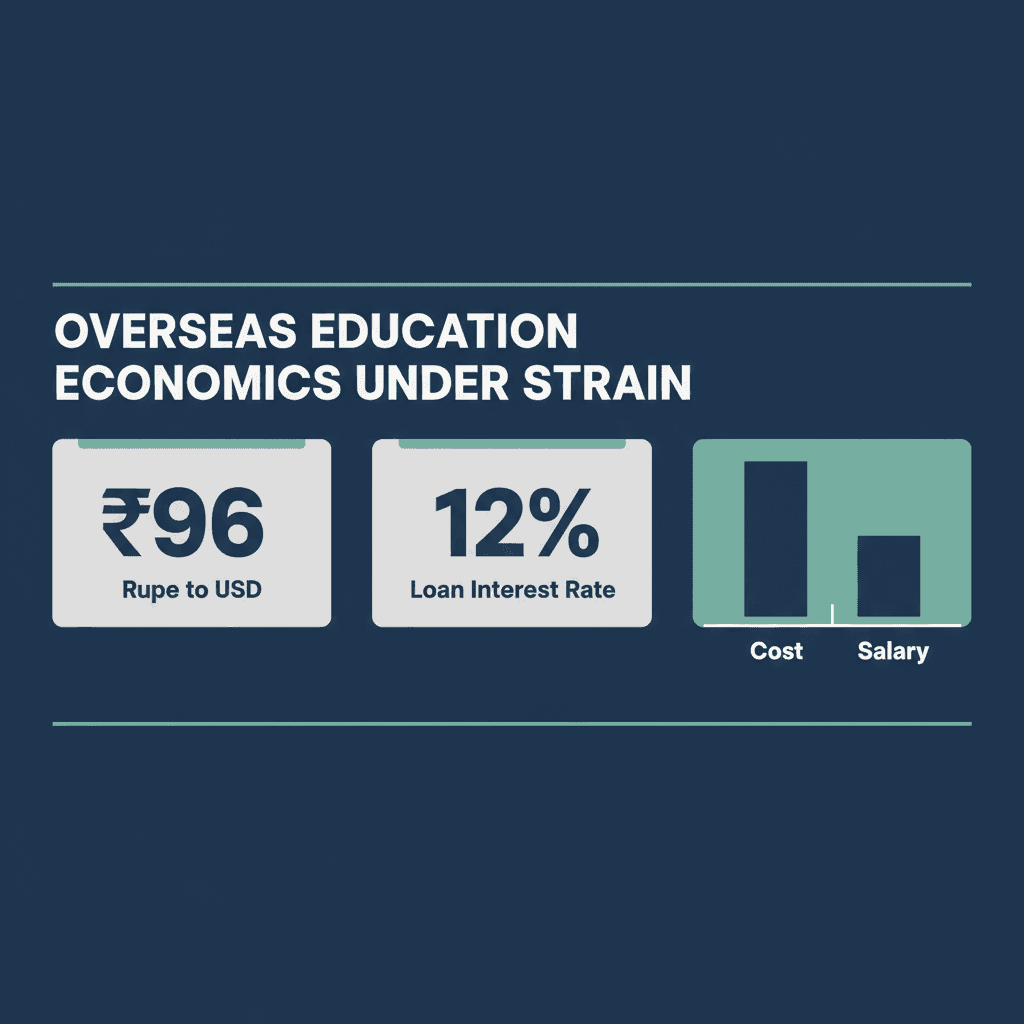
Depreciating rupee & rising loan rates make foreign education unaffordable. Tougher job markets abroad extend repayment timelines for Indian students.
The economics of pursuing foreign education are undergoing a significant shift, driven by a confluence of a weaker Indian rupee, escalating education loan interest rates, and increasingly challenging global job markets. For students and their families, the cost-to-salary ratio, a critical factor in the decision-making process for studying abroad, is now under considerable stress. With the rupee hovering around ₹96 to the US dollar and education loan interest rates touching 12%, the financial viability of international academic pursuits is being seriously questioned.
The Mounting Cost of Foreign Degrees
The primary driver of this financial strain is the consistent depreciation of the Indian rupee. As the rupee weakens against major global currencies like the US dollar and the British pound, the cost of tuition fees, living expenses, and other associated costs for international students escalates in rupee terms. This makes the upfront investment for foreign degrees substantially higher than in previous years. Compounding this issue are rising interest rates on education loans, which are now reportedly around 12%. This increase in borrowing costs directly impacts the total amount students will have to repay, further widening the gap between anticipated future earnings and current expenses.
Stretched Repayment Timelines Amidst Global Economic Headwinds
Beyond the immediate cost of education, the post-graduation prospects for students abroad are also becoming more uncertain. Many popular destinations for Indian students, such as the United States and the United Kingdom, are experiencing tighter job markets. In the US, the availability of H-1B visas, crucial for international graduates seeking employment, remains a significant hurdle. Similarly, the UK’s post-study work visa policies and the broader economic climate are contributing to a more competitive and challenging employment landscape. This means that students may face longer periods of unemployment or underemployment after completing their studies, significantly extending the time it takes to recoup their educational investment and repay their loans. The once-favorable cost-to-salary math, which assumed a relatively quick return on investment, is now being stretched thin by these economic realities.
Visa Restrictions and Rising Fees Add to the Pressure
The challenges do not end with currency fluctuations and job market dynamics. Several countries are also implementing stricter visa regulations and increasing tuition fees, adding further layers of complexity and cost for aspiring international students. These policy shifts, often aimed at managing immigration or boosting domestic employment, inadvertently make foreign education a less accessible option for many Indian students. The cumulative effect of higher upfront costs, increased borrowing expenses, prolonged repayment periods due to weaker job prospects, and more restrictive entry policies is creating a significant deterrent for many who previously considered studying abroad a pathway to better career opportunities and higher earning potential.
Rethinking the Overseas Education Equation
The current economic environment compels a serious re-evaluation of the overseas education strategy for many Indian families. The traditional narrative of studying abroad as a guaranteed route to a high-paying job and quick financial returns is being challenged by the harsh realities of currency depreciation, rising interest rates, and a less forgiving global job market. As a result, students and their advisors are increasingly focused on meticulously calculating the long-term financial implications, factoring in potential delays in salary progression and the rising cost of debt servicing. This necessitates a more conservative and data-driven approach to planning, where the perceived benefits of a foreign degree must demonstrably outweigh the significantly increased financial risks and extended payback periods.