RBI Holds Repo Rate at 5.25%: Home Loan Rates Stable
By Sivam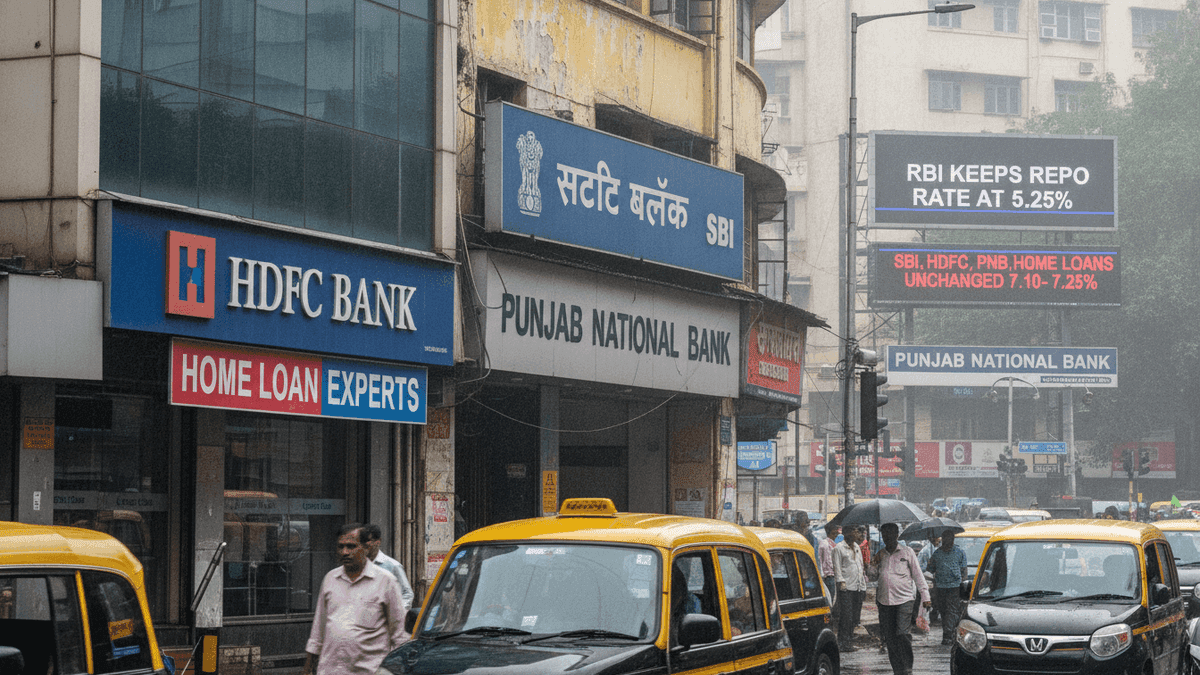
RBI maintains repo rate at 5.25%, keeping home loan rates steady for SBI, HDFC, PNB. Focus on inflation and foreign capital inflow.
RBI Holds Repo Rate at 5.25% Amid Inflation Watch
The Reserve Bank of India (RBI) maintained its benchmark repo rate at 5.25% during its June policy review, opting to await clearer economic signals amidst rising inflation risks. This decision signifies a cautious approach by the central bank, aiming to provide stability in the financial system while closely monitoring macroeconomic developments that could influence future policy adjustments. The unchanged rate provides a period of predictability for financial markets and economic participants.
This steadfastness in the repo rate, which is the key interest rate at which the RBI lends money to commercial banks, has a direct ripple effect across the entire banking sector and the broader economy. It underpins the lending rates offered by commercial banks to both corporate entities and individual consumers, thereby influencing the cost of various loans, including critical home finance.
Home Loan Rates Remain Stable Across Key Lenders
Following the RBI’s policy announcement, home loan rates across major Indian banks have consequently remained unchanged. Public sector lenders, including the State Bank of India (SBI), HDFC Bank, and Punjab National Bank (PNB), are currently offering home loans within a competitive range of 7.10% to 7.25%. This consistent rate environment provides a predictable landscape for prospective homebuyers and those considering refinancing existing mortgages.
The stability in home loan interest rates, particularly from prominent financial institutions such as SBI, HDFC, and PNB, highlights the immediate and direct impact of the RBI’s monetary policy decisions on the retail credit market. For individual consumers, this translates into a period of consistent borrowing costs, which significantly facilitates financial planning for substantial investments like real estate purchases, without the immediate concern of fluctuating interest burdens. The competitive band of 7.10% to 7.25% also indicates the current market equilibrium and vigorous competition among these leading financial institutions for market share.
RBI Introduces Measures to Attract Foreign Capital
In parallel with its domestic monetary policy decision, the RBI also introduced a series of strategic measures designed to attract foreign capital into the Indian economy. These initiatives are primarily aimed at bolstering the Indian rupee, which has been subject to various pressures stemming from global economic uncertainties and capital outflows. By enhancing avenues for foreign investment, the central bank seeks to stabilize the national currency and improve overall external sector resilience.
The move to attract foreign capital is a critical component of the RBI’s broader strategy to manage the nation’s economic health and stability. A stronger rupee, supported by sustained capital inflows, can help mitigate imported inflation, making essential goods and services more affordable, and simultaneously provide a more favorable environment for international trade and foreign direct investment. These measures are specifically expected to appeal to global investors seeking robust growth opportunities within India’s dynamic and expanding market, potentially leading to a significant enhancement of the country’s foreign exchange reserves.
The RBI’s comprehensive approach in its June policy — characterized by maintaining domestic rate stability while actively seeking to strengthen the external position through targeted foreign capital attraction — underscores its multifaceted strategy for economic management. This balanced strategy is designed to effectively navigate existing global uncertainties, manage domestic inflation expectations, and ultimately support the overall stability and long-term growth trajectory of the Indian economy.