RBI Prioritizes Growth: India’s Inflation Dynamics Explained
By ThePip Desk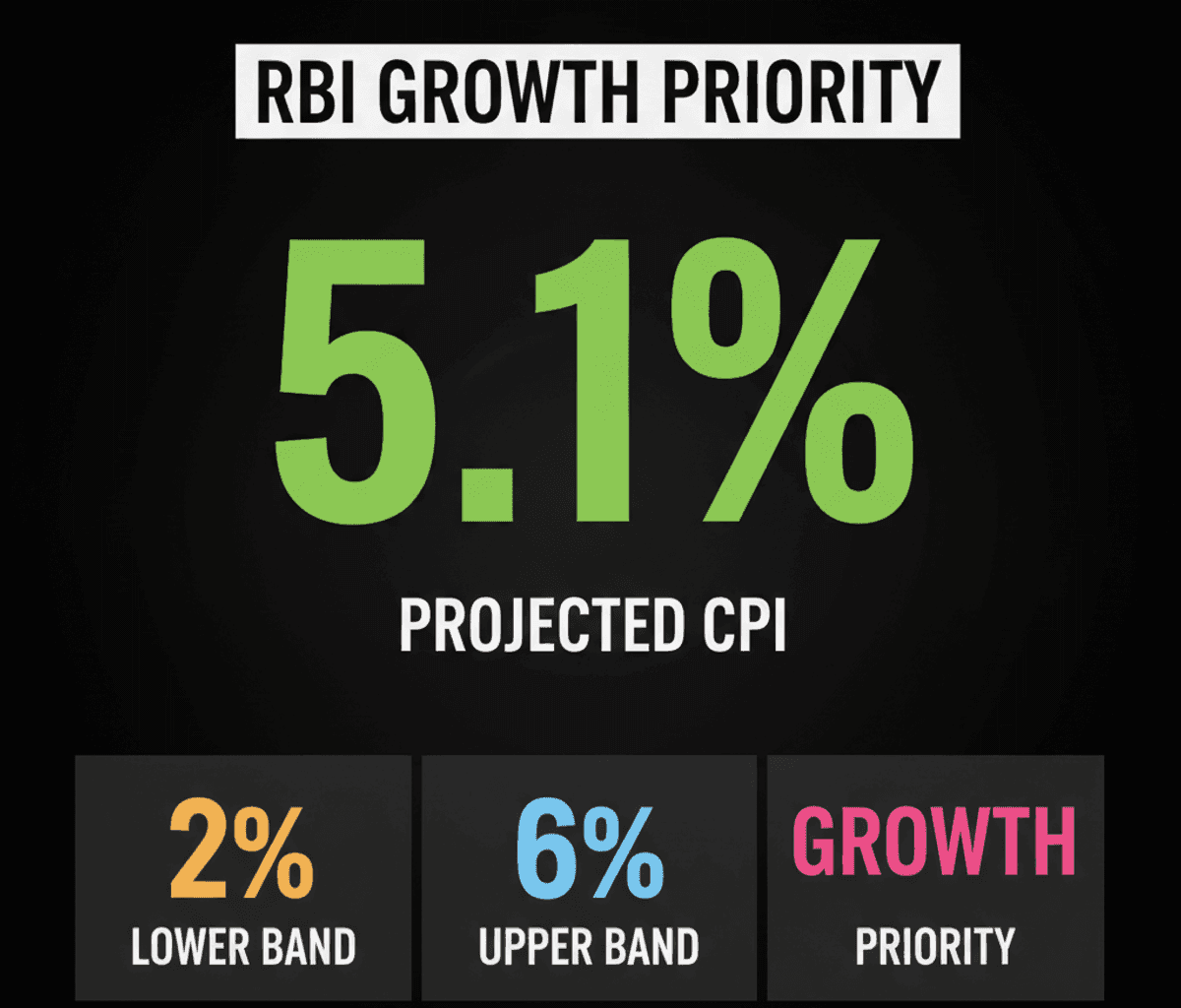
RBI Governor Sanjay Malhotra signals a strategic pivot, prioritizing economic growth by viewing current 5.1% CPI inflation as temporary supply-side pressure.
The Reserve Bank of India (RBI), under the stewardship of Governor Sanjay Malhotra, has signaled a profound strategic shift, consciously prioritizing the imperative of economic growth over an immediate, aggressive campaign to curb inflation. This recalibration is rooted in a first-principles assessment: the central bank views the current uptick in prices, with the Consumer Price Index (CPI) projected around 5.1%, as fundamentally a product of temporary supply-side disruptions, rather than an overheated demand-driven economy. This analytical distinction is crucial, informing a policy stance that seeks to avoid interest rate hikes that could inadvertently stifle India’s nascent domestic investment and consumption.
This policy choice is not a simple disregard for price stability; rather, it embodies a granular approach to inflation management. Instead of reacting solely to the headline CPI figure, the RBI intends to dissect the specific sectors and underlying mechanisms contributing to price increases. This methodical analysis aims to differentiate between transient shocks and persistent inflationary pressures, allowing for targeted interventions rather than broad-brush tightening that could inflict undue damage on productive economic segments. Such a framework-driven approach acknowledges the limitations of monetary policy in addressing non-demand-side inflationary forces.
Deconstructing Inflation’s Drivers: Demand vs. Supply
Understanding the nature of inflation is paramount for effective central bank policy. Economists typically distinguish between demand-pull inflation, which occurs when aggregate demand outstrips aggregate supply, and cost-push or supply-side inflation, where production costs or supply chain disruptions force prices higher. Traditional monetary tightening, primarily through interest rate increases, is highly effective against demand-pull inflation by reducing borrowing and spending. However, when inflation is predominantly supply-driven, raising interest rates can be a blunt and counterproductive instrument, as it does little to alleviate the underlying supply bottlenecks while simultaneously dampening economic activity.
The RBI’s current stance reflects a conviction that India’s 5.1% CPI is largely a manifestation of these supply-side pressures. This interpretation suggests that the central bank believes that the inflationary impulse is not broadly entrenched in consumer expectations or wage-setting mechanisms. By refraining from aggressive rate hikes, the RBI is making a calculated bet that inflation expectations remain anchored, and that the temporary nature of these supply shocks will allow price pressures to naturally recede over time without necessitating a growth-stifling monetary response.
The Framework: Flexible Inflation Targeting and Granular Analysis
India operates under a flexible inflation targeting framework, where the RBI aims to keep CPI inflation within a band of 2% to 6%. While the current 5.1% figure sits within this band, it is notably closer to the upper end. The decision to prioritize growth despite this proximity is a testament to the