Iran War’s Uneven Impact on Gulf Economies: Q2 Earnings Reveal
By ThePip Desk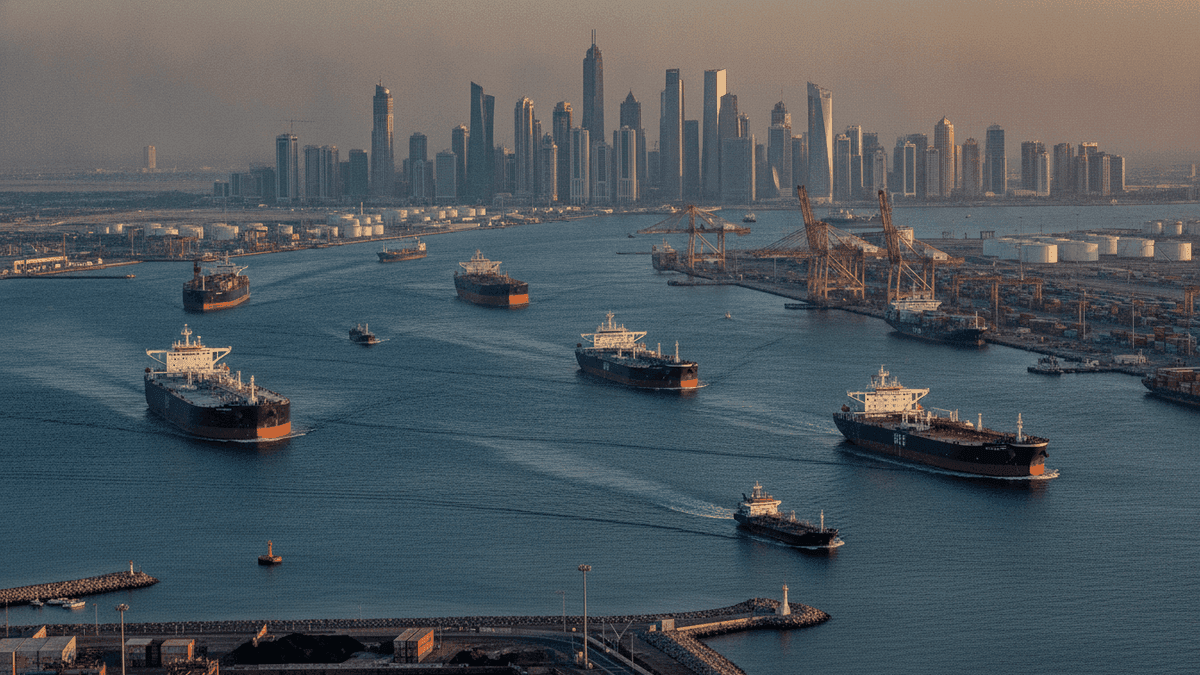
Second-quarter earnings show how the Iran war unevenly impacted Gulf economies, highlighting geographic reliance and sectoral resilience.
The four-month Iran war has starkly illuminated the differential vulnerabilities inherent across Gulf economies, a pattern now concretely reflected in second-quarter earnings reports. While the conflict generated widespread disruptions in trade, energy production, tourism, and financial markets, its financial repercussions varied significantly based on a nation’s geographical positioning and the intrinsic resilience of its dominant economic sectors.
These Q2 results offer a far more comprehensive assessment than the initial Q1 earnings, which only captured the nascent stages of the conflict’s economic transmission. Understanding these outcomes requires a first-principles analysis of how external shocks propagate through diverse structural frameworks.
Geographic Vulnerabilities and Structural Mitigations
The Strait of Hormuz emerged as a critical choke point, fundamentally differentiating the war’s impact. Nations heavily reliant on this shipping lane for oil and gas exports, such as the United Arab Emirates, Qatar, and Kuwait, faced heightened security risks and subsequent investor caution.
Conversely, Saudi Arabia and Oman demonstrated a structural advantage. Saudi Arabia mitigated risk by leveraging alternative crude export routes via its Red Sea terminals, while Oman’s geographical placement entirely outside the Strait of Hormuz provided an inherent buffer against its closure or heightened tensions. Renewed U.S.-Iran hostilities, as declared by U.S. President Donald Trump, further amplified these geopolitical concerns for the more exposed states.
Sectoral Resilience Amidst Disruption
The energy sector presented a complex, almost paradoxical, scenario. Despite facing operational disruptions, the significant surge in global oil and gas prices provided an offsetting benefit. Average second-quarter Brent crude prices reached $114 per barrel, a factor that HSBC now projects will stabilize around $95 per barrel by 2026, illustrating how commodity price dynamics can cushion operational shocks.
However, this resilience was not universal; the UAE’s gas sector, particularly ADNOC Gas, experienced a projected 19% year-on-year decline in domestic gas sales. This specific incident during the conflict highlights that even within a broadly benefiting sector, localized operational vulnerabilities can manifest distinct impacts.
In stark contrast, the telecommunications sector proved remarkably resilient. Operators like Saudi Arabia’s STC and Mobily, alongside the UAE’s e&, maintained stable demand, underpinned by long-term customer contracts. This structural characteristic rendered their revenues less sensitive to the broader economic slowdown.
Consumer-facing businesses, encompassing retailers, restaurants, tourism operators, and airlines, navigated a mixed landscape. Initial travel demand decreased during intense fighting, though airline operations largely normalized thereafter. Interestingly, some segments, such as Dubai-based food delivery platform Talabat, observed increased domestic spending, leading to a notable 60% rise in its share price over three months, demonstrating a localized counter-cyclical trend.
The banking sector is anticipated to report a modest single-digit percentage decline in second-quarter profits, primarily due to reduced trade finance activity and international travel spending. While regional banks generally maintain strong financial profiles and ample liquidity, analysts caution that prolonged geopolitical uncertainty could constrain future lending growth, thereby impacting broader economic expansion.
Echoing these concerns, the property market, particularly in the UAE, has shown signs of weakening. This trend is largely attributable to reduced expatriate arrivals and a slowdown in tourism, underscoring the interconnectedness of geopolitical stability with demographic and investment flows.
Ultimately, the second-quarter earnings reveal a nuanced picture where the Iran war acted as a stress test, exposing the underlying structural factors that dictate economic resilience. The durable takeaway is that geographic positioning and sector-specific demand elasticity are not mere footnotes but fundamental determinants of how external shocks translate into tangible financial outcomes, shaping the long-term investment calculus for the region.