International Travel Spending: Credit vs Forex vs Prepaid Cards
By Sivam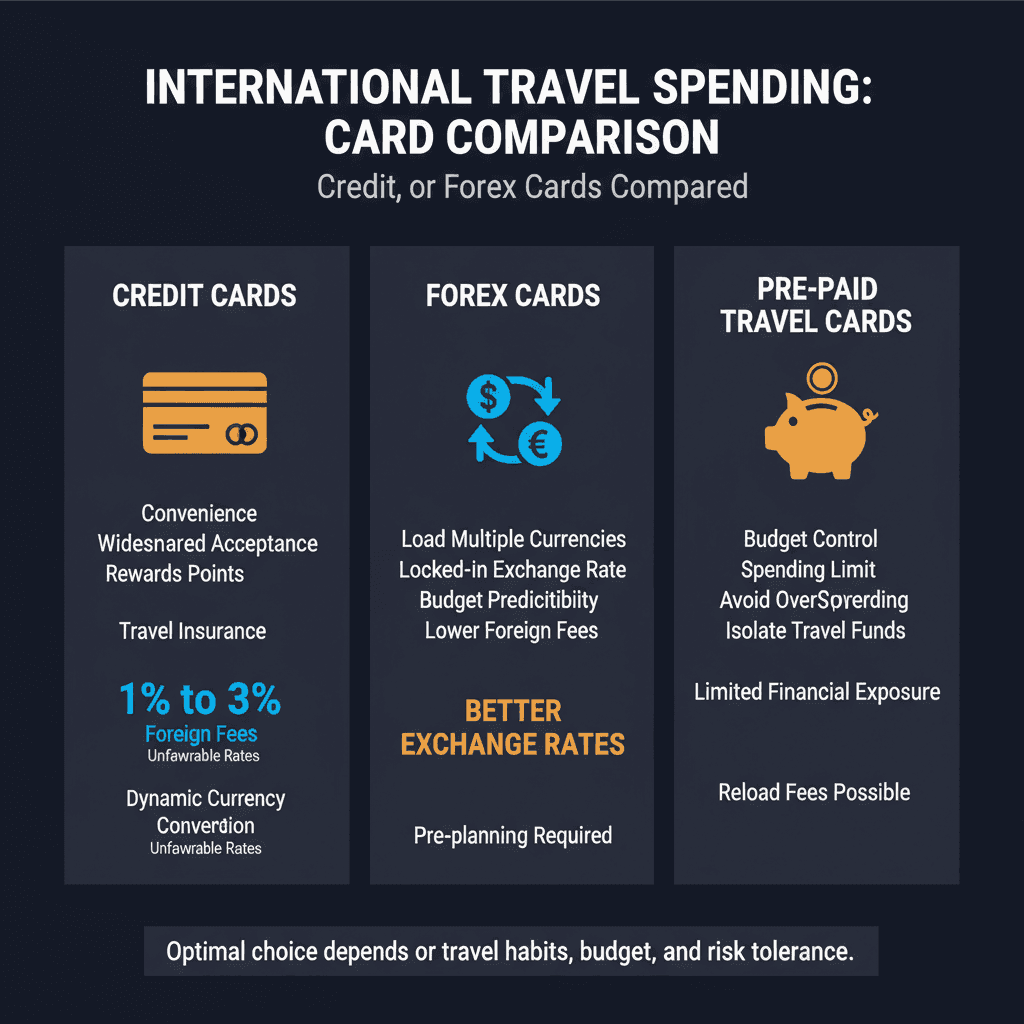
Compare credit cards, forex cards, and prepaid travel cards for international spending. Find the best payment method for your global trips based on cost, security, and convenience.
Choosing Optimal Payment Methods for International Travel
As global travel resumes, individuals planning international trips face a critical financial decision: selecting the most efficient and cost-effective spending method. The choice among credit cards, forex cards, and pre-paid travel cards can significantly impact overall travel expenses, security, and convenience abroad.
Understanding the nuances of each option is paramount for travelers to make informed decisions that align with their specific financial goals and travel itineraries. This comparison delves into the features, benefits, and drawbacks of these popular payment instruments.
Credit Cards: Convenience with Potential Costs
Credit cards offer unparalleled convenience and widespread acceptance globally, making them a go-to option for many international travelers. They provide a line of credit, allowing for flexible spending and often come with benefits such as rewards points, travel insurance, and emergency cash access.
However, credit cards can incur significant foreign transaction fees, typically ranging from 1% to 3% of each purchase. Dynamic currency conversion (DCC) at point-of-sale can also lead to unfavorable exchange rates. While offering security through fraud protection, a lost or stolen card can still present immediate challenges in a foreign country.
Forex Cards: Locking in Exchange Rates
Forex cards, specifically designed for international use, allow travelers to load multiple foreign currencies at a locked-in exchange rate prior to their trip. This feature insulates users from currency fluctuations, providing predictability in budgeting.
These cards typically offer lower foreign transaction fees compared to credit cards and often provide better exchange rates. They function much like a debit card, drawing from pre-loaded funds, which aids in budget management. However, they require pre-planning to load funds and may not be accepted everywhere, especially in smaller establishments.
Pre-paid Travel Cards: Budget Control and Security
Pre-paid travel cards, while often overlapping with forex cards in functionality, can offer distinct advantages for budget-conscious travelers. These cards are loaded with a specific amount of funds before departure, helping users stick to a predetermined spending limit and avoid overspending.
They enhance security by isolating travel funds from primary bank accounts. In case of loss or theft, the financial exposure is limited to the loaded amount. While generally offering competitive exchange rates and minimal transaction fees, some pre-paid cards might have reload fees or less favorable rates compared to dedicated multi-currency forex options.
Strategic Selection for Diverse Travel Needs
The optimal choice among these payment methods largely depends on individual travel habits, budget, and risk tolerance. For travelers prioritizing flexibility and rewards, a credit card with low or no foreign transaction fees might be suitable, especially for larger purchases or emergencies.
Those focused on budget certainty and protection against currency volatility would benefit most from a multi-currency forex card. Meanwhile, pre-paid travel cards serve as an excellent option for managing specific budgets, providing enhanced security for the allocated travel funds without linking directly to primary banking accounts.
Key Considerations and Future Outlook
When selecting a payment method, travelers should meticulously compare foreign transaction fees, ATM withdrawal charges, exchange rates, and any associated annual or reload fees. Security features, customer support availability, and acceptance networks are also crucial factors.
The evolving landscape of digital payments and fintech solutions continues to introduce new options, pushing traditional banking institutions to refine their offerings. As international travel continues its recovery, the demand for versatile, secure, and cost-effective payment solutions will drive further innovation in this competitive market segment, emphasizing the need for travelers to regularly re-evaluate their choices.