IndiGo’s Mega Engine Order: Aviation’s Global Shift
By Business Desk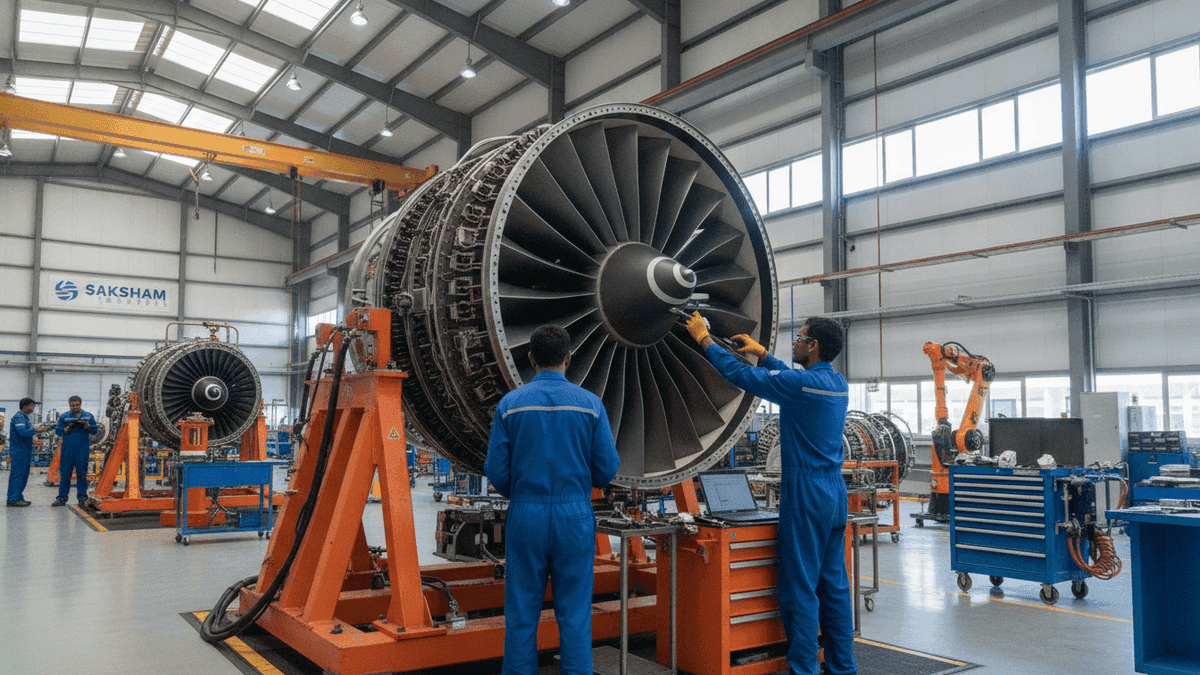
IndiGo’s record engine order for 510 Airbus A320neo aircraft signals India’s growing importance in global aviation, driving localized MRO investments.
IndiGo, a prominent Indian airline, has placed a landmark order for over 1,000 LEAP-1A engines from CFM International for its fleet of 510 Airbus A320neo family aircraft. This transaction, estimated at approximately $14.5 billion at list prices, is more than a mere procurement; it represents a significant structural signal regarding the evolving global aerospace supply chain and India’s increasing strategic relevance within it.
This substantial order directly supports IndiGo’s ambitious expansion strategy to nearly double its current fleet of over 430 planes to 1,000 aircraft by 2030. Such aggressive growth by a single carrier creates an undeniable gravitational pull for original equipment manufacturers (OEMs) to deepen their commitment to the market, moving beyond simple sales to establishing localized infrastructure.
The Imperative of Localized MRO Infrastructure
A crucial component of the agreement, finalized at the Farnborough Air Show, includes CFM International’s pledge to establish an engine maintenance, repair, and overhaul (MRO) facility in India. This move exemplifies a broader trend where the sheer volume of orders from Indian carriers necessitates a localized support ecosystem. For OEMs, the economic rationale for investing in local MRO capabilities becomes compelling when a market like India accounts for such a substantial portion of their order book.
CFM, a 50/50 joint venture between GE Aerospace and Safran Aircraft Engines, already identifies India as its third-largest global market, with over 400 LEAP-powered aircraft in operation and a staggering 2,000 engines on order from five Indian carriers. This established presence, further solidified by Safran’s MRO inauguration in Hyderabad in November, underscores a ‘follow the customer’ strategy, where significant demand aggregation drives supply-side investment.
Broader Ecosystem Engagement
The pattern of deep OEM engagement extends beyond engines. In a parallel development, Honeywell Aerospace announced IndiGo’s selection of its avionics and power systems for 810 new Airbus A320neo aircraft. This indicates that the strategic imperative for localization and comprehensive service support is not confined to a single component but encompasses various critical aircraft systems, reflecting the holistic requirements of a rapidly expanding fleet.
IndiGo’s total order book for approximately 1,000 Airbus aircraft, including 60 widebody A350s with an option for 40 more, and its June 2023 firm order for 500 A320 family aircraft valued at $50 billion, illustrates the unprecedented scale of capital deployment in Indian aviation. This scale fundamentally reshapes the economics for global aerospace manufacturers, compelling them to invest in local manufacturing, MRO, and engineering capabilities to support long-term operational needs.
The confluence of these massive orders and OEM commitments points to a structural transformation within the global aerospace industry. India is rapidly evolving from merely a significant customer into a critical hub for aviation manufacturing and maintenance, driven by the sustained, large-scale demand from its domestic carriers. This shift creates a feedback loop, where local infrastructure further enables growth, embedding India deeper into the global aviation value chain.