India’s Corporate Lending Revival: Banks Gain Over Bonds
By Business Desk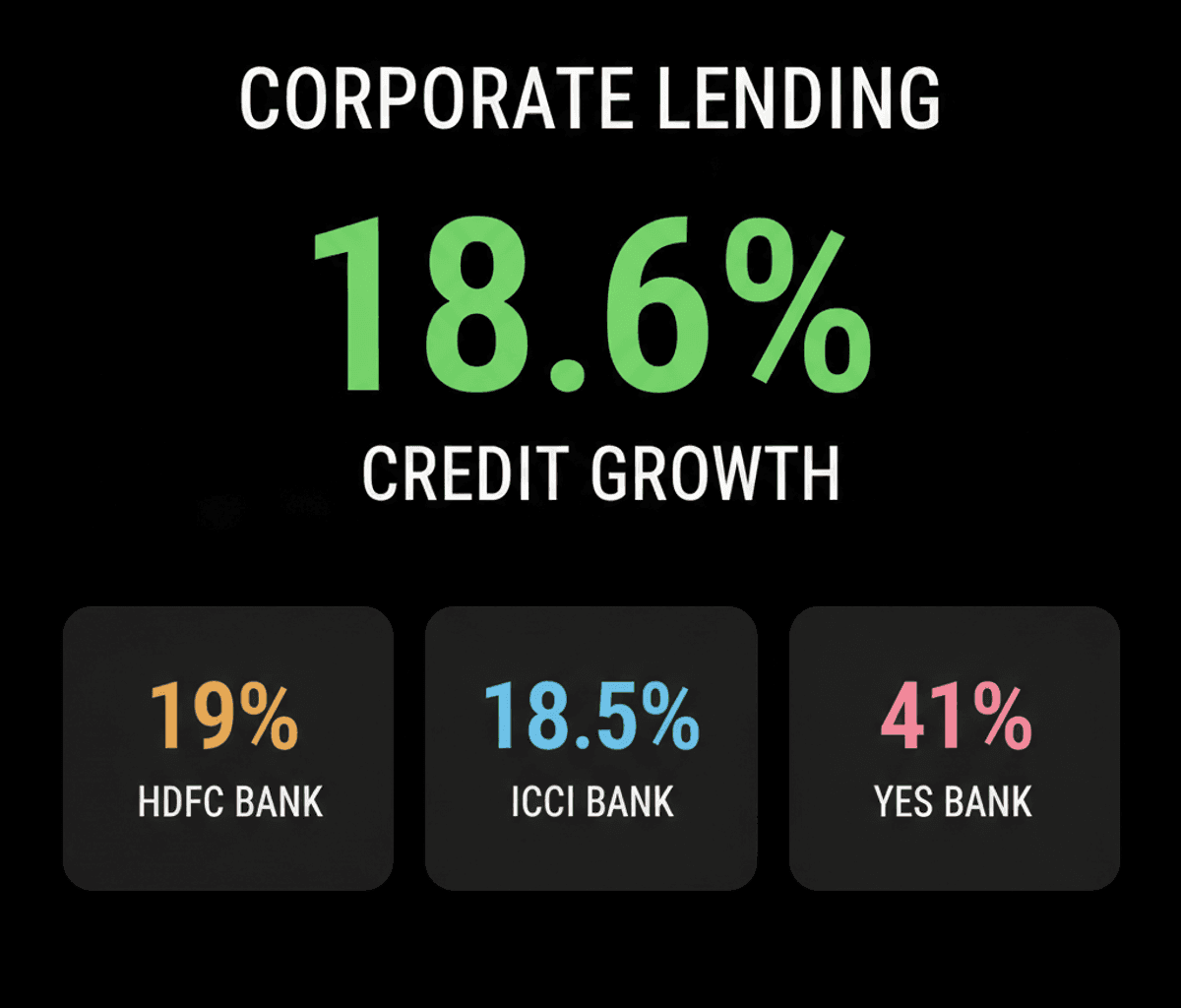
Indian private banks see a corporate loan surge as high bond yields make bank financing more attractive and affordable for businesses.
India’s leading private banks are experiencing a notable resurgence in corporate lending, marking a structural shift in how companies are securing capital. This trend, particularly evident in the first fiscal quarter, is primarily driven by elevated bond yields which have made market borrowings less attractive, prompting businesses to pivot towards more economical bank loans.
This dynamic illustrates a clear cost arbitrage mechanism at play within the Indian financial ecosystem. As sovereign 10-year bond yields climbed above 7% following geopolitical events, the cost of corporate borrowing from bond markets rose commensurately. Companies, facing working capital requirements and seeking efficient capital allocation, are now rationally opting for the comparatively cheaper bank financing.
The data underscores this pivot. HDFC Bank, India’s largest private lender by assets, reported a nearly 19% increase in corporate loans for the quarter, a substantial leap from 1.7% in the prior year. Similarly, ICICI Bank’s domestic corporate loan book expanded by 18.5%, while Kotak Mahindra Bank recorded a 15% increase. Yes Bank demonstrated even more robust growth, with its corporate and institutional loan book expanding by over 41%.
This strong performance among individual institutions aligns with broader market trends. Reserve Bank of India data confirms overall bank credit growth accelerated to an 18.6% year-on-year high by June 30. This sustained demand for loans comes despite a lag in deposit mobilization, indicating a fundamental shift in corporate funding preferences.
Indian banks are well-positioned to capitalize on this corporate loan revival. Years spent cleaning up non-performing assets, strengthening underwriting standards, and building capital buffers have resulted in the banking sector’s gross non-performing asset ratio reaching multi-year lows. This renewed institutional health provides lenders with the confidence to expand their corporate portfolios without repeating past mistakes.
Demand for these loans is broad-based, spanning critical sectors. HDFC Bank’s Deputy Managing Director, Kaizad Bharucha, noted corporate demand was evenly split between term loans and working-capital financing, with strong interest from electronics, automobiles, renewable energy, and commodities. Yes Bank observed healthy borrowing from oil and metals companies, further illustrating the diverse industrial requirements driving this trend.
While the immediate outlook for corporate lending appears robust, driven by these structural shifts and the banking sector’s preparedness, some macro concerns persist. Although bond yields have moderated, the potential for rising oil prices due to Middle East tensions could reignite worries about further monetary tightening, which might recalibrate borrowing costs once more. However, efforts by the Reserve Bank of India to boost reserves, such as offering full hedging-cost support for foreign currency deposits, are expected to enhance banking system liquidity and provide access to cheaper foreign-currency funding, offering a counter-balance.
Ultimately, this resurgence in corporate lending suggests a re-evaluation of funding sources by Indian enterprises, favoring the banking channel in the current interest rate environment. It highlights the renewed structural relevance of banks in capital markets, potentially fostering a more diversified and resilient corporate financing landscape over the long term.