Indian Market Plunges: Banking Woes, Global Fears, Oil Surge
By Business Desk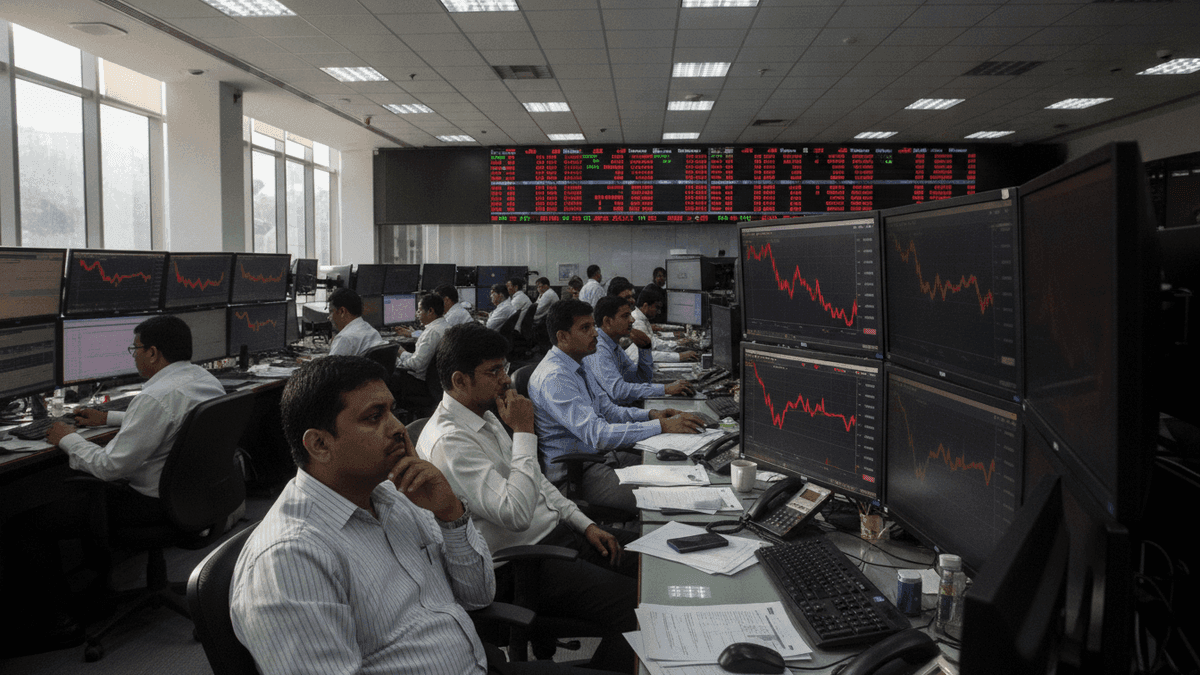
Indian stocks dropped Monday amid banking sector weakness, global jitters, and rising oil prices. A challenging outlook for investors, especially young ones.
🔥 Main Takeaway: Indian markets tumbled due to banking sector woes, global jitters, and spiking oil prices, signaling a tough ride ahead for investors.
📌 What Happened?
The Indian stock market took a hit on Monday, July 20. The Sensex dropped 508 points (0.7%) to 77,639.31, while the Nifty 50 fell 125 points (0.5%) to 24,209.20.
Banking stocks led the decline, with the Bank Nifty down over 1% following recent quarterly earnings announcements. Major players like HDFC Bank and Axis Bank faced significant selling pressure.
Global markets also showed weakness. Asian equities, including South Korea’s KOSPI index, were down over 3.5%, indicating a widespread risk-off sentiment among international investors.
Escalating geopolitical tensions in the Middle East added to investor uncertainty. Reports confirmed the US Central Command (CENTCOM) launched a ninth consecutive night of strikes against Iran.
Crude oil prices surged, with Brent crude trading above $90 per barrel and WTI crude around $84 per barrel. This rise, fueled by the Middle East conflict, sparked fresh inflation concerns for India.
💰 Why It Matters
This market dip directly impacts portfolios, especially those heavily invested in the banking sector. It signals broader economic headwinds for young investors looking to grow their wealth.
Rising oil prices are a big deal for India, a major importer. Higher crude costs can spike inflation, making everything from daily essentials to consumer goods more expensive and potentially widening the current account deficit.
Global instability often pushes foreign investors to reduce exposure to emerging markets like India. This outflow can decrease market liquidity and further depress stock prices.
Higher input costs for businesses, driven by expensive crude, could squeeze corporate earnings across various sectors. This directly affects company valuations and future stock performance.
👀 What to Watch Next
Keep a close eye on upcoming quarterly earnings reports from the banking sector for any signs of stabilization or continued weakness.
Monitor crude oil prices and geopolitical developments in the Middle East. Any de-escalation could ease inflation fears and potentially stabilize markets.
Watch for central bank responses to rising inflation. Tighter monetary policy, such as interest rate hikes, could further impact market liquidity and overall economic growth prospects.