Indian Banks See Deposit Surge as Market Returns Mute
By Varun Mittal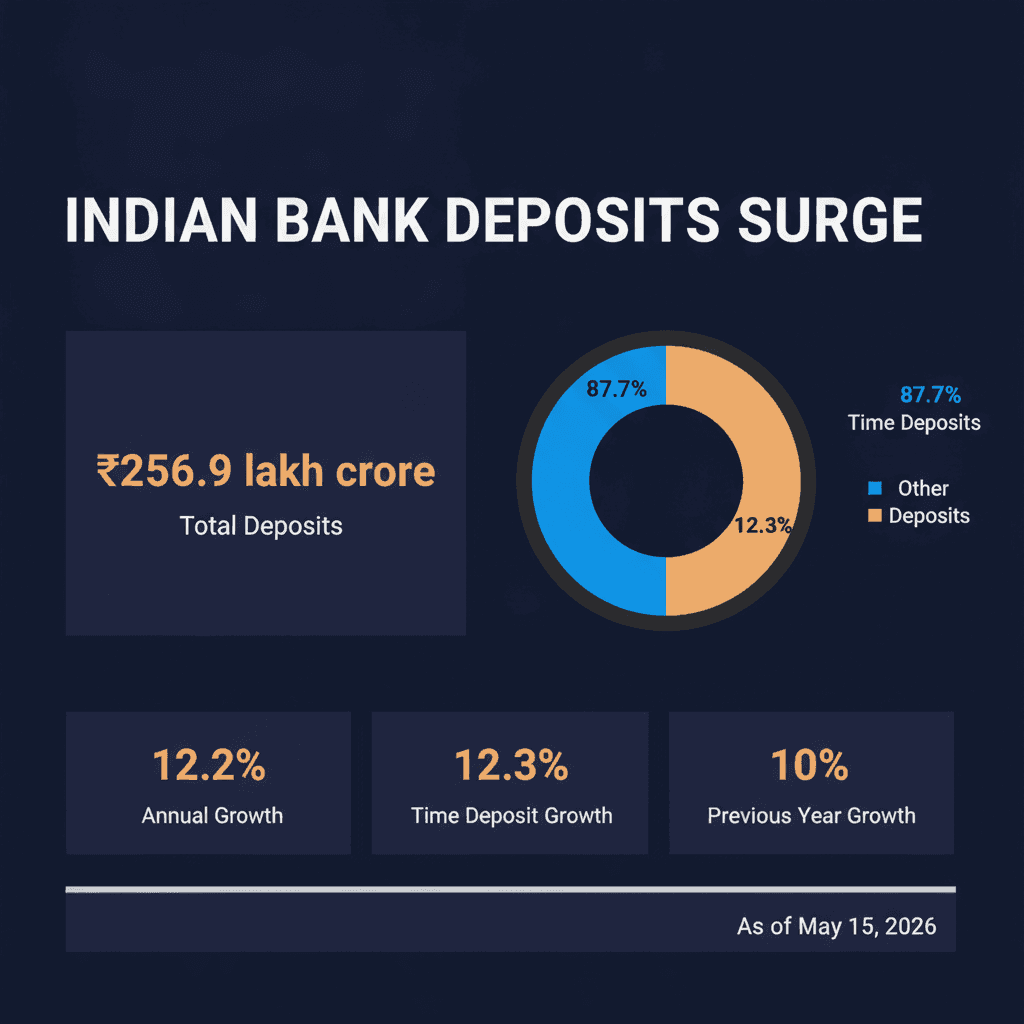
Indian banks witness a significant surge in deposits, with RBI data showing 12.2% YoY growth. Time deposits lead the increase as investors seek safer havens amid muted market returns.
Bank Deposits Surge Amid Muted Market Returns
Indian banks are witnessing a substantial influx of funds as investors shift away from market bets that have yielded muted returns. This trend is clearly highlighted by recent data from the Reserve Bank of India (RBI), which indicates a robust growth in bank deposits across the country.
As of May 15, 2026, the aggregate bank deposits stood at an impressive ₹256.9 lakh crore. This figure represents a significant year-on-year growth of 12.2%, a notable acceleration compared to the 10% growth recorded during the corresponding period in the previous year. The increased pace of deposit accumulation underscores a broader reallocation of capital within the financial system.
Time Deposits Lead the Charge
Further analysis of the RBI data reveals that time deposits have been the primary catalyst behind this surge. These deposits, which include fixed and recurring deposits, collectively rose by 12.3% to reach ₹225.2 lakh crore. This segment alone now accounts for a substantial 87.7% of the total bank deposits.
The dominant contribution of time deposits suggests a prevailing preference among savers for instruments that offer stability and predictable returns, especially when faced with uncertainties or underperformance in equity and other market-linked investments. This strategic shift by depositors provides banks with a solid and reliable funding base.
Implications for the Financial System
This significant flow of funds back into the banking sector carries several implications for the broader financial system. For banks, the increased deposit base enhances liquidity, which can influence their lending capacity and potentially impact interest rate decisions across various loan products.
The sustained growth in deposits, particularly time deposits, also reflects evolving investor sentiment and risk appetite. In an environment where market returns are perceived as less attractive, the safety and assured returns offered by bank deposits become a compelling alternative, steering household and institutional savings towards traditional banking channels.