Indian Bank Focuses on ROA & NIM for Sustainable Growth
By ThePip Desk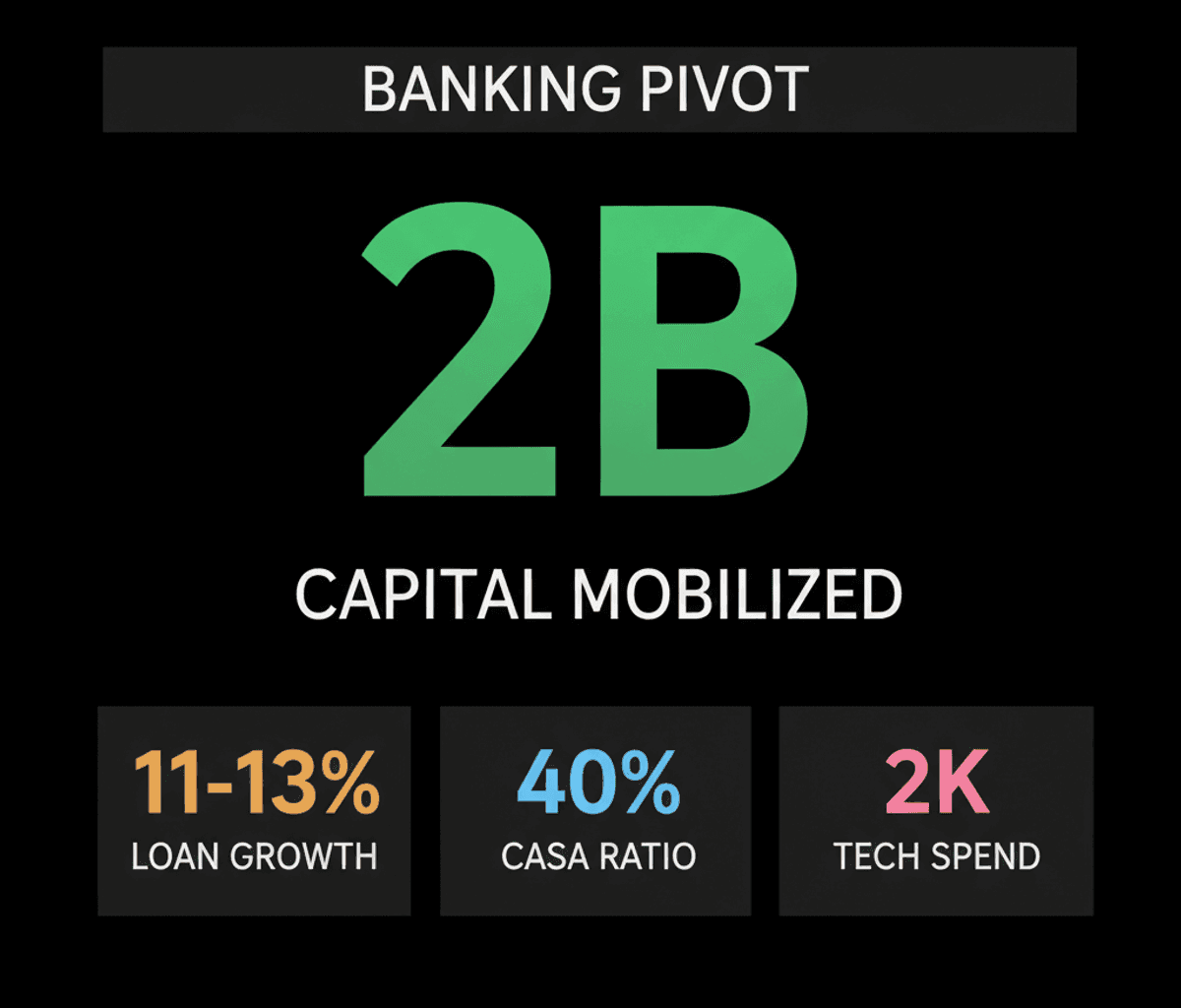
Indian Bank shifts strategy, prioritizing Return on Assets (ROA) and Net Interest Margin (NIM) for sustainable, capital-efficient growth by targeting high-margin segments.
Indian Bank is strategically recalibrating its operational focus, prioritizing the protection of Return on Assets (ROA) and Net Interest Margin (NIM) above the pursuit of aggressive loan book expansion. This pivot, articulated by MD and CEO Binod Kumar, signals a deliberate move towards more sustainable, capital-efficient growth within the public sector banking landscape.
The bank projects an 11-13% loan growth, a figure that, while robust, is underpinned by a targeted approach rather than broad-based volume chase. This growth is specifically channeled into high-margin segments such as MSME, retail, and agriculture, with the latter anticipated to recover to a 15-16% growth trajectory. Such segment-specific targeting is a classic mechanism to optimize asset quality and enhance NIM, reflecting a first-principles approach to banking profitability.
Strategic Capital Mobilization and Risk Mitigation
To bolster its balance sheet and diversify funding, Indian Bank aims to mobilize $2 billion by the end of September. This capital will be raised through FCNR(B) deposits and external commercial borrowings (ECBs), strategically leveraging its international operations in GIFT City and Singapore. The initiative primarily targets Non-Resident Indians (NRIs) residing in the UAE and Singapore, aiming to secure stable, potentially lower-cost funding sources that can positively impact NIM.
Concurrently, the bank is proactively managing its credit risk profile by front-loading ₹3,000-₹3,500 crore in provisions for the Expected Credit Loss (ECL) framework. This pre-emptive provisioning is a critical risk mitigation step, designed to smooth the transition to the new accounting standard and safeguard future ROA by absorbing potential credit shocks in advance, rather than reacting retrospectively.
Technology Investment and Customer Acquisition Levers
Technology remains a significant investment area, with Indian Bank allocating approximately ₹2,000 crore annually to enhance its digital infrastructure and cybersecurity. Plans include the launch of conversational AI for voice-command banking transactions, a move aimed at improving operational efficiency and customer experience. These investments are structural plays to reduce the cost-to-income ratio over the long term and support digital customer acquisition.
The bank’s strategy to improve its Current Account Savings Account (CASA) ratio, a key determinant of funding costs, involves a multi-pronged approach. This includes relationship banking, a focus on salary accounts, and implementing fintech-based payment solutions for government departments. These efforts have already yielded tangible results, converting 17 lakh inoperative accounts. Achieving a CASA ratio of over 40% by FY27 is a stated priority, alongside boosting digital business and cross-selling capabilities, further reinforcing the bank’s commitment to low-cost funding and diversified revenue streams.
Looking towards FY27, the establishment of a dedicated wealth management vertical in the second half of the fiscal year underscores a longer-term strategy. This move positions the bank to capitalize on fee-based income opportunities, diversifying its revenue mix beyond traditional lending and further contributing to ROA enhancement. Indian Bank’s strategic shifts collectively illustrate a foundational repositioning towards a more resilient and profitable operating model, emphasizing quality over sheer volume in a competitive financial landscape.