Indian Bank Diversifies: Enters Life Insurance & Asset Management
By ThePip Desk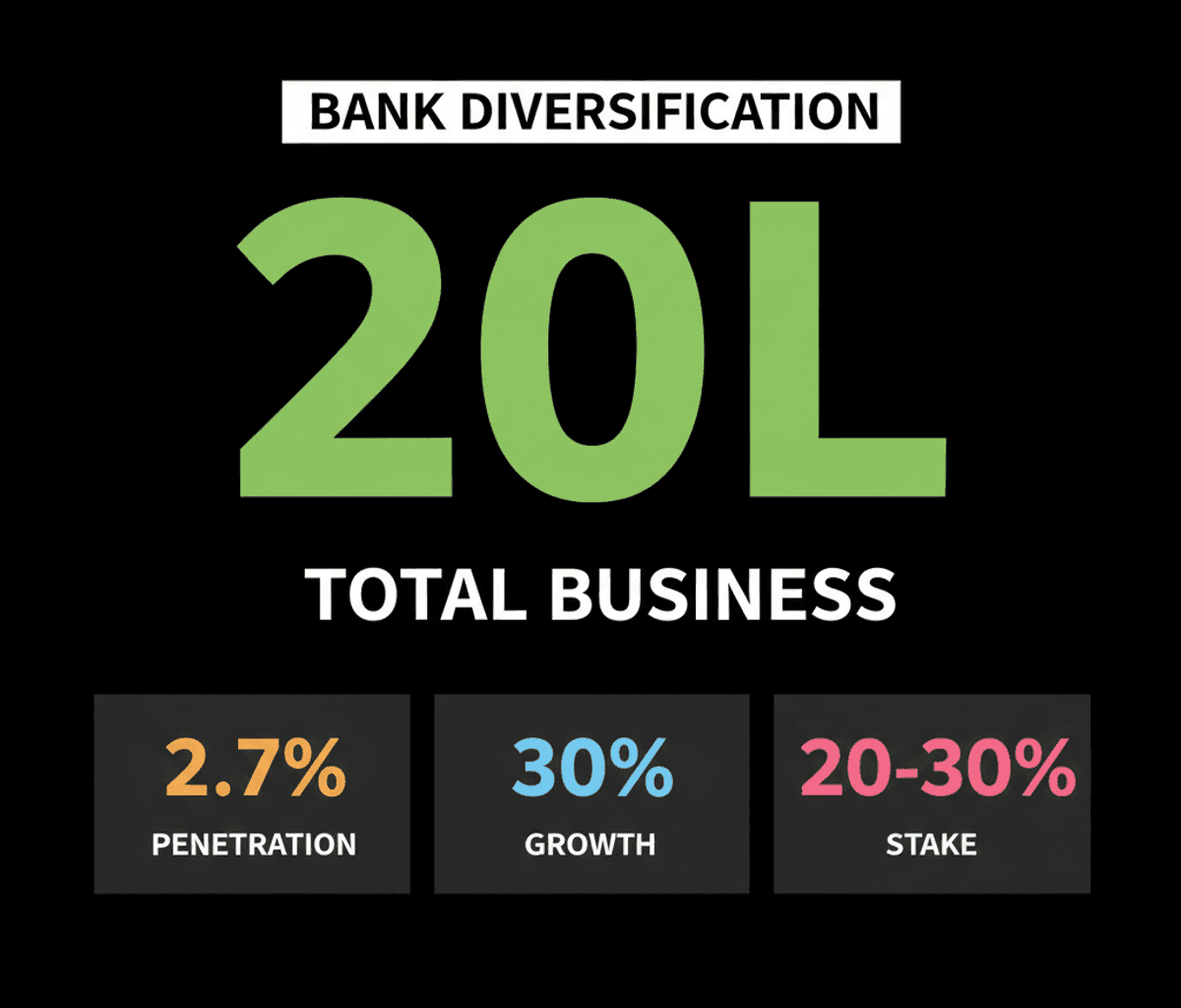
Indian Bank strategically expands into life insurance and asset management via JVs, targeting 30% business growth by Sept 2028. Explore this diversification.
Indian Bank, a prominent public sector lender, is strategically positioning itself for significant growth by venturing into the life insurance and asset management company (AMC) sectors. This move, which involves establishing two new joint venture subsidiaries, signifies a broader trend among financial institutions to diversify revenue streams and capitalize on India’s underpenetrated financial services market.
The Chennai-headquartered bank aims to secure a 20-30% stake in these forthcoming joint ventures. According to Indian Bank MD & CEO Binod Kumar, this long-term vision is underpinned by the substantial growth potential inherent in life insurance, a sector currently exhibiting a mere 2.7% penetration rate in India. Concurrently, the AMC space presents numerous opportunities across wealth management, family offices, and mutual funds, reflecting a structural shift towards broader financial solutions.
The Imperative of Diversification in Financial Services
This strategic expansion aligns with a fundamental principle in financial market evolution: the drive for diversified revenue. Banks traditionally reliant on interest income from lending are increasingly seeking fee-based income, which tends to be less capital-intensive and more resilient across economic cycles. Indian Bank’s existing 28.5% stake in Universal Sompo General Insurance already demonstrates a commitment to this model, and the new ventures deepen this strategic pivot.
The low penetration rate in India’s life insurance market, cited at 2.7%, represents a classic market opportunity from a first-principles perspective. As disposable incomes rise and financial literacy improves, demand for protection and long-term savings products is poised for sustained growth. Similarly, the burgeoning wealth management sector, fueled by a growing middle class and increasing investment sophistication, offers fertile ground for AMCs.
Beyond these new ventures, Indian Bank has set an ambitious target to expand its total business to Rs 20 lakh crore by September 2028. This represents a 30% increase from its Rs 15.3 lakh crore recorded as of June 30, 2026. This growth trajectory is not solely reliant on internal initiatives; it is also expected to be bolstered by macroeconomic tailwinds.
Kumar also highlighted that India’s recent free trade agreements, including the notable UK trade deal, are anticipated to stimulate exports. This increase in export activity is projected to translate into heightened demand for credit from Micro, Small, and Medium Enterprises (MSMEs), a crucial customer segment for the bank. Such external economic drivers provide a foundational layer for the bank’s ambitious growth projections, illustrating how macro policy can directly impact sector-specific credit demand.
Indian Bank’s dual strategy of expanding into high-growth, underpenetrated financial segments while leveraging macroeconomic policy shifts underscores a calculated approach to long-term value creation. The move reflects an understanding of the structural forces shaping India’s financial landscape, where diversification and strategic alignment with economic growth drivers are becoming paramount for sustained success.