India Small Business Credit Soars to Rs 49.2 Lakh Cr
By ThePip Desk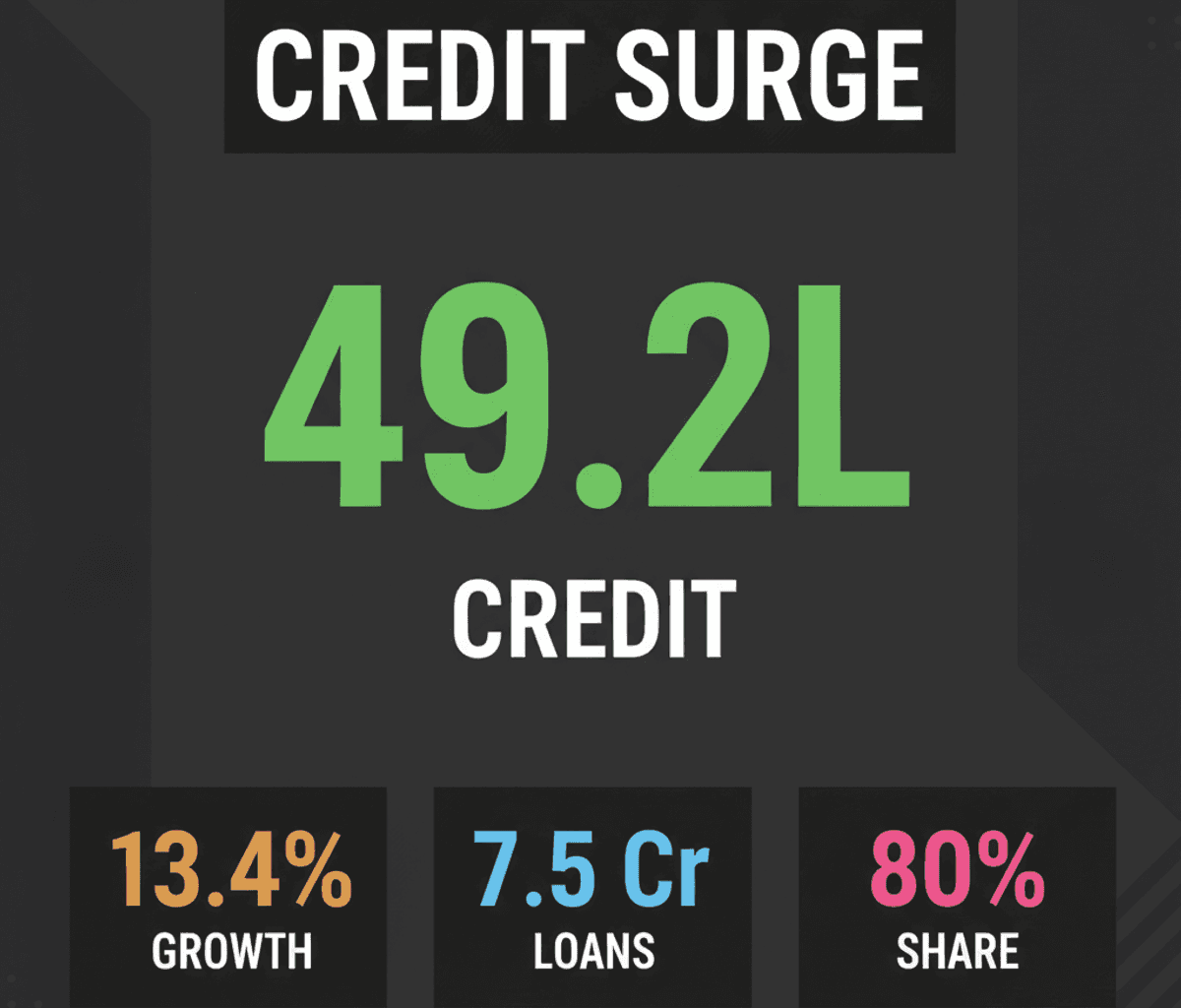
India’s small business credit portfolio surged 13.4% to Rs 49.2 lakh crore by March 2026, driven by sole proprietors and strong regional growth. Discover the key trends.
Main Takeaway
India’s small business credit just saw a massive 13.4% surge, hitting Rs 49.2 lakh crore by March 2026. This significant expansion signals a booming entrepreneurial spirit and a hot market for lenders, with sole proprietors leading the charge.
What Happened?
The latest CRIF–SIDBI Small Business Spotlight Report confirmed India’s small business credit portfolio reached Rs 49.2 lakh crore by March 2026, marking a robust 13.4% year-on-year growth. Simultaneously, the number of active loans climbed to 7.5 crore, showcasing increased access to capital for smaller enterprises.
Sole proprietors are clearly the backbone of this expansion, driving 80% of the total portfolio and accounting for over 87% of active loans. Loan against property, or LAP, remains the dominant product within this segment, growing its share to 27.1% from 25.5% in March 2025.
Regionally, the top 10 states collectively hold 72% of the outstanding portfolio. Andhra Pradesh and Uttar Pradesh demonstrated exceptional year-on-year growth rates of 16.5% and 18.5%, respectively, leading this expansion.
Why It Matters
This impressive growth in small business credit signals robust economic activity and strong confidence within India’s entrepreneurial sector, a critical driver for overall GDP. The increasing preference for Loan Against Property highlights a cautious but consistent growth in credit appetite, favoring secured lending options.
For fintechs and traditional lenders, this presents significant opportunities to innovate and tailor products specifically for sole proprietors and high-growth regional markets. However, the moderation in enterprise term loan growth, which stood at 4.7% year-on-year, suggests a pressing need for specialized financing in areas like technology upgrades and sustainability initiatives for MSMEs.
What to Watch Next
Keep a close eye on how lenders adapt their offerings to meet the evolving demand for tech and sustainability financing within MSMEs, especially in manufacturing-linked growth hubs like Bengaluru, Jaipur, Pune, and Rajkot. Monitoring asset quality trends, particularly in states experiencing rapid growth, will be crucial to ensure this credit expansion remains sustainable long-term.
Future reports will likely reveal whether the strong focus on sole proprietors continues to deepen, or if new product innovations and economic shifts lead to an increased pace in enterprise lending.