India’s Dual Strategy: Easing Norms & Boosting Credit for Industry
By ThePip Desk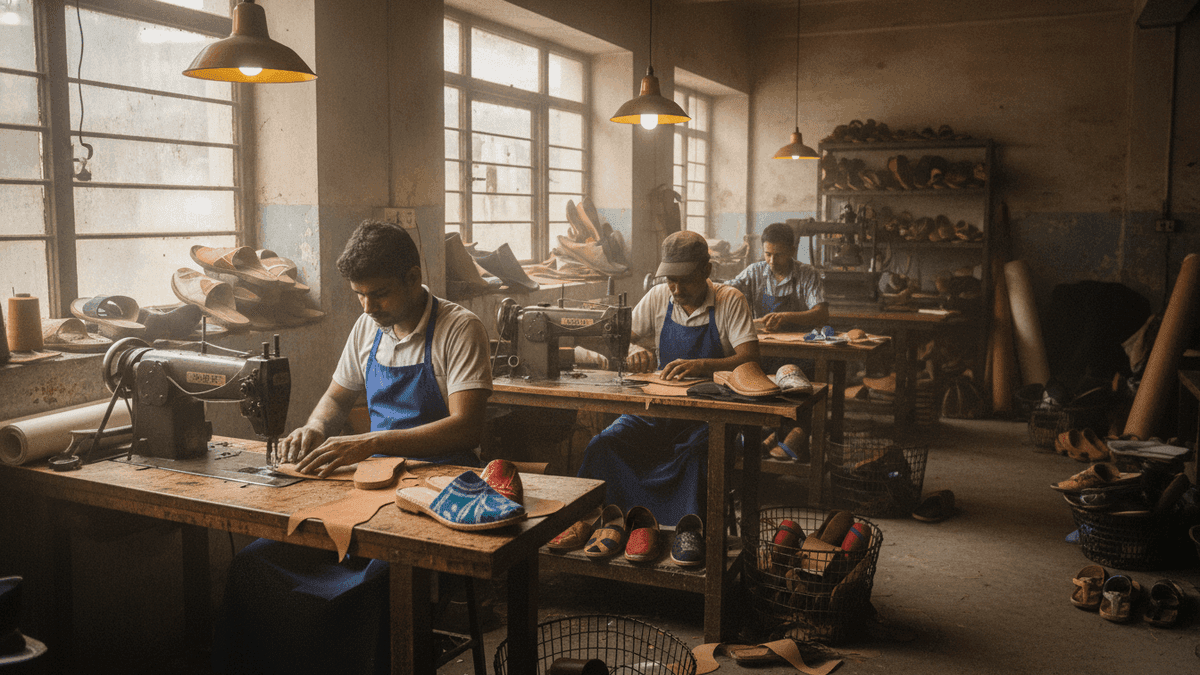
India’s government implements a dual strategy: easing footwear quality norms and enhancing credit access for MSMEs to boost domestic manufacturing and economic growth.
THE PIP (TL;DR)
The Indian government is strategically deploying both regulatory easing and enhanced credit facilitation as key levers to bolster domestic manufacturing capabilities and foster MSME growth.
The core argument posits that reducing friction in regulatory transitions and ensuring capital access are fundamental prerequisites for industrial expansion, particularly for small and medium enterprises.
Evidence includes the DPIIT’s extension of footwear quality control order deadlines to July 31, 2027, and the MSME Minister’s direct call to banks for improved institutional credit access.
The durable takeaway is that targeted, structural policy interventions, rather than broad mandates, are critical for nurturing a resilient and competitive domestic industrial base.
Understanding Structural Support for Domestic Manufacturing
The Indian government is actively calibrating its policy instruments to foster a more robust domestic manufacturing ecosystem, focusing on both regulatory adaptation and capital access. Recent actions by the Department for Promotion of Industry and Internal Trade (DPIIT) concerning footwear quality standards, alongside a direct appeal from the Union MSME Minister for enhanced credit, highlight this dual-pronged approach to industrial development.
This strategy addresses two critical friction points in a developing economy: the cost of compliance with evolving regulatory frameworks and the persistent challenge of capital allocation for micro, small, and medium enterprises. A structural understanding reveals that easing these burdens can significantly de-risk business operations and unlock growth potential across various sectors.
Regulatory Adaptation and the Footwear Sector
The DPIIT’s amendment to two key Quality Control Orders (QCOs) for the footwear sector exemplifies a pragmatic approach to regulatory transitions. Specifically, the Footwear made from Leather and other Materials (Quality Control) Order, 2024, and the Footwear made from All Rubber and all Polymeric Material and its Components (Quality Control) Order, 2024, originally notified on June 12, 2026, have seen a crucial adjustment.
The timeline for clearing legacy stock, which was previously July 31, 2026, has now been extended to July 31, 2027. This extension provides manufacturers with an additional year to transition to new quality standards without incurring significant capital losses from unsellable inventory. From a first-principles perspective, this reduces the immediate financial strain and operational disruption, thereby enhancing the overall ease of doing business within the sector.
Enhancing Credit Access for MSMEs
Concurrently, Union MSME Minister Jitan Ram Manjhi, during his visit to Puducherry, underscored the paramount importance of institutional credit for MSMEs. His call to banks and other stakeholders to enhance access to credit directly targets a fundamental constraint on MSME growth. Access to capital is a primary input for expansion, technology adoption, and market penetration, yet it remains a significant hurdle for many small businesses.
The Minister also directed stakeholders to strengthen support for MSMEs across several other critical dimensions: improved access to technology, skill development initiatives, expanded market opportunities, and robust quality support infrastructure. These are complementary structural enablers that, alongside credit, form the bedrock of a thriving MSME sector, allowing these enterprises to improve their unit economics and competitiveness.
A Cohesive Strategy for Industrial Resilience
When viewed together, the DPIIT’s regulatory easing and the MSME Minister’s credit push reveal a cohesive governmental strategy. Both interventions aim to reduce the inherent friction points that can impede domestic industry. The footwear QCO extension acknowledges the practical challenges of compliance and offers a vital buffer, while the emphasis on credit access for MSMEs addresses the core financing bottleneck.
These targeted policy actions are not isolated events but rather components of a broader framework designed to cultivate resilience and foster long-term growth within India’s manufacturing and small business sectors. By systematically addressing regulatory transition costs and capital availability, the government endeavors to create an environment where domestic enterprises can not only survive but also thrive, contributing significantly to the nation’s economic output and employment.