India’s Polymer Currency: Enhanced Durability & Security
By ThePip Desk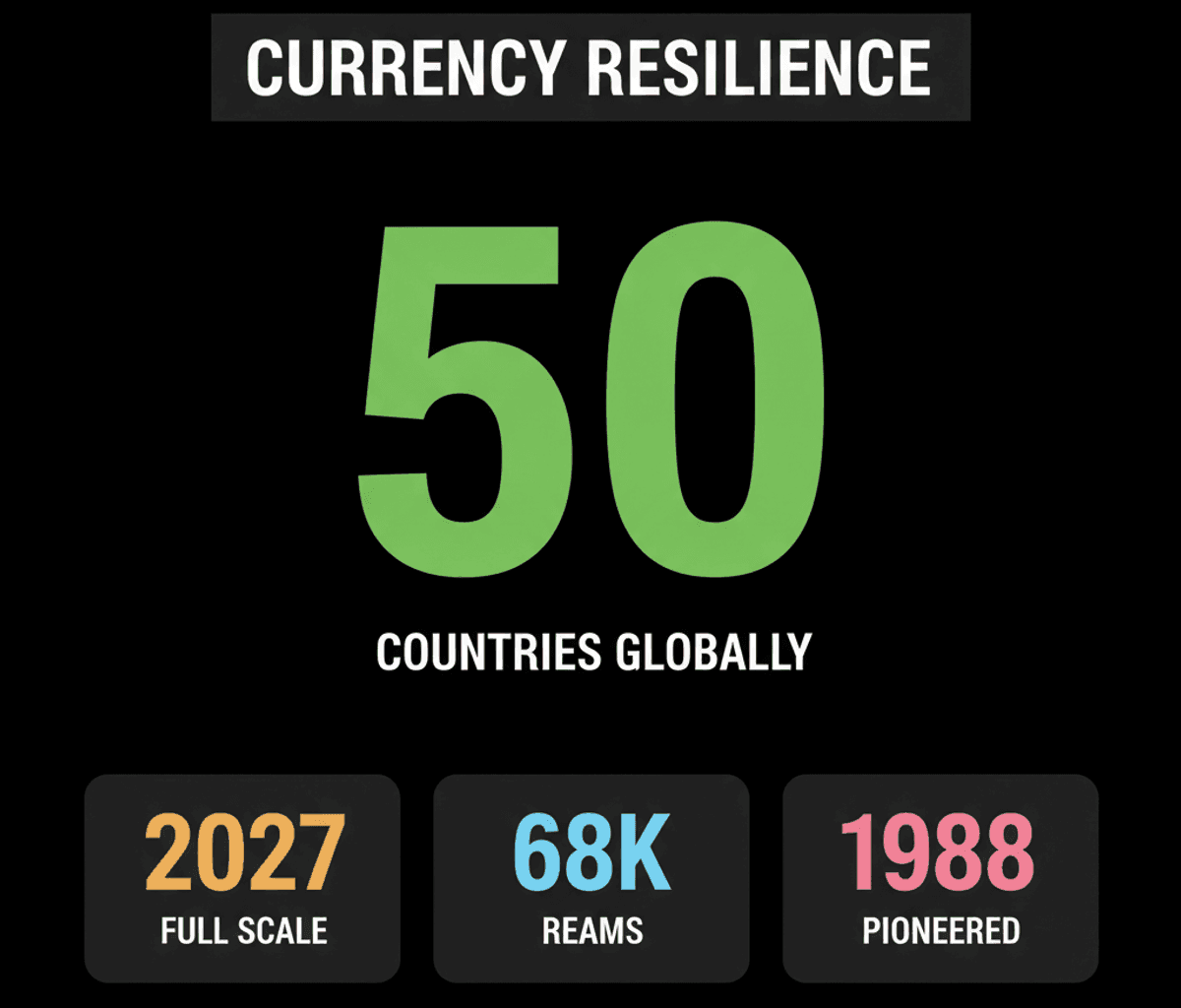
RBI advances plans for polymer currency notes, enhancing durability, security, and sustainability. A strategic move aligning India with global trends.
THE PIP (TL;DR)
The introduction of polymer currency notes by the Reserve Bank of India signals a strategic, long-term commitment to enhancing the durability, security, and environmental sustainability of physical cash in India’s financial system.
Core Argument: India is adopting polymer notes to counter counterfeiting and improve lifespan, aligning with global central bank practices.
Key Evidence: RBI’s global Expression of Interest for Biaxially Oriented Polypropylene (BOPP)-based polymer substrate sheets, targeting a pilot project for Rs 10 and Rs 20 denominations next year.
Durable Takeaway: This move aligns India with over 50 countries, reflecting a global structural shift in currency management towards advanced materials for greater resilience and efficiency.
The Strategic Imperative for Currency Evolution
The Reserve Bank of India (RBI) is making a significant structural move by advancing its plans to introduce polymer, or plastic, currency notes. This initiative, which includes a pilot project for Rs 10 and Rs 20 denominations expected to commence next year, represents a fundamental shift in the physical infrastructure of India’s monetary system. It underscores a strategic imperative to enhance the resilience and operational efficiency of the nation’s currency circulation.
At its core, the transition to polymer notes is a first-principles decision driven by the inherent advantages of the material. Unlike traditional paper currency, polymer banknotes are demonstrably more durable, resisting tearing, moisture, and general wear and tear more effectively. This extended lifespan directly translates to reduced re-issuance cycles and, consequently, lower long-term printing and logistical costs for the central bank.
Framework: Operational Efficiency and Security Enhancement
The decision can be framed within an operational efficiency and national security framework. The RBI’s currency-printing subsidiary, Bharatiya Reserve Bank Note Mudran Private Limited (BRBNMPL), has issued a Global Expression of Interest (EOI) for Biaxially Oriented Polypropylene (BOPP)-based polymer substrate sheets. This EOI specifies a requirement for 68,000 reams, split equally between the two pilot denominations, highlighting the scale of the initial phase.
Crucially, polymer notes offer enhanced resistance to counterfeiting, a critical component of currency integrity and national security. The EOI mandates advanced security features such as a clear window with portrait, a metallic numeral, a magnetic pseudo thread, a shadow image, and an iridescent pattern. These features are significantly more difficult and costly to replicate on polymer substrates compared to paper, thereby bolstering the security architecture of the currency.
Evidence and Global Precedent
The pathway to broader implementation is clear: a potential full-scale introduction by 2027, contingent upon the successful outcomes of these initial field trials. The procurement process itself reflects stringent security and geopolitical considerations. Bidders are required to separate operations related to China or Pakistan from India-related work and to avoid sourcing raw materials or deploying personnel from these countries for the project. Furthermore, companies from countries sharing a land border with India must be registered with the DPIIT Registration Committee.
Eligibility criteria for bidders are equally rigorous, requiring at least three years of experience supplying polymer substrates with security features to central banks and the capacity to supply a minimum of 30% of the indicative requirement. India is not an outlier in this structural shift; polymer banknotes have been successfully adopted in over 50 countries globally since Australia pioneered their introduction in 1988. This widespread adoption serves as a robust evidentiary base for the benefits of durability, anti-counterfeiting measures, and environmental impact reduction.
What Most People Overlook
Many discussions around currency tend to focus on immediate transactional convenience or digital payment trends, often overlooking the foundational material science and operational logistics of physical cash. What is often missed is that the material composition of currency notes is not merely a technical detail but a load-bearing pillar of the entire financial system’s resilience. A shift to polymer is a long-term capital expenditure that promises systemic returns in security, cost management, and environmental footprint, a testament to strategic foresight rather than reactive policymaking.
ONE THING TO CONSIDER TODAY
When observing shifts in national infrastructure, particularly in physical currency, it is instructive to examine the underlying material science and operational economics rather than focusing solely on immediate implementation challenges.