India Gold Loans: Unlocking Capital & Formalizing Credit
By ThePip Desk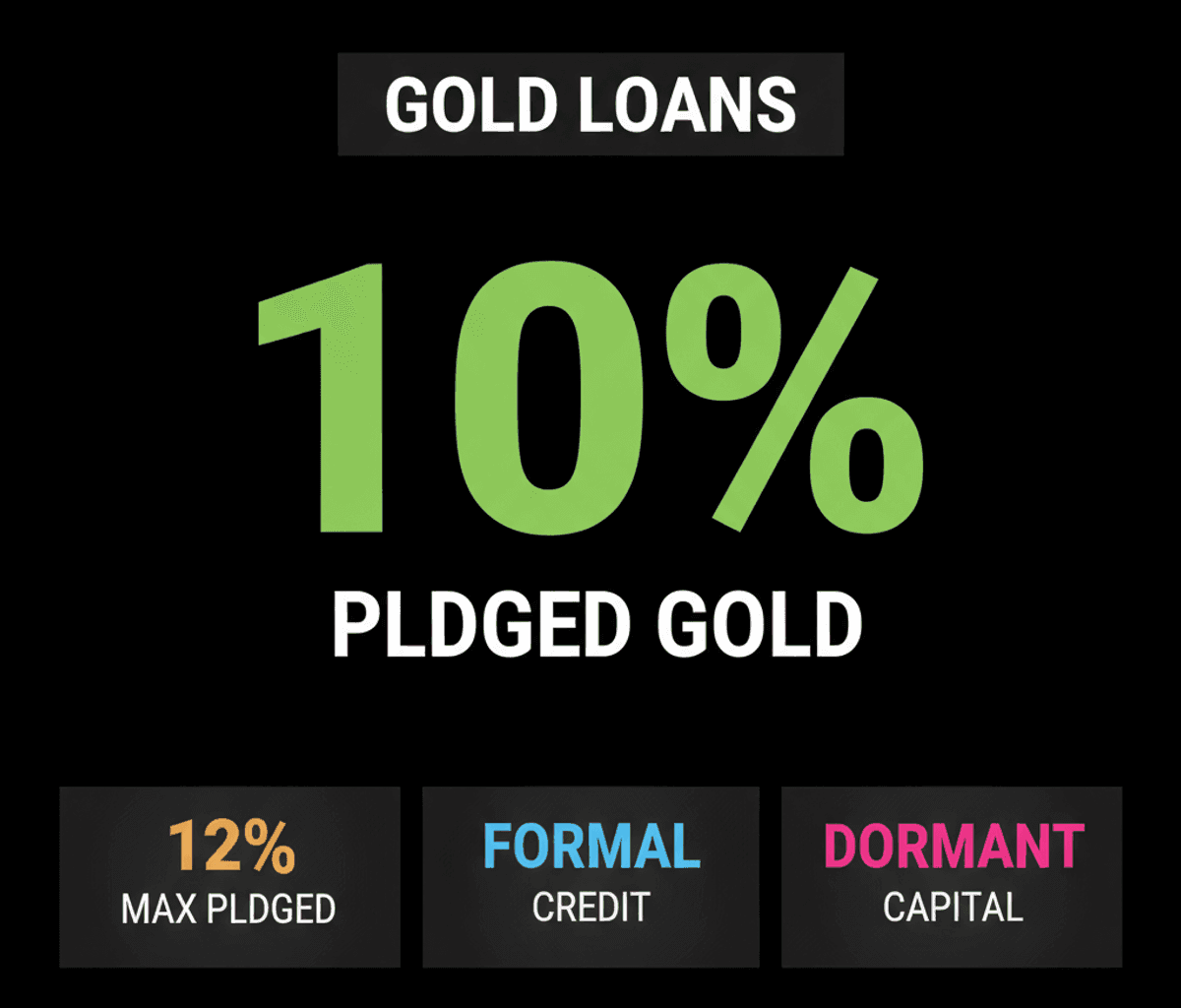
Discover the untapped potential of India’s gold loan market. Learn how pledging household gold is formalizing credit access and unlocking latent capital.
India’s gold loan market presents a compelling structural growth opportunity, rooted in the vast, largely untapped potential of household gold holdings. With only an estimated 10% to 12% of India’s substantial household gold currently pledged for loans, a significant reservoir of dormant capital remains poised for integration into the formal financial system, signaling a fundamental shift in credit accessibility and market structure.
The Underlying Mechanism of Asset-Backed Formalization
The inherent appeal of gold loans stems from their first-principles design as secured credit instruments. These loans offer rapid approval processes, typically at lower interest rates, and demand less extensive paperwork compared to unsecured alternatives. This makes them particularly attractive for individuals, including farmers and small businesses, who require swift, short-term liquidity without collateralizing other assets. The underlying mechanism here is the conversion of an illiquid, culturally significant asset into readily available capital, thereby democratizing access to finance.
This structural advantage expands opportunities across the financial ecosystem. Banks, non-banking finance companies (NBFCs), and specialized gold lenders stand to benefit from the expansion, particularly as the market penetrates smaller towns and rural areas. This growth trajectory is not merely about increasing loan volumes; it represents a critical pathway for formalizing credit, drawing borrowers away from the often usurious rates and opaque practices of informal lending into regulated, transparent financial institutions.
Navigating Structural Headwinds and Future Trajectories
While the growth thesis for gold loans is robust, its trajectory is subject to several structural headwinds and market dynamics. Regulatory adjustments, by their very nature, can reshape operational parameters and compliance costs for lenders. Furthermore, the inherent volatility of gold prices introduces a layer of risk, impacting loan-to-value ratios and requiring sophisticated risk management frameworks from financial institutions. Cultural sentiments surrounding the pledging of gold, while slowly evolving, also remain a significant factor influencing adoption rates.
Despite these challenges, the long-term perspective suggests that the gold loan market will continue its crucial role in India’s financial evolution. Its function in formalizing credit is not merely transactional; it contributes to broader economic development by integrating a substantial, previously underutilized asset class into the productive economy. This enduring structural pattern underscores its importance for financial inclusion and stability, offering a durable lesson in leveraging traditional assets for modern financial solutions.