India FCNR Inflows: Bank Disclosure Divergence & Headwinds
By ThePip Desk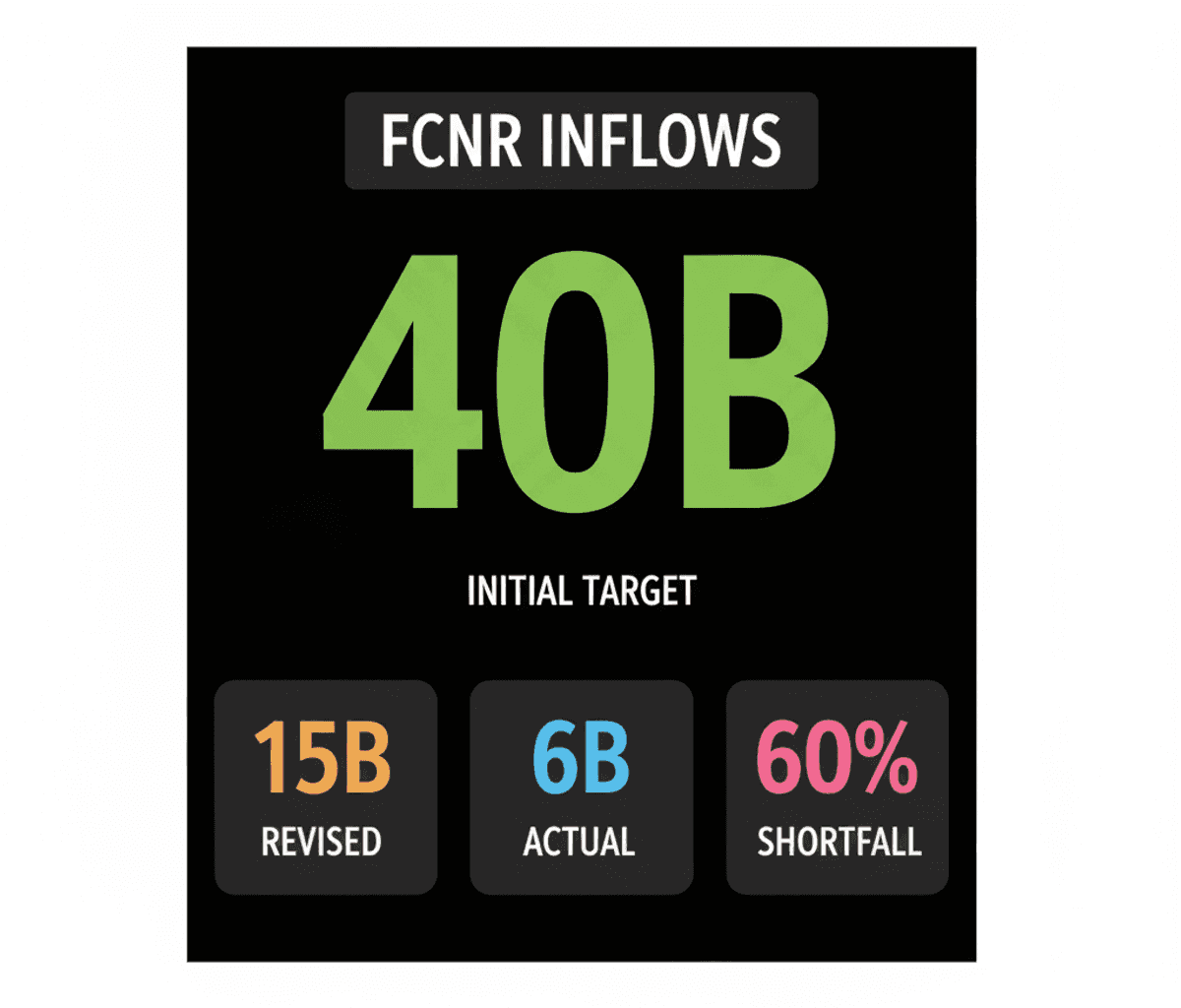
Explore India’s FCNR deposit drive: divergent bank disclosures and structural headwinds impacting capital inflows. Analysis of RBI’s initiative.
India’s banking system is currently navigating a distinct split in transparency regarding Foreign Currency Non-Resident (FCNR) deposit mobilization, a critical initiative by the Reserve Bank of India (RBI) to bolster foreign currency reserves. While public sector banks openly report their progress and targets, leading private sector institutions are notably withholding their specific collection figures, citing completion of the mobilization phase as a prerequisite for disclosure. This divergence highlights fundamental differences in strategic approaches and competitive postures within the Indian financial landscape.
The FCNR deposit scheme allows Non-Resident Indians (NRIs) to place funds in Indian banks, denominated in foreign currency, offering a hedge against exchange rate fluctuations for the depositor and a stable source of foreign capital for the nation. The RBI’s push aims to draw foreign currency into the system, similar to past efforts, by making these deposits attractive through competitive interest rates. Understanding the flow and disclosure patterns of these funds offers a window into the structural dynamics of India’s capital account.
The contrasting disclosure strategies between public and private banks can be understood through differing incentive structures. Public sector banks, often operating with a broader mandate and under closer government scrutiny, tend towards greater transparency, perhaps to demonstrate compliance with national objectives or to signal progress towards targets. Conversely, private banks, driven by competitive market dynamics, may view such data as proprietary, opting to keep their specific strategies and collection performance private until the full picture can be presented, thereby avoiding premature competitive intelligence for rivals.
Leading private entities like HDFC Bank, ICICI Bank, and Axis Bank confirm active participation in the FCNR scheme, yet their specific figures remain under wraps. HDFC Bank, for instance, noted successful capital raising, attributing it to attractive interest rates exceeding 6% for NRI customers. ICICI Bank observed a momentum shift after the RBI clarified operational aspects in late June, anticipating the full impact to emerge in the second quarter. Axis Bank underscored its strategic, measured approach, prioritizing long-term engagement over immediate volume targets.
In stark contrast, public sector banks have provided concrete figures, painting a clearer picture of their progress. Punjab National Bank has reportedly collected $419 million, aiming for a substantial $2.5 billion. Similarly, Union Bank of India and Indian Bank have set ambitious targets, each aspiring to attract between $1.5 billion and $2 billion. Some, like the Bank of Maharashtra, have actively adjusted their offerings, increasing interest rates to 6.60% to enhance their competitive edge in attracting NRI funds.
Despite these efforts, the overall FCNR inflow has fallen significantly short of initial industry expectations. Early projections optimistically pegged potential inflows at up to $40 billion by the September 30 deadline. However, current market estimates, as reported by Whalesbook, have been revised downwards to a more modest range of $12 billion to $15 billion. International analysts from Barclays further refine this, suggesting actual inflows have reached approximately $5 billion to $6 billion, indicating a slower pace compared to the robust mobilization witnessed in 2013.
Several structural factors have contributed to this deceleration. Initial market confusion surrounding the handling of leverage and the operational utilization of GIFT City branches created early hesitations. Furthermore, regulatory adjustments, such as a circular issued by the UAE central bank, introduced additional complexities for certain NRI segments. These elements collectively illustrate how regulatory clarity and operational ease are critical determinants for the success of such capital attraction initiatives.
This scenario underscores a crucial lesson in capital market dynamics: the interplay between regulatory intent, institutional incentives, and global financial conditions shapes outcomes. While the RBI actively monitors the program, the divergence in bank reporting and the slower-than-anticipated inflows highlight the challenge of orchestrating large-scale foreign currency mobilization. The outcome of this FCNR drive, particularly by the September 30 deadline, will offer valuable insights into the structural elasticity of NRI capital and the effectiveness of targeted central bank interventions in a complex global financial environment.