IDFC First Bank & Tata Power: Q1 Growth & Green Energy Milestone
By ThePip Desk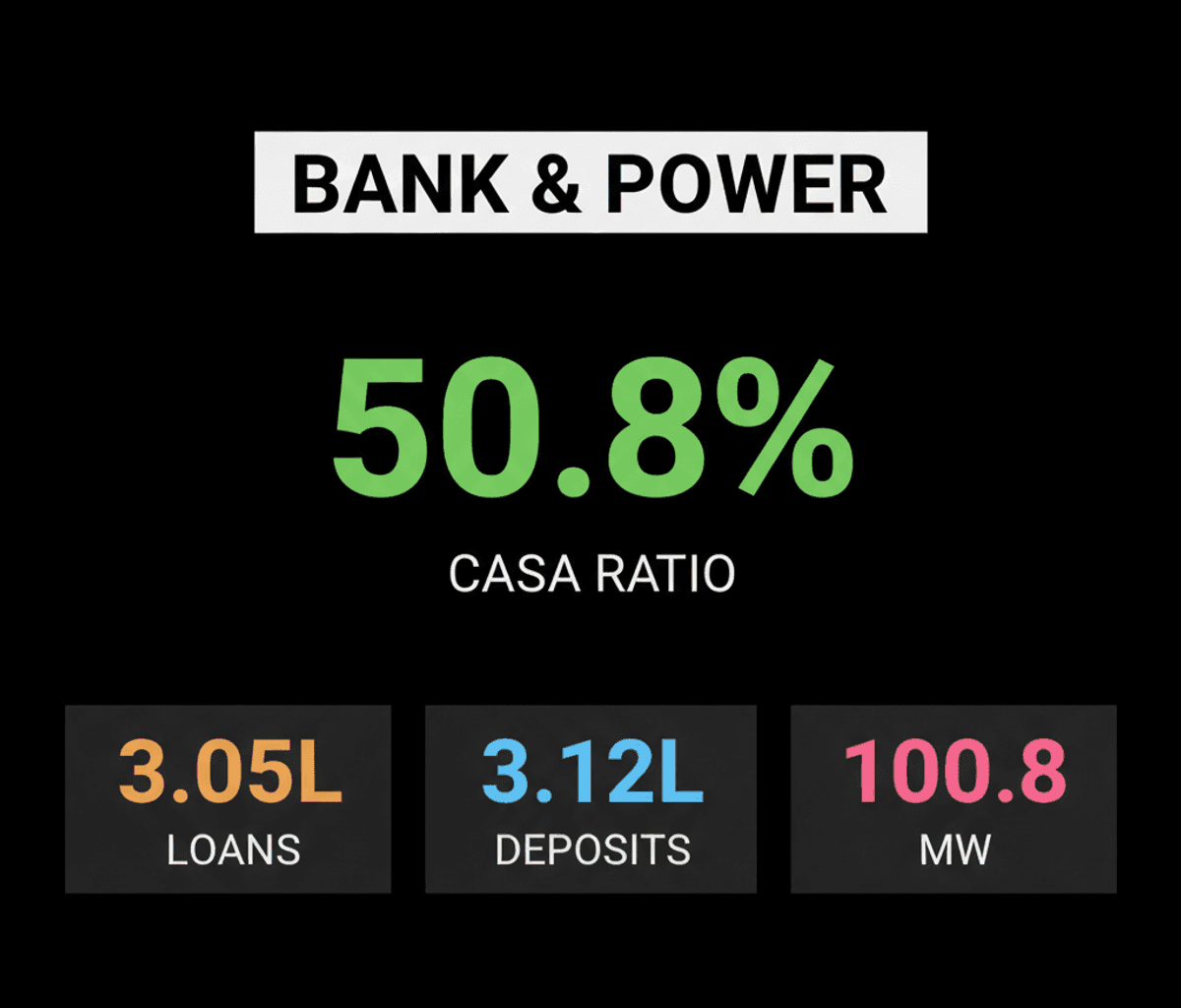
IDFC First Bank achieves robust Q1FY27 loan and deposit growth, while Tata Power commissions a new 100.8 MW wind project in Maharashtra, boosting green energy.
🔥 Main Takeaway
IDFC First Bank just crushed Q1 with double-digit growth across loans and deposits, while Tata Power Renewable Energy powered up Maharashtra with a new 100.8 MW wind project.
📌 What Happened?
IDFC First Bank’s provisional Q1FY27 data, ending June 30, 2026, showed significant financial growth.
Loans & advances jumped 20.6% year-on-year, hitting Rs 3,05,488 crore from Rs 2,53,233 crore previously.
Total deposits increased 17.7% year-on-year, reaching Rs 3,11,874 crore compared to Rs 2,64,971 crore a year ago.
CASA deposits soared 24.7% annually, hitting Rs 1,58,563 crore, which boosted the crucial CASA ratio to 50.8% from 48.0%.
Separately, Tata Power Renewable Energy (TPREL) successfully commissioned its 100.8 MW Jewali Wind Project in Maharashtra’s Dharashiv district.
💰 Why It Matters
IDFC First Bank’s strong deposit and loan growth signals robust underlying demand and effective customer acquisition, which is crucial for scaling a bank in a competitive market.
The improved CASA ratio, now over 50%, translates to lower funding costs for the bank, directly boosting profitability and making it more attractive to investors.
Tata Power’s new wind project significantly boosts its renewable energy capacity, helping the company meet its Renewable Purchase Obligation targets.
This move reinforces Tata Power’s commitment to green energy, aligning with global sustainability trends and appealing to environmentally conscious investors.
👀 What to Watch Next
Keep an eye on IDFC First Bank’s official Q1FY27 results for further insights into asset quality and net interest margins, which could impact future stock performance.
Watch how Tata Power continues to expand its renewable portfolio, especially as India pushes aggressively for more green energy infrastructure and investment.
These developments reflect broader trends in India’s financial sector and its energy transition, offering key clues for future investment opportunities in both banking and renewables.