Canada’s Digital Finance Shift: Open Banking & Payments
By Varun Mittal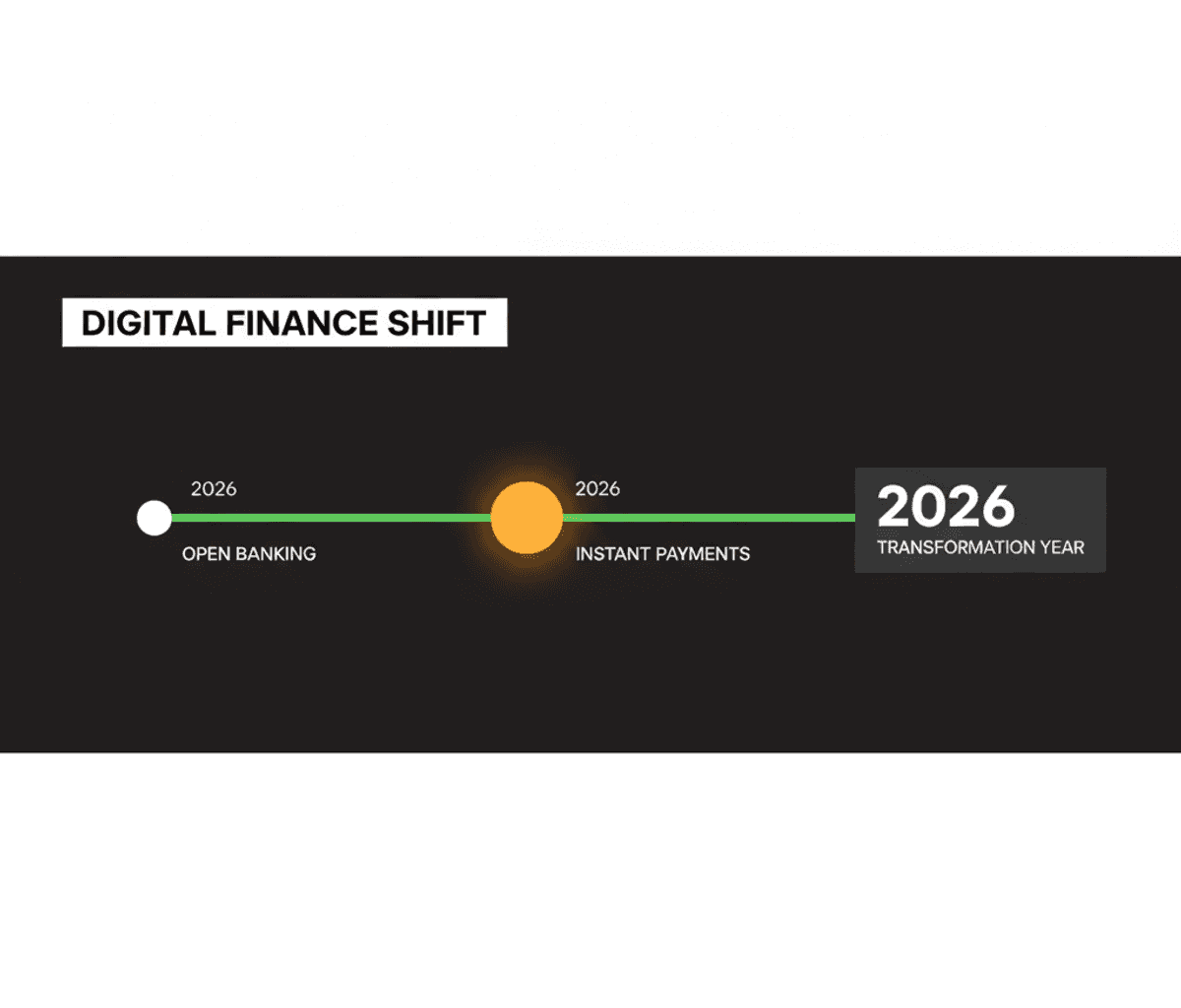
Explore Canada’s financial sector transformation: open banking, instant payments, and fintech innovation reshaping competition and consumer protection by 2026.
Canada’s financial landscape is on the cusp of a fundamental structural shift, driven by a confluence of regulatory reforms, infrastructure modernization, and burgeoning fintech innovation. This coordinated push is set to redefine competition and consumer interaction within the nation’s financial services sector. The core of this transformation involves the phased rollout of consumer-driven banking and the introduction of a national instant payment system, both anticipated to reshape market dynamics significantly by 2026.
At its heart, this shift represents a re-evaluation of data ownership and transaction fluidity. Consumer-driven banking, colloquially known as open banking, is slated for a phased introduction beginning in 2026. This initiative is designed to empower consumers by enabling the secure sharing of their financial data with third-party service providers through Application Programming Interfaces (APIs). This mechanism directly challenges historical data silos maintained by traditional institutions, creating a new substrate for innovation and personalized financial services. Concurrently, the Real-Time Rail (RTR), Canada’s inaugural national instant payment system, is also expected to launch in 2026, promising immediate fund transfers. This infrastructural upgrade addresses the latency inherent in legacy payment systems, fundamentally altering the speed and efficiency of financial transactions across the economy.
The regulatory environment is actively fostering this structural change. The Retail Payment Activities Act (RPAA) plays a pivotal role here, explicitly enabling non-bank payment service providers to enter the market and compete directly with established financial institutions. This legislative intervention is a classic example of how regulatory frameworks can dismantle incumbents’ moats, fostering a more distributed competitive landscape. It creates an opportunity for specialized fintech firms, particularly those leveraging Artificial Intelligence (AI)-driven services and digital assets, to carve out significant market share by focusing on niche solutions or superior user experiences, rather than requiring full banking licenses. The overarching public policy objective behind these reforms is clear: to enhance competition and bolster consumer protection within the financial sector.
Despite the clear strategic intent, the path to full digital transformation is not without its complexities. Canada faces challenges such as its multi-level regulatory structure, which can introduce friction and delays in implementing nationwide changes. Furthermore, the nation’s relatively later adoption of certain digital financial technologies, when compared to some global peers, means there’s a learning curve and potentially a need to catch up. These factors could temper the pace of change, creating a more gradual evolution rather than an abrupt revolution in the short term. However, the foundational elements being put in place are designed for long-term structural impact.
The unfolding digital transformation in Canadian finance underscores a broader trend: the increasing commoditization of core financial infrastructure and the rising value of data interoperability. For market participants, this means competitive advantages will increasingly derive not just from proprietary data, but from the ability to efficiently process, analyze, and act upon securely shared data. The shift from an opaque, institution-centric model to a transparent, consumer-driven paradigm represents a durable change in market architecture. Understanding these underlying mechanisms is crucial, as they will dictate the vectors of innovation and competition for the foreseeable future. This is not merely about new apps; it is about a fundamental re-architecture of financial intermediation itself.