Call Rates Reach 5.00%: Impact on Indian Banks Explained
By ThePip Desk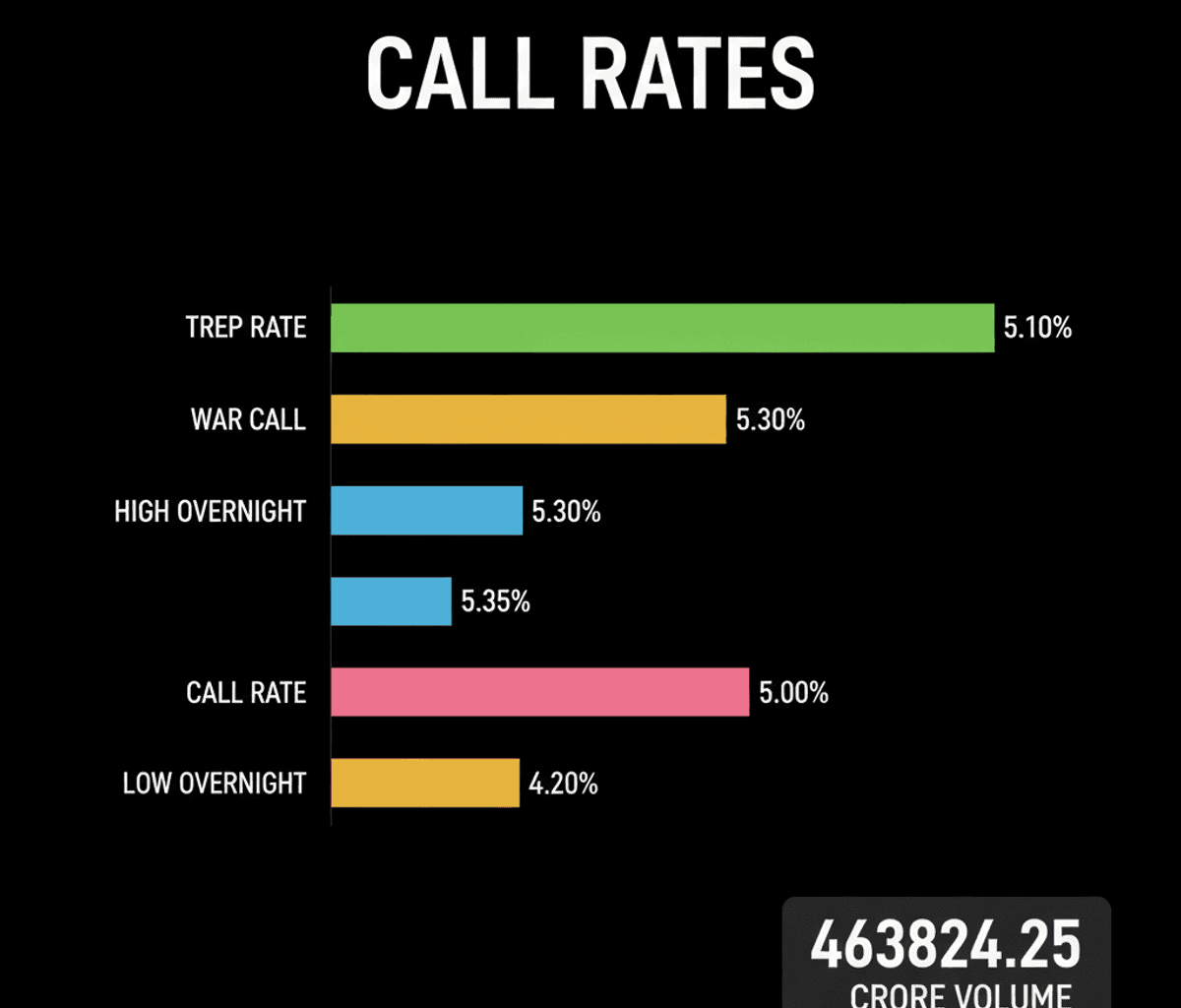
India’s interbank call rates surged to 5.00% on reporting Friday due to increased bank demand, highlighting routine liquidity adjustments. Understand the implications.
THE PIP (TL;DR)
Interbank borrowing costs edged higher on Friday, a routine occurrence as banks squared their books for a reporting cycle.
- Call rates, the interest rate at which banks lend to each other for short periods, rose to 5.00% from 4.60% on Thursday.
- This increase was due to heightened demand from banks on the final trading day of the two-week reporting cycle.
- For you, this highlights the routine, cyclical liquidity adjustments within the banking system, rather than any broader market stress.
India’s interbank call rates, the critical overnight lending rate between banks, moved higher to 5.00% on Friday. This marked an increase from 4.60% observed on Thursday, reflecting a typical end-of-cycle adjustment in the financial system. The weighted average rate (WAR) in the call money market also registered a slight uptick, settling at 5.30% on Friday compared to 5.27% the previous day.
The primary driver behind this rise was the increased demand for funds as banks navigated the last trading session of the two-week reporting cycle. During this period, banks often need to adjust their cash reserves to meet regulatory requirements, leading to a temporary surge in short-term borrowing. Overnight borrowing rates touched a high of 5.35% and a low of 4.20% as institutions balanced their liquidity needs.
This movement in call rates is a regular feature of the financial calendar, particularly on what is known as a ‘reporting Friday.’ It shows how banks manage their short-term liquidity. Meanwhile, the Triparty Repo (TREP) market, another key segment for short-term funding, saw its weighted average rate at 5.10% on Friday. Total volume in the TREP market reached ₹463824.25 crore, according to data from the Clearing Corporation of India Ltd (CCIL), indicating robust activity in the interbank lending space.
For your own financial planning, these short-term fluctuations in interbank rates are generally contained within the banking system and do not directly impact your SIPs or portfolio. They are an important pulse check for the banking system’s day-to-day liquidity management, showing a healthy, albeit sometimes more expensive, flow of funds between institutions.
ONE THING TO CONSIDER TODAY
Understanding these small, cyclical market movements helps demystify the banking system’s inner workings, reminding us that not all rate changes signal broader economic shifts.