APAC Banks: 92% of Global Network Attacks Explained
By Varun Mittal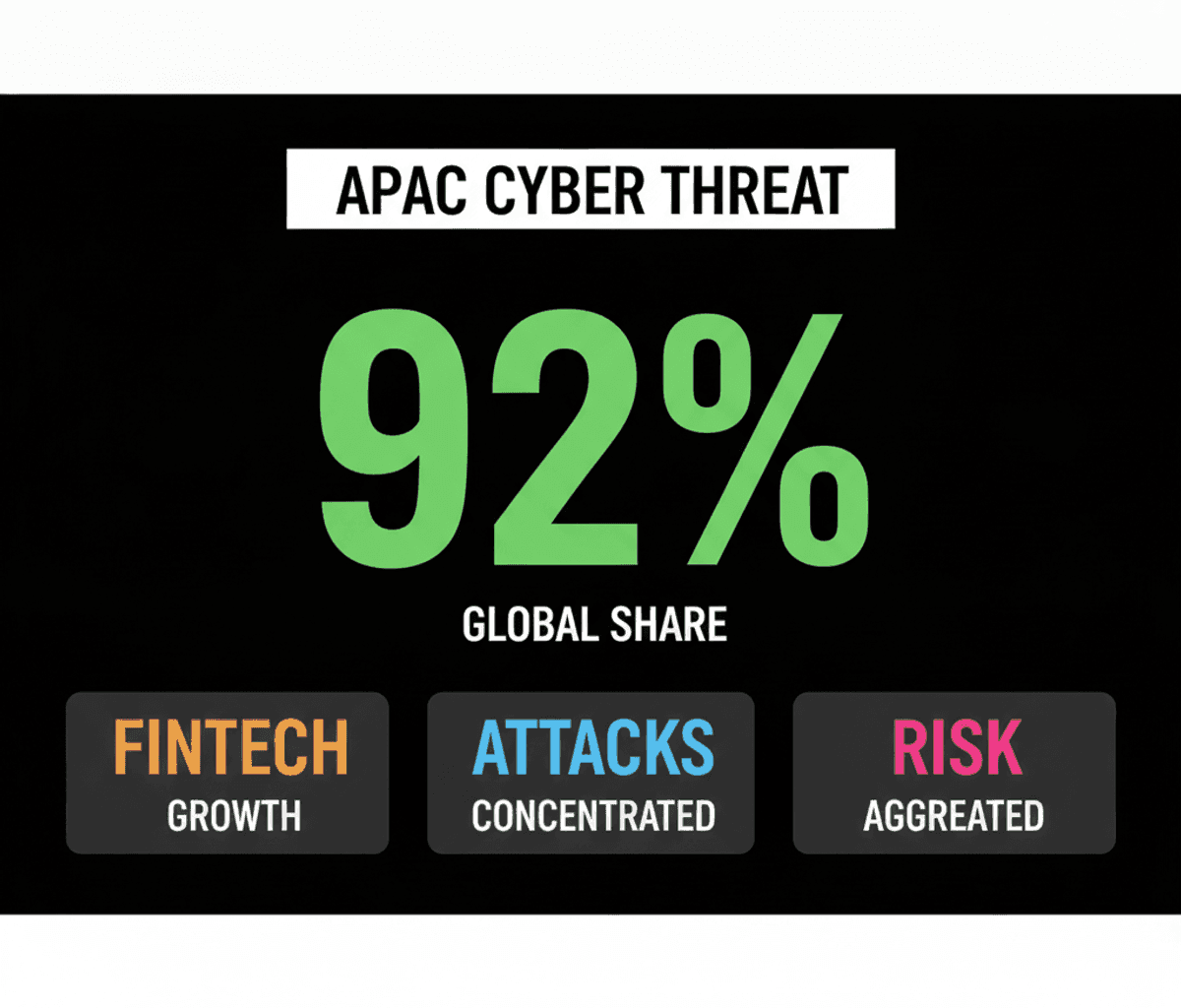
Discover why Asia-Pacific banks are targeted in 92% of global network attacks. Explore the link between rapid fintech adoption and increased cyber vulnerabilities.
Financial institutions across the Asia-Pacific (APAC) region are confronting an overwhelming and disproportionate share of global cyber warfare, accounting for a staggering 92% of all network attacks worldwide. This critical statistic, highlighted by Asian Banking & Finance, does not merely represent a surge in incidents; it underscores a fundamental shift in the region’s digital risk landscape, driven by the rapid proliferation and integration of financial technology.
Understanding this phenomenon requires a first-principles approach to digital transformation within the banking sector. The APAC region has embraced fintech innovation at an accelerated pace, fostering a vibrant ecosystem of digital payments, challenger banks, and embedded finance solutions. While this drive towards efficiency and expanded access delivers significant economic benefits, it simultaneously broadens the attack surface available to malicious actors, creating new vectors for exploitation that traditional security frameworks were not designed to cover.
The Structural Imperative of Interconnectedness
The core mechanism at play is the increased interconnectedness inherent in modern financial systems. As banks integrate with numerous third-party fintech providers, cloud services, and open APIs, they effectively extend their perimeter to encompass a vast, distributed network. Each new integration point, while enabling seamless customer experiences or operational efficiencies, introduces potential vulnerabilities. A weakness in one partner’s security posture can cascade through the entire ecosystem, compromising the primary institution.
This aggregation of risk is a defining characteristic of digital transformation. Unlike legacy systems that operated in more isolated environments, today’s banking infrastructure relies heavily on a complex supply chain of technology vendors and data exchanges. This complexity means that the security of a bank is no longer solely dependent on its internal defences but also on the weakest link within its broader digital value chain. The sheer volume of transactions and user data flowing through these interconnected systems in APAC makes them an exceptionally attractive target for sophisticated cybercriminals.
Disproportionate Exposure and Evolving Threats
The 92% figure suggests that APAC institutions are either more frequently targeted, more susceptible to successful breaches, or a combination of both, compared to their global counterparts. This disproportionate exposure can be attributed to several factors, including varying levels of cybersecurity maturity across different markets, the rapid pace of regulatory evolution struggling to keep up with technological change, and potentially a perception among attackers that the region offers higher rewards due to its economic dynamism and digital asset growth.
The nature of these network attacks also evolves with fintech adoption. Beyond traditional denial-of-service or malware, institutions now face threats like sophisticated phishing campaigns targeting digital credentials, supply chain attacks leveraging third-party vulnerabilities, and advanced persistent threats designed for long-term data exfiltration. The move towards open banking and real-time payments further intensifies the need for robust, adaptive security protocols capable of defending against polymorphic threats.
Implications for Systemic Resilience and Strategic Investment
For the APAC banking sector, this structural pattern implies a continuous and escalating demand for strategic investment in cybersecurity infrastructure, talent, and threat intelligence. It shifts the defensive paradigm from merely protecting internal assets to securing an expansive, dynamic digital ecosystem. Regulators are increasingly pushing for enhanced resilience standards, but the onus remains on financial institutions to proactively build security into the very architecture of their digital products and services, rather than treating it as an afterthought.
Ultimately, the overwhelming concentration of network attacks in APAC underscores a critical insight: the benefits of rapid fintech integration come with inherent, structural security challenges. The path forward demands not just incremental improvements, but a fundamental re-evaluation of risk management frameworks, fostering a culture of security that spans the entire digital value chain to safeguard the stability and trust in the region’s burgeoning financial markets.